
Lieferung heute & morgen

Qualitätsgarantie

Willkommens-Angebote freischalten: KOSTENLOSE Lieferung | Bis zu 80 % RABATT | Kostenlose 30-Tage-JoyPlus-Testphase
App herunterladen
Puzzles and brain teasers vary considerably in their recommended age, number of pieces, materials, space requirements and difficulty. An eye-catching design or the label ‘educational game’ alone tells you little about whether a product is right for the way you plan to use it. Parents often look for a jigsaw puzzle for children aged 4 and over, while teenagers and adults may prefer a 1,000-piece puzzle for adults, a Rubik’s Cube or a compact logic game to take on the go.
This buying guide explains what to look for before you buy and which options suit different needs.
A puzzle with small pieces may not be suitable for younger children, even if the design looks appealing. A product such as the Perplexus Spin Master Phantom Beast 3D Maze Ball is recommended for ages 9 and over. The manufacturer also warns that it contains small parts and may pose a choking hazard. So it’s important to consider the child’s abilities and the level of supervision planned, as well as the age recommendation.
For a puzzle for children aged 4 and over, the size and number of pieces and the stability of the surface you’ll use also matter. A game that’s too challenging may soon be left untouched, while one that’s too easy may not offer enough variety.
Terms such as brain training, educational game and skill game usually describe the type of activity, not a medically proven effect. Claims about concentration, logic or spatial thinking should therefore be understood as playful aims. They don’t establish therapeutic or medical benefits.
A 1,000-piece puzzle for adults needs a suitably large, flat surface. The finished Ravensburger ‘Beautiful Castles: Eilean Donan Castle’ puzzle measures around 70 × 50 cm. That’s suitable for a dining table, but may be impractical if space is limited. A travel game or compact IQ puzzle is easier to store for train journeys and holidays.
For children aged 4 and over, frame puzzles with 24 pieces or sets containing several smaller designs are often a good choice. The frame can help with sorting and stop the picture from shifting easily as you put it together. For adults, a 1,000-piece puzzle offers a much longer challenge, although the design, distribution of colours and repeating patterns all affect how difficult it actually is.
With logic games, don’t just count the challenges. Check whether there are different game modes, solutions or hints. The SmartGames IQ-Puzzle IQ-Puzzler PRO, for example, offers 120 challenges in 2D and 3D formats and is designed for one player.
For cardboard puzzles, precise cutting, a clear image and sufficiently thick material are all worth checking. A matt or linen-textured finish can reduce glare when you’re playing under a lamp, but it’s no substitute for good lighting.
For cube puzzles and speedcubes, look at how smoothly they turn, their size and their construction. A 7×7 speedcube has seven layers, making it considerably more complex than a classic 3×3 Rubik’s Cube. Beginners may find a simpler cube with smooth-turning layers more suitable. Terms such as ‘stickerless’ describe the coloured plastic surfaces and don’t automatically indicate a particular skill level.
Check the CE marking, age recommendation, warnings and details of the responsible person in the EU. Small parts and magnets should be kept away from children below the stated age. Take particular care with a magnetic fidget cube: swallowed magnets can cause serious injuries. Keep this type of product out of reach of younger siblings.
For travel, compact dimensions, a secure closure and a manageable number of pieces are important. A game that doesn’t need batteries is easier to take on a trip, as you won’t need a charger.
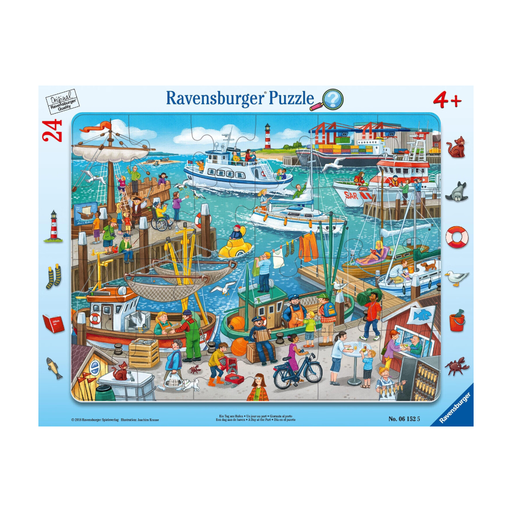
Why it suits this profile: This frame puzzle is designed for children aged 4 and over and combines 24 pieces with an additional find-and-seek game.
The manageable number of pieces and the frame make it easier to get started; the age recommendation and warning are clearly stated.
24 pieces, sturdy cardboard and a search picture featuring ten items; no batteries required.
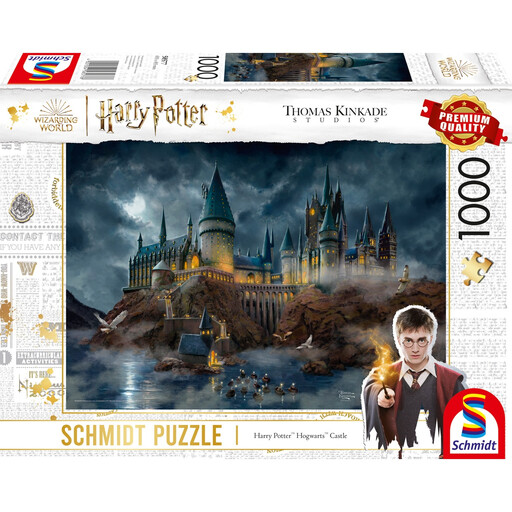
Why it suits this profile: Designed for adults aged 12 and over, this puzzle offers 1,000 pieces for longer puzzle sessions.
The number of pieces, finished dimensions and material details are clearly specified, making it easier to plan for space and storage.
1,000 precision-cut pieces, a linen-textured finish and a matt, low-glare surface, according to the product description.
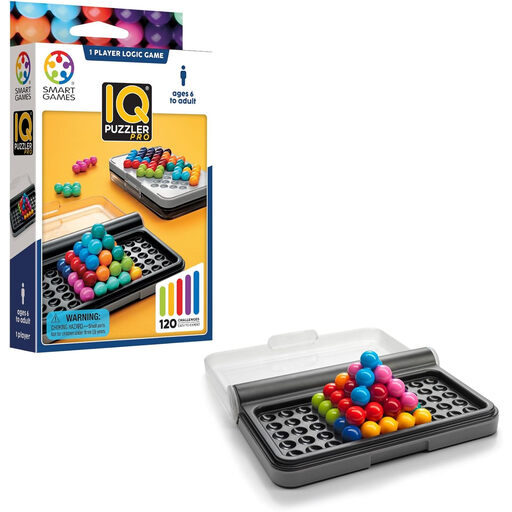
Why it suits this profile: This compact one-player game is suitable from age 6 and works well at home, while you’re waiting or when travelling.
The challenges are brought together in a compact format; 2D and 3D modes add variety without taking up much storage space.
120 challenges, three game variations, one-player play and no batteries required.
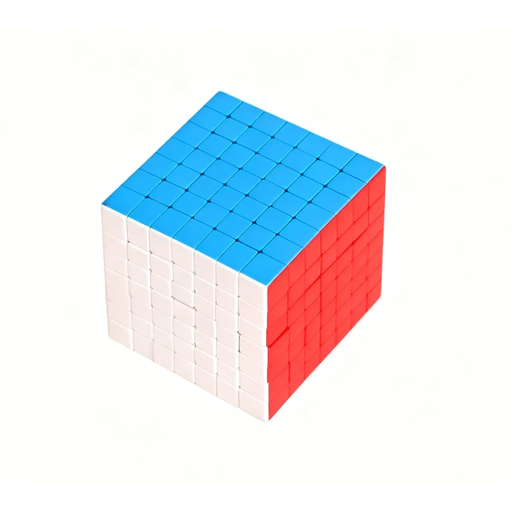
Why it suits this profile: With seven layers and a complex internal mechanism, this cube is designed for people who already have experience with twisty puzzles.
The product description clearly states that it has seven layers, is made from ABS, gives its size and sets an age limit of 8 and over.
Stickerless surfaces, seven movable layers and no batteries; clean with a soft, dry cloth.
We’ve put together a complete, regularly updated list of products that meet these strict selection criteria and fully comply with the safety regulations in force in the EU.
It depends on the child’s experience and fine motor skills. A 24-piece puzzle in a frame is a manageable starting point. Sets with 2 × 26 or 2 × 48 pieces can offer variety if they include several designs. The manufacturer’s specific age recommendation should always be followed.
There’s no set time. The detail in the design, areas of colour, sorting method and time available all affect how long it takes. When choosing a puzzle, the number of pieces, finished dimensions and a suitable place to store it are therefore more important than any advertised completion time.
Compact games such as IQ-Puzzler PRO or IQ Mini are handy for travel, provided all the pieces can be stored securely. Before you buy, check the dimensions, whether it can be played solo and any warnings about small parts. The game should also be suitable for the child’s age, and younger siblings shouldn’t be left unsupervised with it during play.