
Lieferung heute & morgen

Qualitätsgarantie

Willkommens-Angebote freischalten: KOSTENLOSE Lieferung | Bis zu 80 % RABATT | Kostenlose 30-Tage-JoyPlus-Testphase
App herunterladen
A transparent 2 mm PVC table protector is designed to protect your table from scratches, stains, water and everyday wear without completely concealing the surface. In practice, however, disappointing purchases are often caused not by the material itself, but by unclear size specifications, exaggerated heat-resistance claims or an unsuitable edge design.
This buying guide from the Joybuy Product Recommendation Officer takes an objective look at the most important features and shows which version is best suited to different uses.
A table protector should not be chosen based solely on the table’s stated width. Depending on the design and material, rolled PVC products may have slight dimensional variations or shrinkage of around 1 to 5 mm. Ordering an exact edge-to-edge fit can therefore result in visible gaps.
Measure the length and width at several points. With a rectangular table protector, you should also check whether the corners are actually at right angles. A made-to-measure table protector, or a slightly larger size that can be carefully trimmed, may be a sensible choice for unusual dimensions.
Several available models state that they can withstand temperatures of up to 80 °C. This is a specific product specification, but it does not mean that hot pans straight from the hob or baking trays from the oven can be placed directly on the protector. Other product information gives a lower limit of 60 °C.
Always check the specifications for the particular version. Trivets are still recommended, especially for very hot, heavy or damp containers. Open flames and direct sources of heat should always be avoided.
A non-slip table protector can sit securely on wood, matt decorative panels and many coated table surfaces. On glass and high-gloss surfaces, however, air bubbles may form between the tabletop and the protector. Some product specifications recommend using a thin layer of fabric as a spacer in this case.
Before buying, you should also decide whether the protector is to be laid loosely on the table or permanently bonded to it. A transparent PVC tablecloth is generally designed to be laid on top. Self-adhesive furniture films serve a different purpose and are not automatically an equivalent solution for everyday table protection.
A thickness of 2 mm provides more substance than very thin table protectors. In everyday use, it can form a durable barrier against scratches, spilled liquids and abrasion. At the same time, it is heavier and less flexible than thinner plastic films.
This thickness is often practical for dining tables, kitchen tables, desks and craft areas. If you need to move the protector frequently or have a very small tabletop, the additional weight should be taken into account.
A waterproof table protector or a water- and grease-resistant surface makes daily care easier. According to the respective product specifications, spilled drinks, sauces and writing materials can generally be removed with a damp cloth.
Use a soft cloth and mild soapy water. Scouring pads, harsh bleach and highly abrasive cleaners can scratch or cloud the transparent surface. A washable table protector reduces the effort required for care, but does not replace regular cleaning.
A straight edge is suitable for simple, functional applications. A table protector with a bevelled edge, on the other hand, has a 45-degree V-cut that can feel more comfortable when resting your arms on the table and makes hard edges appear less pronounced. This is particularly relevant for dining tables where the protector is to remain in place permanently.
A textured underside can improve grip on suitable surfaces. Nevertheless, the tabletop should be clean and dry. PVC protectors are often delivered rolled and need 24 to 48 hours to flatten after being laid out. Weights placed along the edges can help with this process.
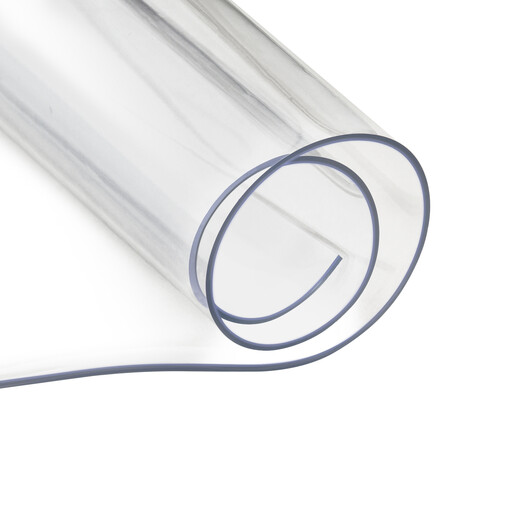
Why this product suits this profile: The compact size is suitable for smaller dining and kitchen tables, as well as desks with clearly defined rectangular dimensions.
The product specifications state that it is made from 2 mm PVC, is waterproof, easy to clean and has a non-slip backing. Nevertheless, the stated temperature limit of up to 80 °C should be observed.
2 mm material thickness, 70 x 120 cm format and, according to the product description, can be trimmed to size.
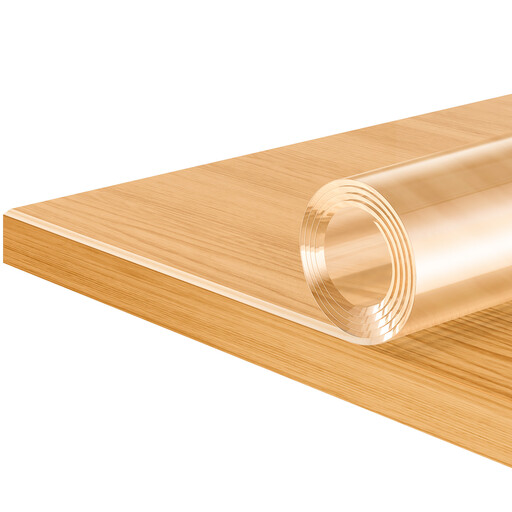
Why this product suits this profile: The bevelled edge and transparent, glossy finish are ideal for dining rooms where appearance and everyday practicality matter equally.
The 45-degree edge avoids one consistently sharp straight edge. At the same time, the product description points out that air bubbles may form on glass or high-gloss surfaces.
Water- and grease-resistant surface, non-slip texture and rectangular 80 x 140 cm format.
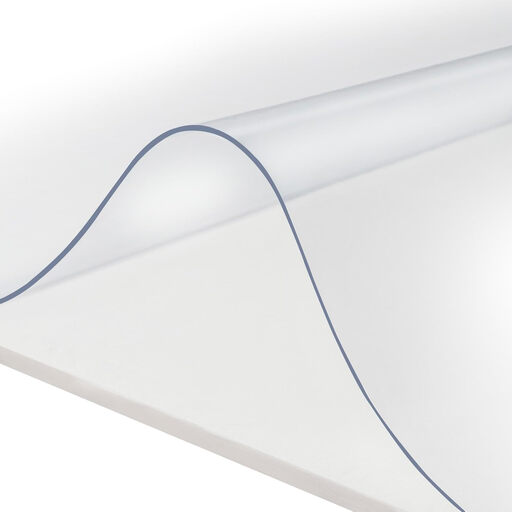
Why this product suits this profile: The long format covers larger dining tables, worktops or conference tables and, according to the product description, can be trimmed to size if required.
The clear size specification prevents you from choosing based on product images alone. For heat resistance, the description states up to 80 °C; hot pans and open flames should still be avoided.
100 x 180 cm format, waterproof PVC surface and easy cleaning with a damp cloth.

Why this product suits this profile: The combination of transparent PVC, a trimmable format and a washable surface is practical for family areas, craft spaces and desks.
The product specifications state that it protects against liquids, oil, scratches and stains. They also point out that air bubbles may form on glass and high-gloss surfaces.
80 x 140 cm, 2 mm thickness and can be trimmed with household scissors or a cutting tool, according to the product description.
We have put together a complete, regularly updated list of products that fully meet these strict selection criteria and the safety regulations applicable in the EU.
A scratch-resistant table cover protects the tabletop, but it is not completely impervious to knife blades, sharp-edged crockery or abrasive cleaners. Trivets should be used for hot items.
Its lifespan depends on exposure to UV light, everyday use, cleaning and contact with sharp objects. It would not be responsible to give a blanket durability estimate. If the protector is regularly cared for with mild cleaning products and is not used as a cutting surface, it may stay clear and functional for longer.
This is generally possible, but air bubbles may become visible. Several product variants recommend placing a thin layer of fabric between the glass and the protector. Also check whether the underside is suitable for the specific surface and whether the protector sits securely without slipping.
Some models state that they can withstand temperatures of up to 80 °C, while other product information gives lower limits. This specification applies only to the particular version. Hot pans, baking trays, open flames and items placed directly from the hob should not be put on the protector.