
Lieferung heute & morgen

Qualitätsgarantie

Willkommens-Angebote freischalten: KOSTENLOSE Lieferung | Bis zu 80 % RABATT | Kostenlose 30-Tage-JoyPlus-Testphase
App herunterladen
A pyjama set may seem straightforward at first: choose a top and bottoms, select a size and you’re done. In practice, unclear sizing, unsuitable materials or poorly positioned fastenings can quickly lead to a disappointing purchase. This applies to women’s pyjamas, men’s pyjamas and baby pyjamas alike.
This buying guide will help you assess product descriptions objectively and choose a pyjama set using clear, practical criteria.
The word “soft” describes how a fabric feels to the touch. It doesn’t tell you whether it will hold its shape after several washes, how much it will shrink or whether it’s suitable for the room temperature. Cotton pyjamas can feel comfortable to wear, while a dense flannel pyjama set may be too warm in a heated room. Conversely, lightweight summer pyjamas may not keep you warm enough in winter.
So, check the fibre composition, fabric construction and care instructions rather than relying on promotional descriptions alone.
Sleepwear can fit differently depending on the brand and style. A loose-fitting two-piece set may leave plenty of room around the chest, hips and thighs, while a shorter top may ride up when you lie down. International size labels such as UK, EU and US aren’t always directly comparable.
That’s why the specific measurements in the size guide matter. In particular, measure your chest, waist, hips and inside leg and compare them with the measurements listed for the item.
Lace trim, buttons, cords and appliqués can affect both the look and care requirements of sleepwear. Hard details shouldn’t dig in, and they shouldn’t become easily misshapen in the wash. For babies, a long row of poppers can make dressing easier, as you won’t have to pull the garment over their head. Loose ties and small detachable parts should be checked particularly carefully on children’s clothing.
Cotton is a versatile choice for many households. It’s used in jersey, woven fabrics and flannel, each of which can vary considerably in warmth depending on how it’s made. Knitted pyjamas with some stretch can allow plenty of movement, while dense flannel is better suited to cooler nights. Lightweight, breathable fabrics are a natural choice for warm rooms and summer pyjamas.
If you’re considering a blended fabric, check the percentage of each fibre. A small amount of elastane can improve stretch, but it can’t make up for a poorly fitting cut.
Comfortable pyjamas shouldn’t pull across the shoulders or hips, or be so loose that the sleeves or trouser legs get in the way while you sleep. Stretchy cuffs, an elasticated waistband and a top that’s long enough can all be useful. With long-sleeved pyjamas, check that the cuffs sit comfortably and don’t dig in.
If you’ll also wear your loungewear at breakfast or on the sofa, pockets and a sturdy waistband may come in handy. However, a loungewear set doesn’t necessarily need all the same features as sleepwear.
Check the washing temperature, drying instructions and guidance on bleach. Several of the styles featured here recommend a gentle machine wash or hand wash, drying in the shade and avoiding bleach. Rubbing too hard can affect the surface and colour of delicate lace trim or printed fabrics.
For JBS cotton styles, the product information specifies washing at up to 40 °C. This is a specific care instruction, but it isn’t a guarantee of a particular lifespan. Durability also depends on how often you wash the item, the detergent you use, how you dry it and how often you wear it.
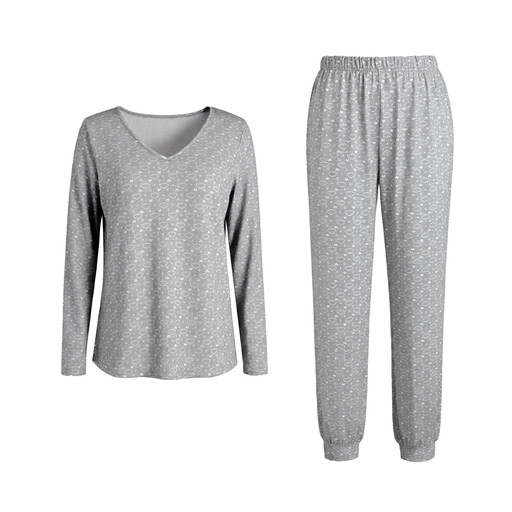
Why it suits this profile: This two-piece set includes a long-sleeved top and full-length bottoms in a relaxed fit. It’s a practical choice for unwinding in the evening or sleeping in a cooler room.
The product description specifies a stretchy knitted fabric and a relaxed fit. Even so, check the size chart against your own measurements before buying.
V-neck, long sleeves, full-length bottoms and elasticated trouser cuffs; machine washable or hand washable according to the product information.
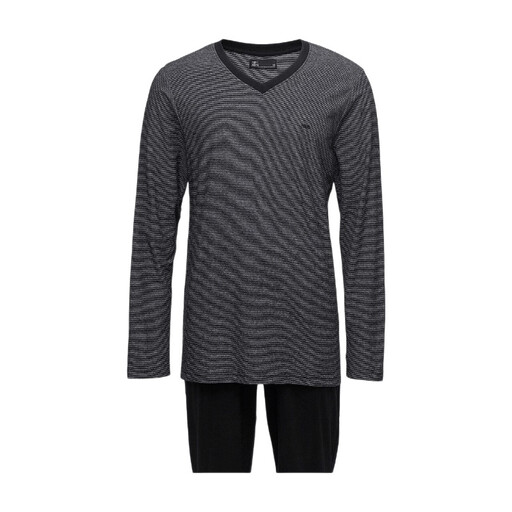
Why it suits this profile: If you’re looking for a simple men’s pyjama set made from a clearly specified material, this understated jersey style is suitable for sleeping and relaxing.
The composition is clearly listed as 100% cotton. This makes the material easier to assess than a vague description such as “Soft Fabric”.
100% cotton, standard EU sizes and care instructions allowing washing at up to 40 °C, according to the product information.
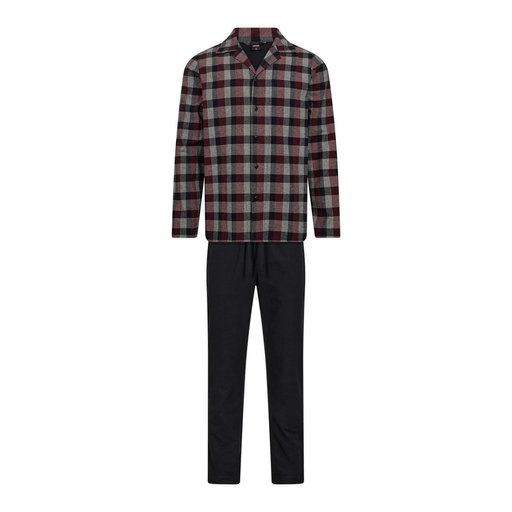
Why it suits this profile: These checked flannel pyjamas are for anyone looking for classic sleepwear for cooler nights and long, relaxed days at home.
The product details specify the material, button fastening and elasticated waistband. This makes key comfort and care details clear before you buy.
100% cotton according to the product information, classic check pattern, shirt collar and elasticated waistband.
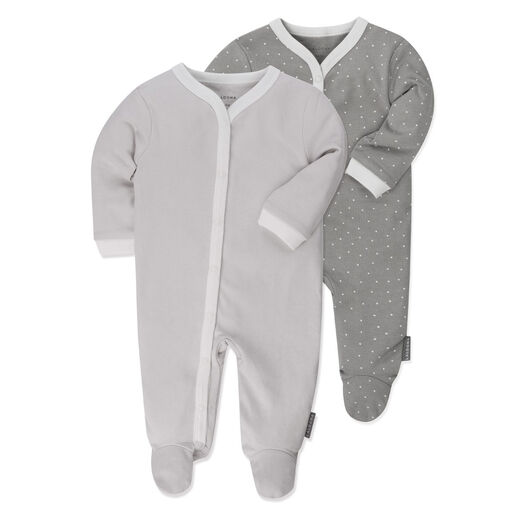
Why it suits this profile: This baby pyjama set is described as a two-piece outfit with feet and a long row of poppers. This can make dressing and changing your baby at night easier.
The product information specifies 100% cotton, machine washing at 40 °C and a long row of poppers. Even so, check the size, fit and fastenings before buying.
Two pyjamas included according to the product description, feet, a long row of poppers and Oeko-Tex Standard 100 certification according to the supplier.
We’ve put together a complete, regularly updated list of products that meet these strict selection criteria and the safety regulations in force in the EU.
Use the body measurements in the relevant size guide rather than relying on S, M or L alone. For a relaxed fit, you can allow for the extra room you’d like. For babies, their length or clothing size is the key measurement. The garment shouldn’t be so large that the feet, sleeves or poppers get in the way.
It depends on the room temperature, how warm you like to be and the time of year. Cotton jersey is versatile, flannel usually feels thicker and warmer, while lightweight knitted or blended fabrics may work well in in-between seasons. Always check the specific material and care instructions.
There’s no reliable way to give a set lifespan. Material quality, construction, washing temperature, drying and how many sets you rotate all make a difference. Gentle care, avoiding unnecessarily high temperatures and alternating between several sets can help reduce wear. Always follow the label and care instructions for the specific product.