
Lieferung heute & morgen

Qualitätsgarantie

Willkommens-Angebote freischalten: KOSTENLOSE Lieferung | Bis zu 80 % RABATT | Kostenlose 30-Tage-JoyPlus-Testphase
App herunterladen
Choosing a new built-in oven can quickly become overwhelming. Manufacturers advertise a multitude of features, but not all of them deliver on their promises. Especially with appliances boasting advanced functions like pyrolysis and convection, there are critical differences that can mean the difference between kitchen satisfaction and frustration. This guide will help you understand the essential features and avoid common purchasing pitfalls.
Before making a decision, it's crucial to critically examine common marketing claims. Three points in particular often lead to regrettable purchases:
To find the right oven, you should carefully examine three technical features. These define the appliance's performance, convenience, and longevity.
Not all convection is created equal. Basic systems often distribute heat unevenly, leading to burnt edges and an undercooked centre. Modern appliances use advanced systems like 3D Hotair. This technology features a ring heating element with a fan to ensure constant and uniform heat distribution on up to three levels simultaneously. The result is consistently perfect baking and roasting, without the need to swap trays mid-cook.
A true pyrolytic self-cleaning function is a complex system. The oven cavity is heated to extremely high temperatures, requiring special insulation and an automatically locking door. Ensure that accessories like baking trays and racks are either pyrolysis-proof or can be easily removed before the cleaning cycle. Safety features such as a child lock and a low external door temperature during operation are essential for these appliances.
For most fitted kitchens, a 60 cm multifunction oven is the standard niche width. These appliances typically offer a cavity volume of around 71 litres, which is ample for preparing family meals or baking on multiple levels. Before purchasing, precisely check your kitchen's niche dimensions (height, width, depth) to ensure a perfect fit. A black built-in oven also integrates seamlessly into modern kitchen designs.
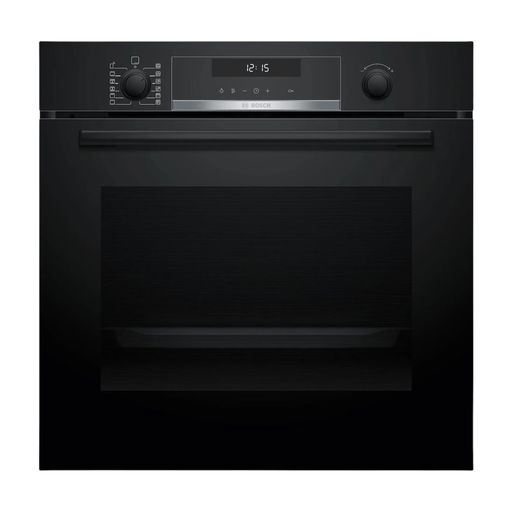
Why This Fits Their Persona: Ideal for tech-savvy users who value convenience and versatility. The Home Connect app allows for preheating on the go, while the Air Fry function and 30 automatic programmes simplify cooking and ensure consistent results.
This model offers true pyrolytic self-cleaning and focuses on useful innovations like the Air Fry function and app control, rather than superfluous gimmicks.
Pros: 3D Hotair for even cooking, Home Connect for smart control, integrated Air Fry function for healthier preparation.
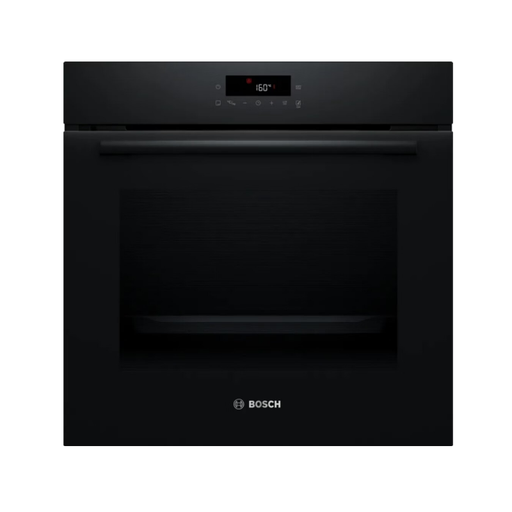
Why This Fits Their Persona: Perfect for buyers who want proven brand quality and key convenience features but can do without smart app connectivity. The focus is on excellent baking results and effortless cleaning.
This appliance concentrates on the two most important features: a powerful pyrolytic function and effective 3D Hotair. It avoids the cost of extra smart functions that not all users need.
Pros: True pyrolytic self-cleaning for minimal effort, 3D Hotair for even results, AutoPilot 10 for easy preparation of common dishes.
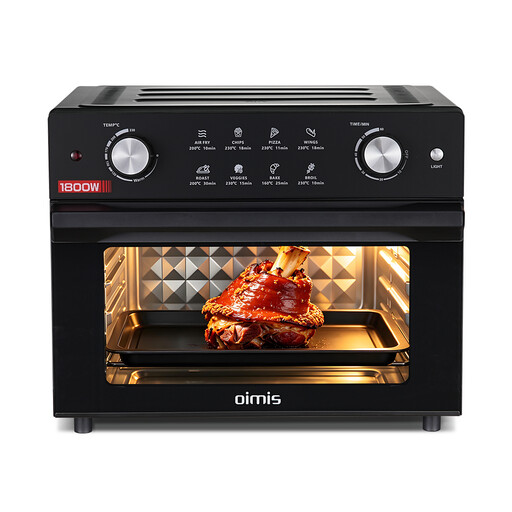
Why This Fits Their Persona: An alternative for households that don't need a built-in oven or are looking for a powerful countertop addition. This appliance combines the functions of an oven with an air fryer and is ideal for rapid heating and preparing pizzas or crispy side dishes.
This appliance prevents the purchase of an expensive built-in oven when a more flexible and faster countertop solution is sufficient. It specifically offers the popular Air Fry function in a compact form factor.
Pros: Very fast preheating (up to 50% faster than a conventional oven), powerful 1800W convection technology, simple operation via two control dials.
We have compiled a complete, up-to-date list of products that fully meet these strict selection criteria and all relevant safety standards.
1. How much electricity does a pyrolytic cleaning cycle use? A pyrolytic cycle typically lasts 1 to 3 hours and consumes between 3.5 and 6 kWh of electricity, depending on the model and duration. Although this is more than a normal cooking cycle, the function is only needed every few months. The cost per clean is therefore manageable, and the gain in convenience is significant.
2. Can I leave pyrolysis-proof baking trays in the oven during cleaning? This depends on the manufacturer and the specific accessories. Some high-end ovens come with pyrolysis-proof racks and trays that can remain in the oven during the cleaning cycle. However, standard accessories made of enamelled steel or with a non-stick coating must always be removed, as the high temperatures would damage the coating. Always consult the manufacturer's instructions.
3. What is the difference between 3D Hotair and standard convection? With standard convection, air is heated by an element at the back of the oven and circulated by a fan. With 3D Hotair (or similar systems like 4D Hotair), an additional ring heating element directly around the fan creates optimised air circulation. This results in significantly more even heat distribution throughout the entire oven, allowing you to bake or cook on multiple levels simultaneously without any variation in results.