
Lieferung heute & morgen

Qualitätsgarantie

Willkommens-Angebote freischalten: KOSTENLOSE Lieferung | Bis zu 80 % RABATT | Kostenlose 30-Tage-JoyPlus-Testphase
App herunterladen
A quality notebook should be reliable for everyday use. Its pages need to suit your writing instrument, its size should match how you plan to carry and use it, and the cover should remain practical over time. But decorative looks don’t always go hand in hand with everyday functionality.
Three common buying mistakes can leave you with a notebook you rarely use:
A5 measures approximately 14.8 × 21 cm and is well suited to lecture notes, office tasks, journalling, longer pieces of writing and diary entries. There’s plenty of space for daily planning, lists and creative notes, while the notebook remains reasonably portable.
A6 is much more compact, measuring approximately 10.5 × 14.8 cm. It fits into smaller bags and is ideal for shopping lists, quick notes, ideas on the go or a small journal. However, there’s less space on each page.
Also check whether the stated page count refers to pages or sheets. Some products contain 96 sheets, which make 192 pages in total. Knowing the difference helps you compare price and capacity accurately.
Paper weight is measured in grams per square metre (g/m²). The products featured here use either 90 or 100 g/m² paper, depending on the model. With many pens, 100 g/m² paper can feel sturdier than very thin standard paper. If you’re using a fountain pen, marker or rollerball, also check the manufacturer’s specific guidance on suitability.
Paper colour ranges from white to ivory or chamois shades. Some people find ivory-coloured paper less stark during longer writing sessions, but it ultimately comes down to personal preference and lighting.
There are several types of ruling to choose from:
A hardcover notebook offers better protection for the pages in a rucksack or work bag, and can provide a firmer surface to write on. A softcover notebook is more flexible and often lighter. So for everyday use, consider more than just the appearance: weight, spine and binding matter too.
Useful features include:
Protect a decorative fabric or PU cover from moisture, direct sunlight and heavy rubbing. Small parts such as ribbons, elastic closures and pen loops should be kept out of the reach of children under three.
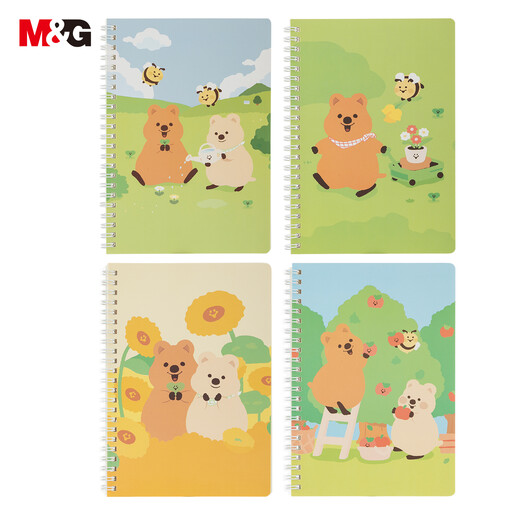
Why this product suits this profile: This set contains four A5 spiral notebooks, each with 60 sheets or 120 pages. Keep notes for different subjects, projects or personal use neatly organised in separate notebooks.
The spiral binding helps the pages lie flat, while the four-pack lets you keep notebooks for different purposes separate.
A5 size, ruled pages, spiral binding and four different Quokka covers.
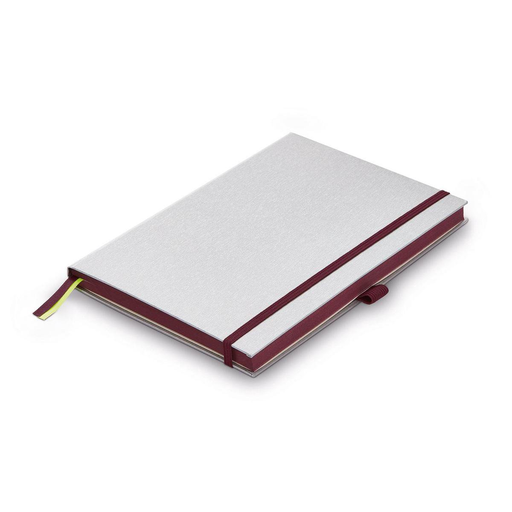
Why this product suits this profile: With its metallic finish, this A6 hardcover is a good choice if you’re looking for a compact notebook for work, study or taking out and about.
The specifications are clearly set out: 192 pages, 90 g/m² paper, an elastic closure, pen loop, two ribbon markers and a rear pocket.
A6 size, hardcover, acid-free paper, LAMY ruling and eight perforated sheets.
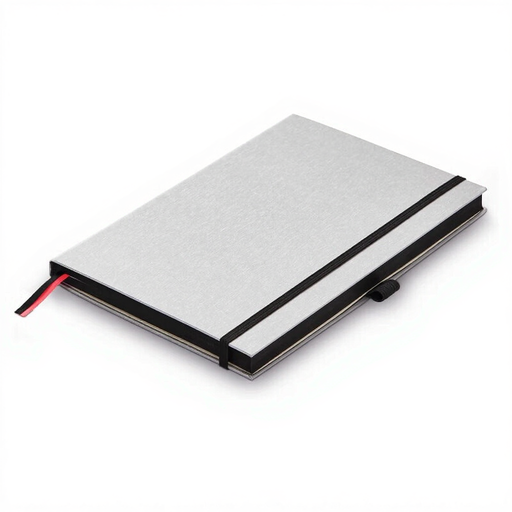
Why this product suits this profile: The plain A5 pages are ideal for sketches, mind maps, creative drafts and free-form journalling, with no pre-printed ruling to work around.
The product description clearly states that the pages are plain. That helps you avoid buying a ruled notebook when you need one for drawing or free-form layouts.
A5 hardcover, plain chamois paper at around 90 g/m² and thread-sewn binding.
We’ve put together a complete, regularly updated list of products that meet these strict selection criteria and fully comply with the safety regulations in force in the EU.
A5 gives you more room for notes, planning and longer pieces of writing. A6 is easier to carry and is ideal for quick notes or a small diary. The right choice depends on your bag, how much you write and what you’ll use it for.
A hardcover notebook offers better protection for its contents and provides a steadier surface to write on. A softcover notebook is more flexible and may take up less space when you’re carrying it around. Both options work well for school and the office, as long as the size and binding suit how you plan to use it.
Its lifespan depends on the binding, cover, paper, how often you use it and how you store it. Thread-sewn binding, a sturdy cover and keeping it away from moisture can all help it stand up to everyday use. Store your notebook somewhere dry, keep it away from excessive heat and water, and avoid forcing the cover backwards.