Family bakers with a large springform tin
If you’re planning a whole quark cheesecake for a celebration, check that the tin, including its rim and the height of the cake, will fit inside the oven.


When baking a quark cheesecake for a family celebration, first check that the springform tin and the height of the cake will fit, then make sure the oven’s heating method matches your recipe. A countertop oven may also be suitable for a single cake if it is large enough. A built-in oven is a better option if you have a suitable housing unit or plan to bake other things too. Dr. Oetker’s recipe uses a 26 cm springform tin and specifies about 160 °C conventional heat or about 140 °C fan-assisted heat. As well as oven capacity, compare shelf positions, connection requirements and energy consumption.
If you’re planning a whole quark cheesecake for a celebration, check that the tin, including its rim and the height of the cake, will fit inside the oven.
If you’ll be preparing other dishes or baked goods as well as the cheesecake, compare the heating methods and the shelf positions you can actually use in each oven.
If you need a freestanding appliance, make sure your tin will fit, you have enough worktop space and the model’s connection requirements suit your kitchen.
First check that the tin and cake height will fit. Then match the heating methods to your recipe and make sure the type of oven will suit your kitchen.
A good fit if: you have a suitable built-in space and plan to bake other things as well as the cake.
Keep in mind: the dimensions of the housing unit, connection requirements and whether telescopic runners can be fitted afterwards. Multiple shelf levels don’t guarantee even results when baking several tall cheesecakes.
A good fit if: you don’t have a suitable built-in space and usually bake one cake at a time. Rommelsbacher says the BG 1805/E fits tins up to 31.5 cm in diameter.
Keep in mind: the height of your tin, the space available and the clearances specified in the instructions. The manufacturer’s stated maximum tin diameter is not a comparative baking test.
The proportions below refer to consumers for whom each of these concerns is the main priority when choosing an oven for a quark cheesecake for a family celebration.
| Priority | What to check when buying | Who it matters most to |
|---|---|---|
| Tin and cake height | The springform tin, including its rim, the usable internal dimensions and the clearance above the tin. Dr. Oetker’s recipe is for a springform tin with a diameter of 26 cm. | If you want to bake a whole cake in your springform tin for the celebration, fit—including height—is your main concern. Consumers who prioritise whether their tin will fit account for approximately 36%. |
| Heating method and recipe | The heating method specified in the recipe and its temperature must be available on the oven. Dr. Oetker specifies about 160 °C conventional heat or about 140 °C fan-assisted heat for the recipe in question. | If you want to follow the recipe using its recommended heating method, check that the oven has the right settings. Around 29% of consumers prioritise the recipe’s heating method. |
| Oven type and connection | Check the appliance and housing dimensions, or the space available on your worktop, as well as the connection requirements. Under § 13 NAV, work on a fixed electrical installation must be carried out by the network operator or a registered electrical installation company. | If you’re looking for an oven to fit the space available in your kitchen, its type and connection requirements need to suit your circumstances. Consumers who prioritise finding an oven to suit their kitchen account for approximately 21%. |
| Running costs and care | For ovens with an energy label, compare consumption per standard cycle using the same heating method; the German Environment Agency provides figures for conventional heat and fan-assisted heat. Also check the cleaning method and any accessories that can be fitted afterwards. | If you’re weighing up energy use, cleaning and potential accessory costs over the longer term, running costs are your main concern. Around 14% of consumers prioritise this. |
The capacity in litres alone won’t tell you whether your springform tin, including its rim and the height of the cake, will fit on a suitable shelf.
Measure your tin and check the usable internal dimensions of the specific model. Only rely on a stated maximum tin diameter for the model it refers to.
A heating method listed for use on multiple levels doesn’t prove that several tall cakes will fit or bake evenly at the same time.
Check the shelf positions, tin height and recipe. If you’re not sure the oven is suitable, plan to bake in separate batches.
You may need to bake in extra batches or buy suitable accessories.
Beko describes SteamShine on the BBIM12300X as a cleaning programme; you wipe away the residue afterwards.
If you want a particular cooking function, look for it in the list of heating methods, not in the cleaning section.
For the Siemens, NEFF and AEG models mentioned here, the runners are described as available to fit afterwards.
Check what’s included and whether the accessories are compatible with the full model number.
Compatible runners may need to be bought separately.
Countertop ovens offer a freestanding alternative to a built-in model. The BG 1805/E is one example for baking a single cake in a suitable tin.
Built-in ovens with a range of features. The BBIM12300X is one example, with a capacity of 72 l.
Built-in appliances with extra technology. The HR776G1B1 is worth comparing if you’d also use these features for other dishes.
Built-in ovens with different door and heating designs. The B6ACJ7AG3 is one example of a possible combination of features.
Built-in ovens with fan-assisted cooking and cleaning features. The BPE53516AB is one example for buyers considering pyrolytic cleaning.
This selection includes built-in and freestanding ovens for different kitchen spaces and baking needs. For each model, check the specific internal dimensions to make sure your springform tin and cake will fit.
 No image available
Worth considering if you have a suitable built-in space and want to use the listed heating methods for a range of baking. Check that your springform tin will fit by comparing its dimensions with the oven’s internal measurements.
Capacity of 71 l, 10 heating methods and a temperature range of 30–275 °C. The description lists conventional heat and fan-assisted heat.
 No image available
This freestanding model is worth considering if you don’t have a built-in space. Before buying, check whether your tin and cake height will fit inside.
Capacity of 32 l, 1600 W, temperature range of 100–250 °C and a timer. The description lists a baking tray and wire rack as accessories.
 No image available
A freestanding option if you’re looking for a compact oven. Measure your springform tin and take the cake height into account before you decide.
Capacity of 28 l, three heating modes with top heat, bottom heat and a combined setting, temperature control from 100–230 °C and a 60-minute timer.
 No image available
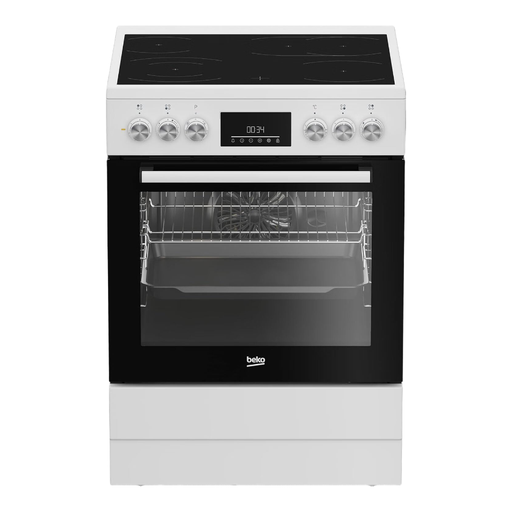
Worth considering if you need a hob as well as an oven. Check the available space and connection requirements, as well as whether your tin will fit.
Capacity of 72 l, eight heating functions and a ceramic hob. The description lists fan-assisted heat as a heating function.
No. The Dr. Oetker recipe referenced here gives instructions for both conventional heat and fan-assisted heat, with a separate temperature for each. Follow the settings specified in your recipe.
To follow the Dr. Oetker recipe referenced here, allow time for resting and cooling as well as baking. The base is baked first; the filled cake is then baked for about 70 minutes and left in the switched-off oven for 15 minutes with the door slightly open. This is the method for that particular recipe, not a general rule for every cheesecake.
It depends on the connection. Under § 13 of the Low Voltage Connection Ordinance, work on a fixed electrical installation may only be carried out by the network operator or a registered electrical installation company. Check the instructions for the specific model; this doesn’t mean that you’re generally prohibited from plugging in an appliance with a suitable mains plug and using it as intended.
For ovens with the relevant energy label, it gives details including the oven’s capacity and energy use per standard cycle for conventional heat and fan-assisted heat. The German Environment Agency recommends using these figures to compare ovens with the same heating method. They aren’t a personalised estimate of the cost of baking your cheesecake recipe.