Map-makers with limited desk space
You usually create quest maps at a small, permanent workstation and want to leave enough room for your screen and input devices.


If you mainly create quest maps in a browser, check the available desk space, connections and requirements of the specific software you use before assuming you need a powerful graphics card just because a PC is labelled ‘gaming’. A compact PC with a dedicated graphics card may suit more demanding games or graphics-intensive software. A gaming laptop is more practical if you work in different places, but it still takes up space when open on a small desk.
You usually create quest maps at a small, permanent workstation and want to leave enough room for your screen and input devices.
You use the same computer for map projects and more demanding games. So, alongside its dimensions, you’ll need to consider its exact graphics hardware and the requirements of your games.
You work on maps in different places, so you’ll need to consider how a laptop will fit on your desk at home and what features you need when you’re out and about.
A good fit if: You mainly use an online map-making tool and plan to use a separate screen.
Consider: You’ll need to make room on your desk for a screen and input devices as well as the PC. Gaming performance depends on the specific graphics hardware.
A good fit if: As well as making maps, you want to play more demanding PC games or use graphics-intensive software, and you have a permanent place for your computer.
Consider: Check the space required and the ventilation clearance for the specific configuration. heise notes that noise under load and limited upgrade options can be drawbacks of compact gaming PCs.
A good fit if: You want to work on maps away from your usual workspace and need a screen and keyboard built into your computer.
Consider: Check that the laptop fits on your small desk when open, with room for a mouse or drawing tablet. Dimensions and connections vary by model.
| Priority | What to check before buying | Who should pay particular attention? |
|---|---|---|
| Desk space and workspace | Check the dimensions of the specific model, and allow room for cables and clear ventilation. | If your computer needs to sit alongside a screen and input devices, every spare centimetre counts; around 31% of consumers put desk space first. |
| Suitability for map-making | Check the software you use, the size of your projects and its requirements, as well as the screen connections you need. | If your main concern is making sure your map-making workflow will run smoothly, compare the software requirements with the PC’s specifications; around 25% of consumers prioritise map-making software. |
| Gaming and graphics performance | Compare the full GPU name with the requirements of the games you plan to play. | If you also want to play more demanding PC games, the specific graphics hardware is key; around 19% of consumers put gaming performance first. |
| Working in different places | Consider how much portability you need, as well as space for your laptop, mouse and, if necessary, an external screen. | If you want to work on maps away from your usual workspace, a laptop may suit your everyday routine better; around 13% of consumers prioritise portability. |
| What’s included and the total cost | Check whether RAM, an SSD and an operating system are included with the exact version, and what else you’ll need. | If you want to know which components you’ll still need after buying, compare everything included in the box; around 12% of consumers put the total cost first. |
A small case alone tells you nothing about how noisy a PC will be under load or how easy it will be to access its components later. heise notes that noise under load and limited upgrade options can be drawbacks of compact gaming PCs.
Look for stress tests of the specific configuration and check which components you can access before you buy.
MINISFORUM offers the AtomMan G7 Ti as both a barebone and a version with 32 GB RAM and a 1 TB SSD. What’s included therefore depends on the version you choose.
Compare the full model version and what’s included before weighing up different offers.
Depending on the barebone version, you may need to buy and install RAM or storage separately.
ASUS specifications list different graphics hardware and memory configurations within the ROG NUC range. Details for one version don’t automatically apply to another.
Check the full model number, GPU, RAM and SSD, and don’t assume that test results for one model apply to another.
The AtomMan G7 Ti is a range of compact PCs with dedicated laptop graphics. MINISFORUM specifies an Intel Core i9-14900HX and an RTX 4070 Laptop GPU for the G7 Ti.
The ROG NUC range includes compact gaming PCs with different model numbers.
The MPG Trident AS is a compact gaming desktop, not an especially small mini PC.
The ZBOX MAGNUS ONE ULTRA is a compact desktop alternative with a desktop graphics card.
The Legion Slim range includes gaming laptops for making maps in different places.
These mini PCs are an option if you want to use one compact computer for map-making and other PC tasks. Check the requirements of your map-making software and games before comparing specifications.
 No image available
A compact desktop option. The product details also describe it as suitable for home working and gaming, but don’t include independent performance tests.
AMD Ryzen 7 7735HS, Radeon 680M, 16 GB RAM and 512 GB SSD.
The product details list dual M.2 slots and triple-display output.
 No image available
The listed dimensions make it easier to check whether the PC will fit in a small space. Remember to allow for cables and ventilation on your desk.
128 × 128 × 47,6 mm, Radeon 660M, 16 GB LPDDR5 RAM and 512 GB NVMe SSD.
The product details list HDMI 2.0, DP 1.4 and USB-C.
 No image available
Check the listed dimensions and display connections against your desk and the screen you already have.
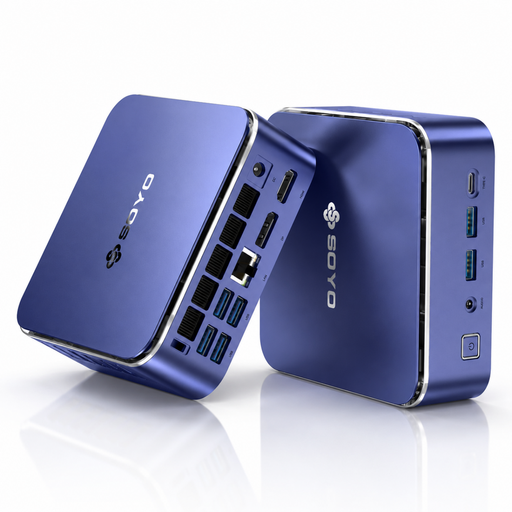
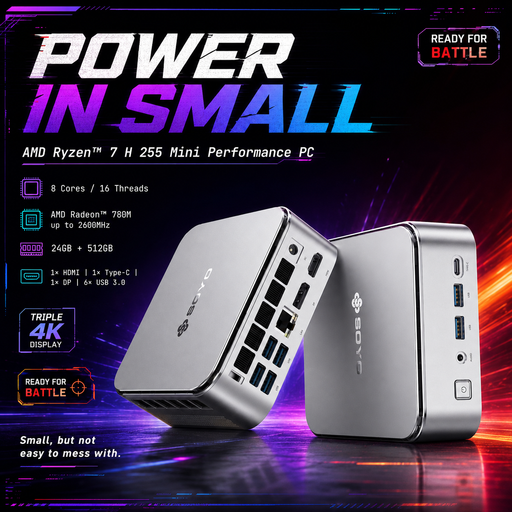
128 × 128 × 47,6 mm, Radeon 780M, 24 GB LPDDR5 RAM and 512 GB SSD.
The product details list HDMI, DisplayPort, Type-C and six USB 3.2 ports.
 No image available
Consider this for map-making and other PC tasks. Its gaming credentials come from the product details and aren’t based on independent performance tests.
Radeon 760M, 24 GB LPDDR5 RAM and 512 GB PCIe 4.0 SSD.
The product details list USB 4.0, HDMI 2.1 and triple-screen output.
 No image available
If your setup includes several screens, check the listed connections and make sure they’re compatible with your devices.
Radeon 880M, 24 GB DDR5 RAM and 1 TB PCIe 4.0 SSD.
The product details list USB4, HDMI 2.1, Oculink and support for up to four 4K displays.
Inkarnate’s FAQ doesn’t specify a general minimum requirement for a dedicated GPU: Inkarnate describes itself as an online map-making tool. Check the additional requirements for the software and games you actually plan to use.
Allow space for cables and clear ventilation around the device. Also check the screen and USB connections on the exact model version to make sure they’re compatible with your monitor and input devices.
Before you buy, check how easy it is to access the RAM and SSD on the specific version. MSI describes access to components on the MPG Trident AS, while heise notes that limited upgrade options can be a drawback of compact gaming PCs.
For qualifying online purchases from a trader, Your Europe explains that you generally have 14 days from delivery to change your mind; exceptions may apply, and you may have to pay return costs in certain circumstances. In the EU, faulty goods are generally covered by a legal guarantee of at least two years. These rights relating to faults are separate from a manufacturer’s voluntary guarantee.
The European Union describes the CE marking as the manufacturer’s declaration that the product met the applicable EU requirements when it was placed on the market. It isn’t an independent mark of performance. The Bundesnetzagentur lists labelling, manufacturer details and the required instructions among the points checked during market surveillance.