
Lieferung heute & morgen

Qualitätsgarantie

Willkommens-Angebote freischalten: KOSTENLOSE Lieferung | Bis zu 80 % RABATT | Kostenlose 30-Tage-JoyPlus-Testphase
App herunterladen
Rising temperatures can significantly impact concentration at work or relaxation at home. Heat can build up quickly, especially at a desk or in small rooms. A desk fan offers a targeted and efficient solution to provide pleasant air circulation.
This article serves as your guide. We will introduce various models and their specific features to help you choose the right device for your needs—whether it's for the office, your home office, or as a portable fan for on the go.
The selection of models is vast, but a few key features are crucial for satisfaction in daily use.
A loud operating noise can disrupt concentration or interfere with sleep. For use at your workstation or in the bedroom, a quiet fan is therefore an essential requirement. Pay attention to the manufacturer's decibel (dB) rating. Values below 50 dB are generally considered non-disruptive. A quiet office fan ensures a productive work environment even on hot days.
The type of power source determines how and where you can use the fan.
Besides the classic design with rotor blades, there are also modern alternatives. A bladeless fan generates a smooth, consistent airflow without visible, spinning parts. This enhances safety, especially in households with children or pets, and makes cleaning easier. Other useful features include oscillation (automatic swivel motion) for wider air distribution and an adjustable tilt angle for precise airflow direction.
Here is a selection of models that stand out for their different features and applications.
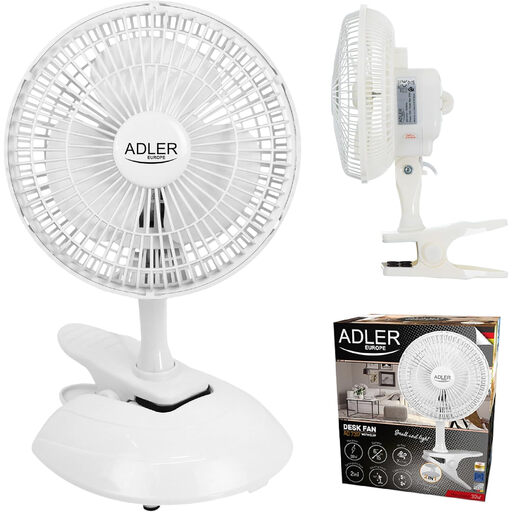
What Makes It Stand Out The ADLER AD 7317 is a versatile compact fan equipped with both a sturdy base and a practical clip. This dual mounting option allows for flexible placement on desk edges, shelves, or any flat surface. With a 15 cm rotor diameter and a 30-watt motor, it provides a focused stream of air.
Advantages
Who Is It For? This mini fan is ideal for users looking for a straightforward, space-saving cooling solution. The clip function makes it especially practical for cluttered desks or workspaces with limited surface area.
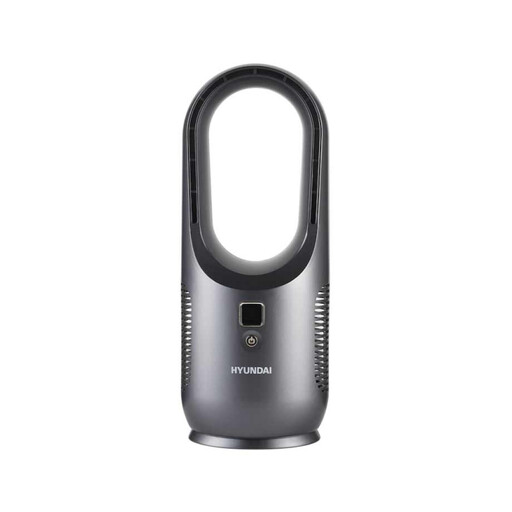
What Makes It Stand Out This bladeless fan from Hyundai Electronics combines modern design with functional technology. The absence of rotor blades not only provides an elegant look but also ensures enhanced safety and easy cleaning. Thanks to its integrated battery, this desk fan is cordless and can be used flexibly.
Advantages
Who Is It For? Perfect for design-conscious users and households with children or pets. As a battery-powered fan, it is an excellent choice for anyone seeking a stylish yet mobile cooling solution for their desk or other living areas.
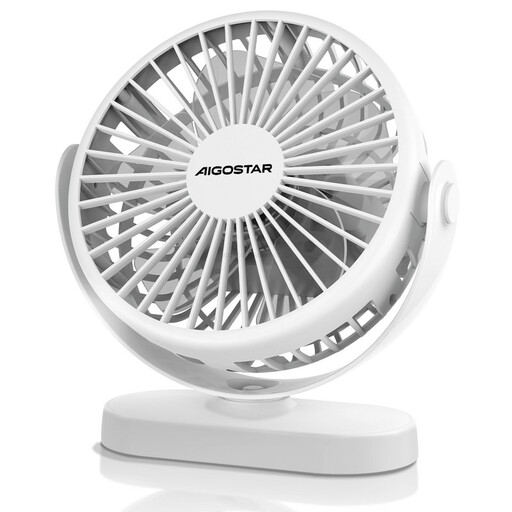
What Makes It Stand Out The Aigostar desk fan is a compact powerhouse. It combines the benefits of a USB fan with those of a battery-powered model and also offers an automatic oscillation feature for wide air distribution. The integrated night light also makes it a practical companion in the bedroom.
Advantages
Who Is It For? This fan is the right choice for users who want maximum functionality in a small footprint. The combination of battery power, oscillation, and a night light makes it a versatile device for the home office, bedroom, or as a portable fan for travel.
If these recommendations don't include the right model for your needs, you can find a wider range of fans and air conditioners for various applications.
Discover more models in our Household Desk category.
The perception of noise is subjective, but as a technical benchmark, models with an operating noise level below 50 decibels (dB) are often considered quiet and suitable for work or sleep environments. This is roughly equivalent to the volume of a quiet conversation. Always check the manufacturer's specifications for the specific product.
A bladeless fan has two main advantages. First is safety, as there are no accessible, fast-spinning blades, making it safer in households with children or pets. Second is easy cleaning, as the smooth surfaces can be easily wiped down without navigating grilles or tight corners.
The runtime depends on the battery capacity, measured in milliampere-hours (mAh), and the selected speed setting. A typical battery-powered fan can run for 3 to 8 hours, depending on the model and setting. Higher speed settings consume more power and reduce the runtime. Precise details can be found in the respective manufacturer's product description.