
Lieferung heute & morgen

Qualitätsgarantie

Willkommens-Angebote freischalten: KOSTENLOSE Lieferung | Bis zu 80 % RABATT | Kostenlose 30-Tage-JoyPlus-Testphase
App herunterladen
Rising summer temperatures can significantly impact concentration in your home office or a good night's sleep in the bedroom. A loud fan often isn't the solution—it's just another form of disruption. The search for a model that cools effectively while operating quietly can prove to be a challenge.
As your Joybuy Product Recommendation Officer, I've made it my mission to analyze the market and offer you clear guidance. This guide introduces a selection of top devices and explains which features to look for when choosing a quiet desk fan, helping you make an informed decision.
Before we dive into specific models, it's helpful to understand the most important technical features. These criteria will help you objectively evaluate a device's performance and comfort.
Noise level is the deciding factor for a quiet fan in the bedroom or office. Manufacturers often state the noise output in decibels (dB). For reference:
Pay attention to models where the dB value is specified for the lowest operating speed, as you will use this setting most frequently.
Modern desk fans offer more than just a simple stream of air. Features like oscillation, a timer, and a remote control significantly enhance user comfort.
While a classic fan blows air directly onto you, an air circulator is designed to move the entire volume of air within a room. It creates a focused air beam that uses walls and ceilings to establish continuous air circulation. This results in more uniform temperature distribution throughout the space and can improve energy efficiency when used with an air conditioner or heater.
Here is a selection of models that meet various requirements for noise level, functionality, and design.
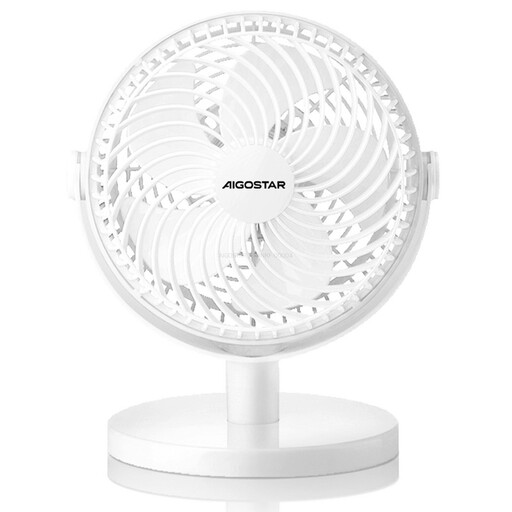
Why it stands out: This model focuses on the essentials: a quiet, directional airflow for your personal space. Its USB connection makes it flexible to use with a laptop, power bank, or USB power adapter.
Advantages:
Who is it for? Ideal for users looking for a straightforward and energy-efficient cooling solution directly at their workstation, who don't need extra features like oscillation or battery operation.
To the product: Aigostar USB Desk Fan
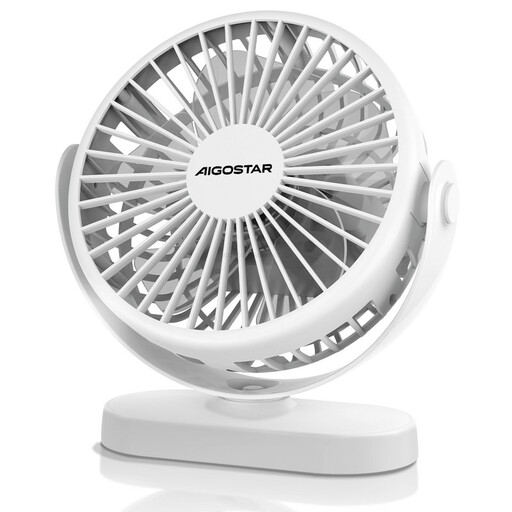
Why it stands out: This model combines cordless freedom with practical features. The integrated battery, oscillation, and night light make it a versatile companion for various locations.
Advantages:
Who is it for? Perfect for users who need a flexible desk fan that they can move without a cord from the office to the balcony or into the bedroom.
To the product: Aigostar Rechargeable USB Desk Fan
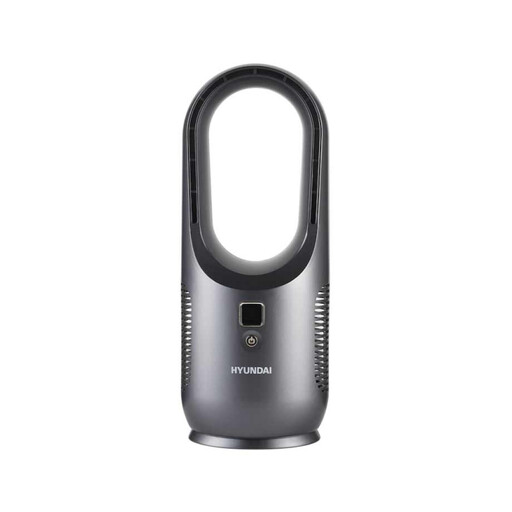
Why it stands out: The bladeless design is not just a visual statement; it also offers enhanced safety, as there are no fast-spinning blades. The combination of battery operation and a modern look makes it a real eye-catcher.
Advantages:
Who is it for? For design-oriented users who value modern aesthetics and cordless functionality. Particularly suitable for households with children or pets.
To the product: Hyundai Electronics Bladeless Fan
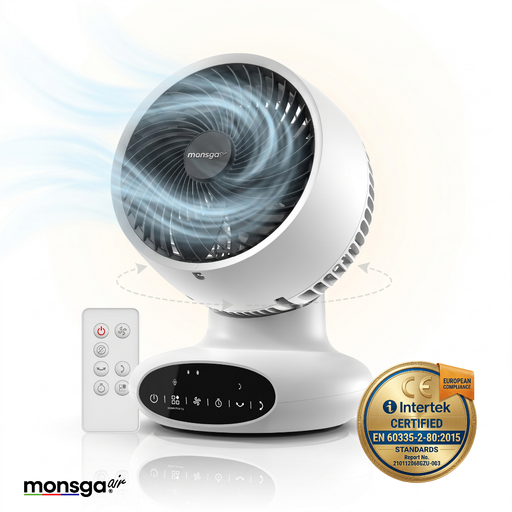
Why it stands out: This device is more than just a fan—it's an air circulator. With an extremely low noise level of just 25 dB in sleep mode and a powerful airflow range, it's designed to cool entire rooms.
Advantages:
Who is it for? For users with the highest standards for quiet operation and effective room cooling. The combination of whisper-quiet performance and powerful circulation makes it the top choice for bedrooms, large offices, or living rooms.
To the product: Monsga AC100 Air Circulator Fan
The models featured here already cover a broad spectrum of needs. However, if you'd like to compare other alternatives with different designs, sizes, or specific features, you can find an even larger selection in our main category.
Discover all desk fans on Joybuy.de here
A fan is generally considered quiet if its operating noise is below 35 dB on the lowest setting. Models with levels below 30 dB are particularly suitable for noise-sensitive environments like a bedroom or a quiet office, as this noise level is comparable to a soft whisper.
A conventional fan produces a broad, diffuse stream of air that provides direct cooling on the skin. An air circulator, on the other hand, generates a focused, spiral-shaped air beam that sets the entire volume of air in the room into motion. This leads to better mixing of warm and cool air and a more balanced indoor climate.