Who are the different recording setups best suited to?

Recording people who speak quietly

If you want dialect words and pronunciation to be easy to hear later, check the microphone distance and the room before the interview. The RØDE Help Centre recommends positioning the microphone close to the sound source and away from noise sources.

Interviewers recording two important voices

If you want both questions and answers to be included in the recording, plan microphone positions or recording setups for both people. The Library of Congress recommends testing your recording equipment before an interview.

Recording dialects on the move

If the speaker moves or you change recording locations, consider how the microphone will be attached and where the files will be saved. The Library of Congress also recommends checking the power supply and available storage before recording.

What should you consider when choosing?

Handheld XLR microphone

A good fit if: you can hold the microphone close to each person as they take turns speaking, and have a suitable XLR recording setup. Sennheiser describes the MD 46 as a dynamic handheld microphone with a cardioid pattern and an XLR connection.

Bear in mind: you’ll need to reposition the microphone when the speaker changes; the microphone and cable alone won’t record anything.

Two body-worn lavalier microphones

A good fit if: you want to hear both the storyteller and the interviewer, or the people being interviewed will be moving around. RØDE lists two Lavalier II microphones and internal transmitter recordings for the Wireless PRO.

Bear in mind: attaching the microphones, connecting the receiver and exporting the files later are all part of the process. According to RØDE, the Wireless PRO’s 32-bit float recording applies to internal transmitter files, not automatically to the camera audio.

Standalone portable recorder

A good fit if: you want to record without a separate phone or external microphone, and can position the recorder suitably close to the speaker. According to their manufacturers, the Zoom H1essential and Tascam DR-05XP have built-in microphones.

Bear in mind: placing the recorder further away is no substitute for positioning a microphone nearby. Check the power supply and storage in advance, and test a recording with both voices.

Microphone for your smartphone

A good fit if: you can record with a compatible USB-C device and control the microphone position during the conversation. For the MV88 USB-C, Shure lists polar patterns including mono cardioid and mono bi-directional.

Bear in mind: check compatibility with your specific device and recording app. The microphone’s position on your phone needs to suit the people speaking.

What matters What to check before buying Who is this important to?
Clarity of quiet voices Listen to a test recording of the actual quiet voice in the intended location; check the distance and direction of the microphone. If I want to understand dialect words clearly later, I’d listen to a test recording made at the interview location. Around 36% of consumers put clarity for a quiet storyteller’s voice first.
Questions and answers Decide in advance whether questions should be recorded; listen to both voices in the saved file. If I want questions and answers to be part of the archive, I’ll plan a clear microphone position for both people. Around 29% of consumers prioritise capturing both voices equally.
Movement and changing locations Test how the microphone is attached while moving as you will during the interview; check the batteries, receiver connection and saved files. If the speaker moves around, I want the microphone to move with them. Around 21% of consumers prioritise portability and changing recording locations.
Complete recording setup Check for a suitable connection or standalone recording; make sure the power supply and storage are sorted, and check a test file. If I want to record on location without separate devices, I’ll check whether my chosen device covers the whole recording process. Around 14% of consumers prioritise a simple, standalone setup.

Common misconceptions

  • 32-bit float automatically separates voices clearly from room noise

    The recording format can’t make up for poor microphone positioning. According to the manual, 32-bit float on the RØDE Wireless PRO applies to internal transmitter files, not automatically to the camera audio.

    Make a test recording of the actual quiet voice in the planned location, then listen to the exact file you intend to use later.

  • An XLR handheld microphone is a complete recording setup in itself

    The Sennheiser MD 46 has a 3-pin XLR connection. You’ll also need a compatible recording device or interface to save a recording.

    Before buying, check that the input and the entire recording chain through to the saved file will work with your setup.

  • It’s enough to test just the storyteller

    A clear recording of the storyteller doesn’t guarantee that the questions will also be easy to understand.

    Decide in advance whether questions should be part of the archive, and listen to both voices in a test recording.

Relevant brands and product ranges

RØDE

The Wireless PRO offers a complete recording setup with two Lavalier II microphones and internal transmitter recordings.

  • RØDE describes two body-worn microphone positions and internal transmitter recordings.
  • The 32-bit float specification applies to transmitter files, not automatically to connected camera audio. Attaching the microphones and transferring the files are also part of the process.

Sennheiser

The MD 46 is a wired dynamic handheld microphone designed for conducted interviews.

  • Sennheiser lists a cardioid pattern, a long handle and features designed to reduce wind and handling noise.
  • The 3-pin XLR connection requires a suitable recording setup; these specifications apply to this model.

Zoom

The H1essential is a portable recorder with built-in X/Y microphones; according to Zoom, the H4essential adds two XLR/TRS inputs.

  • Zoom lists standalone 32-bit float recording for the H1essential.
  • The format specification doesn’t prove that a recorder placed far away will clearly capture quiet speech; positioning still matters.

Tascam

The DR-05XP is a portable recorder with built-in stereo microphones and an input for external microphone or line signals.

  • Tascam lists 32-bit float, 24-bit and 16-bit recording formats.
  • For quiet voices, the built-in microphones need to be positioned suitably close to the speaker.

Shure

The MV88 USB-C is a smartphone option with several selectable polar patterns.

  • Shure lists mono cardioid and mono bi-directional patterns, among others, as well as a speech preset.
  • Check compatibility with your specific USB-C device and the app you use; automatic level control is no substitute for suitable microphone positioning.

Joybuy interview products

This selection includes lavalier sets for recording two voices, as well as a portable recorder for interviews.
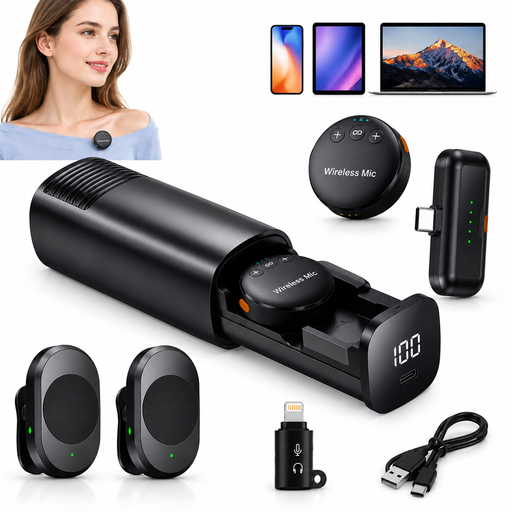
Wireless lavalier microphone set with 2 transmitters

Wireless lavalier microphone set with 2 transmitters

For interviews where both people need to wear a microphone close to their mouth.

2.4 GHz; DSP noise reduction; latency under 20 ms; range up to 40 m; 500 mAh charging case; USB-C and Lightning.

View at Joybuy
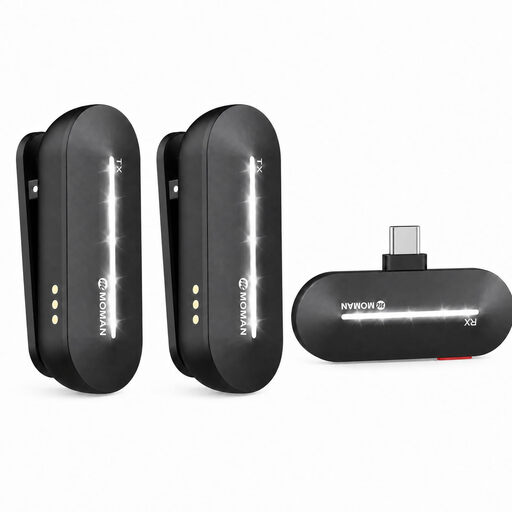
Moman M1CXT wireless lavalier microphone with USB-C, 2TX+1RX

Moman M1CXT wireless lavalier microphone, USB-C, 2TX+1RX

For two-person interviews when the recording device has a compatible USB-C connection.

2TX+1RX; range up to 150 m according to the product specifications.

View at Joybuy
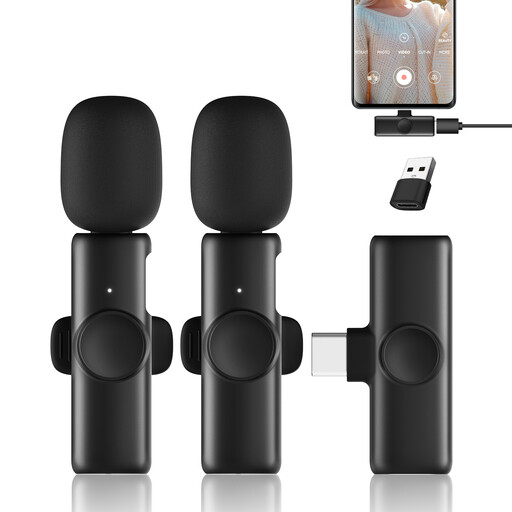
Moman MS1X(C) wireless lavalier microphone, 2TX and 1RX, USB-C

Moman MS1X(C) wireless lavalier microphone, 2TX&1RX

For recording two voices with body-worn microphones and a compatible USB-C Android smartphone.

2TX&1RX; designed for USB-C Android smartphones according to the title.

View at Joybuy
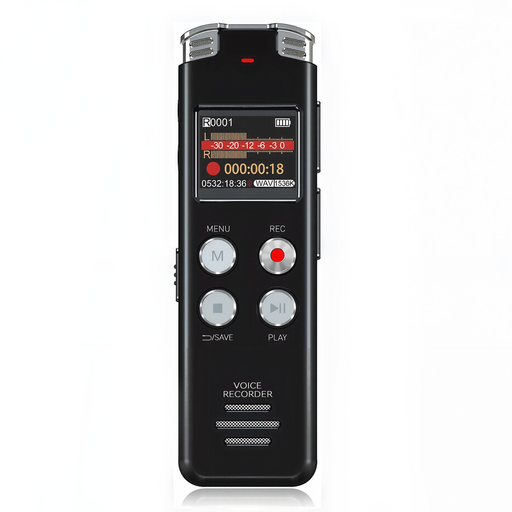
Rexsun L357 portable digital voice recorder with 128 GB

Rexsun L357 portable digital voice recorder, 128 GB

For interviews if you’re looking for a standalone portable recorder rather than a lavalier set.

128 GB storage; model L357.

View at Joybuy
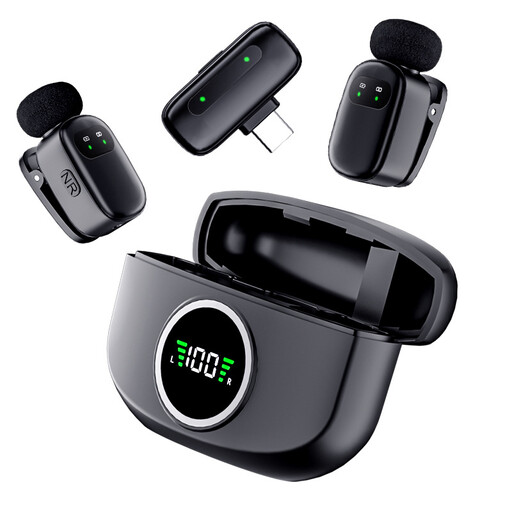
The Verbex K21 wireless dual microphone with Type-C

The Verbex K21 wireless dual microphone, Type-C

For two-person interviews, provided your recording device is compatible with the Type-C connection.

Two microphones; Type-C interface.

View at Joybuy

Frequently asked questions

Is 32-bit float enough to record a quiet dialect speaker clearly from further away?

No. The recording format can’t make up for poor microphone positioning. Check how audible the voice is by listening to a file recorded at the actual interview location. According to the manual, 32-bit float on the RØDE Wireless PRO applies to internal transmitter files, not automatically to the camera audio.

What should I check just before a longer interview?

Test the recording, power supply and available storage, and check both voices if you’re using two microphones. The Library of Congress also recommends testing your equipment before the interview.

Can I simply record and publish a private dialect interview in Germany?

Section 201 of the German Criminal Code (StGB) covers the unauthorised recording of another person’s non-public speech. It also covers the use and distribution of an unauthorised recording. Check that you have permission before recording, and separately confirm permission for any planned publication. The German Data Protection Conference explains the requirements for consent to be freely given, specific and informed. Guidance in its paper on telephone conversations cannot be applied wholesale to every face-to-face interview.

What statutory rights apply if a microphone I’ve bought is faulty?

When you buy from a business seller, there is generally a statutory minimum guarantee of two years from the date you receive the goods. Your Europe explains this EU-wide minimum period. It covers statutory rights relating to faults and is separate from any additional voluntary manufacturer’s guarantee.