Anyone recording a quiet voice on its own
You want to record the story of a former miner clearly and can check the distance from the microphone and the room in advance.


When recording a quiet voice, the first thing to consider is whether you can position a microphone close by and keep it steady. A basic voice recorder suits straightforward conversations, a handheld recorder offers more flexible recording options, and a lapel mic is useful if the person telling their story will be moving around. Check the controls, storage and power supply against the length of your planned conversation; 32-bit float will not compensate for a microphone placed too far away or a room with echo. For private conversations, you should also check in advance whether recording is permitted.
You want to record the story of a former miner clearly and can check the distance from the microphone and the room in advance.
You visit people in different places and need a straightforward recording process that you can check on location.
You want to be able to find, store and perhaps share longer conversations later. That makes the recording format and file management part of your buying decision.
A good fit if: You’ll mostly be talking while seated and can place the device close to the person speaking quietly.
Consider: Manufacturers’ claims about voice features are no substitute for listening to a sample of the actual voice in the room where you plan to record.
A good fit if: You want to record not only the story, but also the questions or the atmosphere of the place where you’re talking.
Consider: If you choose a model that records to microSD, factor in a memory card and power supply; positioning is still crucial when recording a quiet voice.
A good fit if: The person telling their story will be moving around, or you can’t place a tabletop device close enough, and they’re happy to wear a microphone on their clothing.
Consider: The mic mainly picks up that one person. Try out the way it attaches and check for clothing rustle before the interview.
| Priority | What to check when buying | Who is it important to? |
|---|---|---|
| Recording quiet voices clearly | A steady microphone position close to the person telling their story; a short test recording in the room you plan to use. | If you want to capture a quiet voice as clearly as possible, the microphone position and the room matter. Around 42% of consumers are primarily concerned with making quiet voices clear. |
| Simple recording on the go | Test the record button, display, playback and power supply before your appointment. | When visiting different locations, you want to be able to set up the device, start recording and listen back with confidence. Around 25% of consumers prioritise straightforward operation on the go. |
| Keeping conversations as files | Check the format, storage and file transfer options for the length of conversation you have planned; check the copy before deleting the original. | If you want to find and keep longer recordings of memories for the future, the recording format and file management should suit the way you work. Around 17% of consumers focus on long-term file storage. |
| Recording the conversation and its atmosphere | Decide in advance whether the voice or background sounds matter more; listen to a test recording with everyone involved. | If you want to capture questions or the sound of a place that holds memories, you’ll need to balance this against the clarity of the main, quieter voice. Around 16% of consumers prioritise capturing both the conversation and its atmosphere. |
A short test using the actual voice and the planned recording position will help you find the right microphone placement before the interview. RØDE’s microphone technique guidance notes that greater distance can make a voice sound more remote and echoey, while bringing background noise further to the fore.
For specific models, Sony lists 4 GB of internal storage and PCM and MP3 recording for the ICD-UX570; Philips lists 8 GB and PCM/MP3 for the DVT4115. The respective manuals for the Zoom H1essential and Tascam DR-05XP specify microSD cards. Compare the recording time and storage available for the format you actually plan to use.
Even with this recording format, a quiet voice recorded from too far away can sound distant and echoey, or be drowned out by background noise.
First, find the right microphone position and listen to a test recording in the room you plan to use. Only then compare recording formats and models.
The Zoom and Tascam manuals specify microSD cards. An independent review also criticised the Zoom H1essential for not including accessories.
Check what’s included with the specific offer, and test the memory card and power supply before your conversation.
Depending on how you plan to record, you may need a suitable memory card, power supply or mount.
On 7 July 2025, AMAZONA.de ranked the Tascam DR-05XP first in a comparison. Tascam now lists the model as discontinued.
Don’t rely on an earlier ranking as proof of availability. Check the stock and service terms for the specific offer separately.
With personal memories, recording, sharing and processing can raise different legal questions.
Discuss the intended use of the recording in advance. If you plan to publish it or have it transcribed by an external provider, check the specific legal basis.
The ICD-UX570 is a compact voice recorder with built-in storage and straightforward file handling.
The DVT4115 combines built-in storage with several built-in microphones and a choice of PCM or MP3 files.
The H1essential is a portable stereo recorder for recording and later editing 32-bit float files.
The DR-05XP is a handheld recorder with built-in microphones and an input for external microphones. The DR-10L Pro combines a recorder with a lapel mic for one person.
The XV1-R is a portable stereo recorder with recording profiles and an input for external microphones.
This selection includes voice recorders with built-in storage for longer conversations and recording on the go.
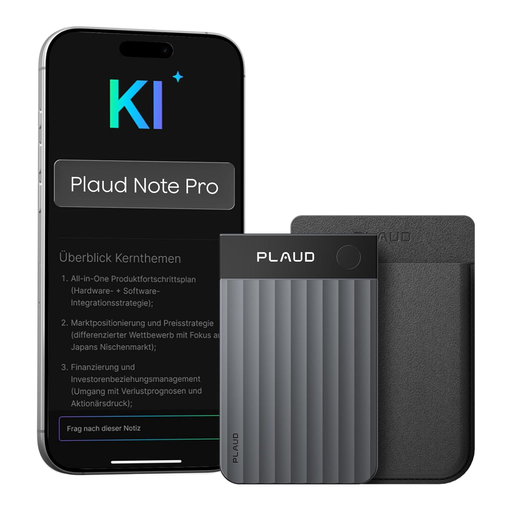 No image available
For longer conversations when you want to use the built-in storage and transcribe your recording later.
64 GB storage; 30-hour battery life; four MEMS microphones; compatible with Android and iOS. The product name lists transcription and summaries as features.
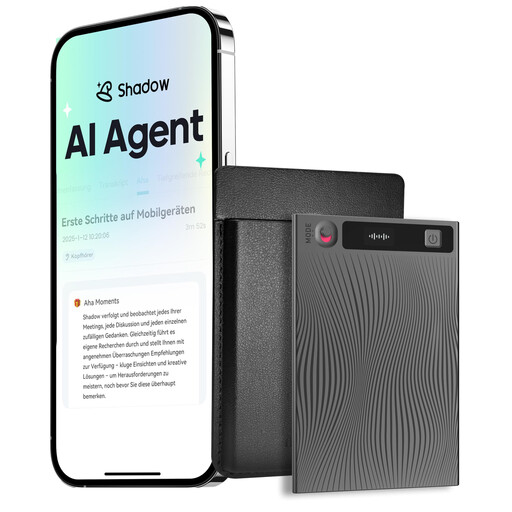 No image available
For longer interviews when you want a portable recorder with storage and a transcription feature listed in the product name.
64 GB storage; stated recording time of 20 hours; three microphones; Wi-Fi and Bluetooth; OLED display. The product name lists transcription and summaries.
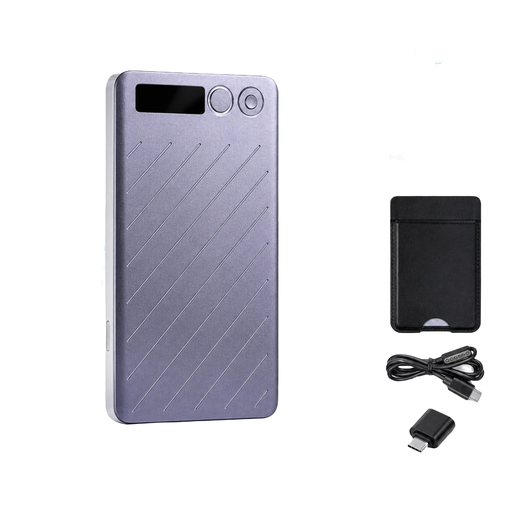 No image available
An option if you’re looking for a digital voice recorder with storage and a transcription function listed in the product name.
64 GB storage; the product name lists a transcription function.
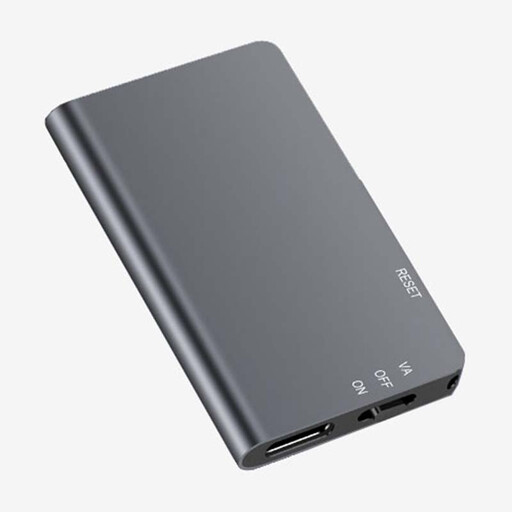 No image available
For straightforward recording if the one-button recording listed in the product name suits the way you want to use it.
64 GB storage; one-button recording; ABS and aluminium alloy; grey.
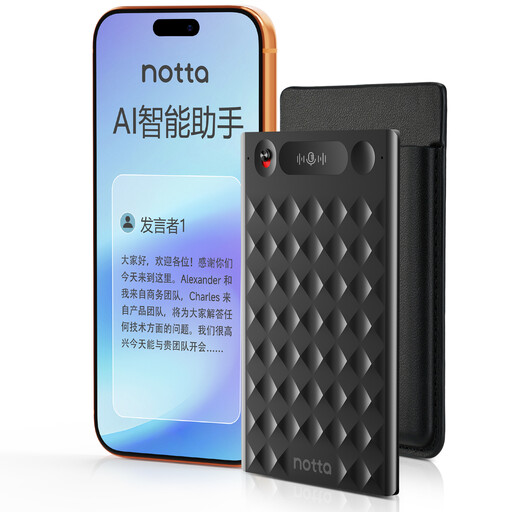 No image available
For longer recordings if you’re looking for a recorder with built-in storage and a transcription function listed in the product name.
32 GB storage; stated battery life of 30 hours; four microphones. The product name lists real-time transcription and translation in 58 languages.
No. 32-bit float is a recording and editing option, but it won’t replace a microphone positioned close enough. Listen to a test recording using the actual voice and the room’s acoustics.
Make a short test recording to check the microphone position, playback, power supply and available storage. The Zoom H1essential and Tascam DR-05XP need a suitable microSD card as part of the recording setup; the Sony ICD-UX570 and Philips DVT4115 are listed with built-in storage.
Transfer the file, check the copy and keep the original for the time being. The Philips VoiceTracer manual notes that resetting the device to factory settings will delete recordings stored on it; check the equivalent steps for your specific model too.
Section 201 of the German Criminal Code (StGB) makes it a criminal offence to record another person’s private spoken words without authorisation, as well as certain uses of such a recording. Check that you have permission before recording. Don’t automatically assume that permission to record also means consent to publish the recording or process personal data. The data protection basis required for a planned archive or publication will depend on the specific project.
No. The cloud transcription feature that Philips also describes isn’t needed just to record. If you want to use it, check the contract and data protection terms separately.