
Lieferung heute & morgen

Qualitätsgarantie

Willkommens-Angebote freischalten: KOSTENLOSE Lieferung | Bis zu 80 % RABATT | Kostenlose 30-Tage-JoyPlus-Testphase
App herunterladen
A racing car toy can be a construction kit, a remote-controlled car, a slot-car racing track or a scale model. However, the differences in age recommendation, space requirements, power supply and how it’s played with are considerable. If you decide based purely on vehicle design or brand name, you can easily overlook important details.
A set recommended for ages 10 and up may contain many small parts, challenging building steps or an app-based control system. That doesn’t automatically mean every child can manage it independently. With a racing car construction kit, parents should therefore also pay attention to the number of pieces, the building instructions and the fine motor skills required.
Products with small parts are fundamentally unsuitable for children under three years old. Even with older children, it’s advisable to check the safety warnings. A model intended for adults may work as a gift for motorsport fans, but it won’t automatically be suitable as a toy for younger children.
Terms like “app control”, “artificial intelligence” or “racing mode” alone tell you little about practical use. What really matters is:
A remote-controlled racing car is flexible to use, whereas a slot-car racing track needs a defined area. The Carrera GO Formula Free Racing Set has a built track area of approximately 180 × 75 cm and a track length of around 5.3 m. These dimensions should be checked against the available space before you buy.
With scale model racing cars, the scale is a key point of comparison. A 1:43 scale model needs significantly less display space than a large 1:8 scale exhibition model. Metal bodies are often suitable for a display cabinet, while LEGO models are designed for building, modifying and playing.
The term “die-cast” shouldn’t be taken to mean it’s unbreakable. Moving doors, thin add-on parts and transparent covers can be delicate. For frequent play, a robust construction model is often more practical than a pure collector’s car.
Pay attention to the official age recommendation and the warning about small parts that could be swallowed. The LEGO Technic Porsche GT4 e-Performance Race Car is intended for fans aged 10 and over and contains 834 pieces. The LEGO Technic BMW M4 GT3 EVO Race Car is aimed at children aged 11 and over and includes 747 pieces. The LEGO Technic Oracle Red Bull Racing RB20 F1 Car, with 1,639 pieces and an age recommendation of 18 and over, is much more focused on adult model builders.
With remote-controlled or battery-powered products, children should be supervised when charging and setting them up. Lithium batteries must only be charged and stored according to the manufacturer’s instructions.
Small LEGO F1 racing cars from the Speed Champions range are around 20 cm long and are suitable for building, playing and displaying. The larger LEGO Technic Porsche model measures approximately 37 cm in length. A 1:8 scale model not only needs more display space, but also a firm surface and a suitable display cabinet or shelf.
With a racing track, you also need to factor in the curves, connectors and controllers. Check before you buy whether the track can be left set up permanently or whether it’s easy to take apart.
With a remote-controlled racing car, the range is only part of the buying decision. The control method, charging time and availability of spare parts are also important. The Porsche model from LEGO can be controlled via the CONTROL+ app. This allows you to operate the steering and lights, among other things, and data can be displayed in the app.
The Carrera GO Formula Free Racing Set uses wireless controllers, which require two AAA batteries per controller. According to the product information, these batteries are not included. The Carrera Hybrid Devil Drivers Set is controlled via a smartphone or tablet app and has a rechargeable lithium-polymer battery. The recommended age group is 12 years and older.
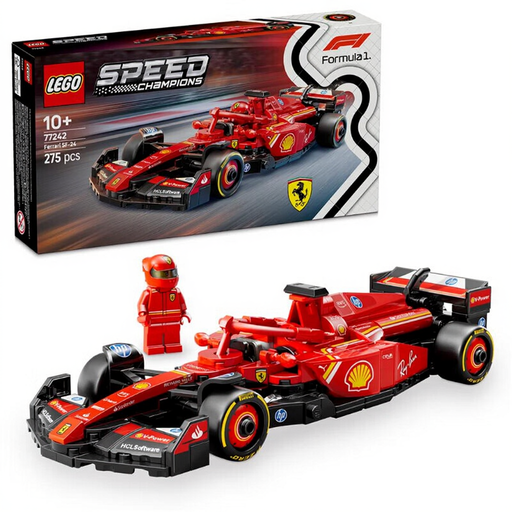
Why this product fits the profile: This compact LEGO F1 racing car combines a manageable build with a length of around 20 cm. It’s intended for fans aged 10 and over and includes a racing driver minifigure.
The piece count of 275 and the product dimensions are clearly stated. This makes it easier to assess the building effort than with a purely descriptive toy listing.
Construction kit with 275 pieces, minifigure and details such as the halo, rear wing and printed tyres.
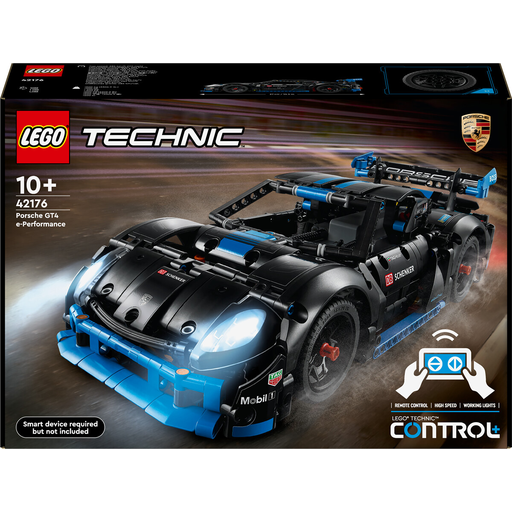
Why this product fits the profile: This model is aimed at children aged 10 and over and combines a more extensive build with app control, lights and opening doors.
The control system isn’t just advertised; it’s described concretely via the CONTROL+ app. Dimensions, piece count and battery function are also provided.
834 pieces, app control, lights, forward and reverse drive, plus a rechargeable battery.
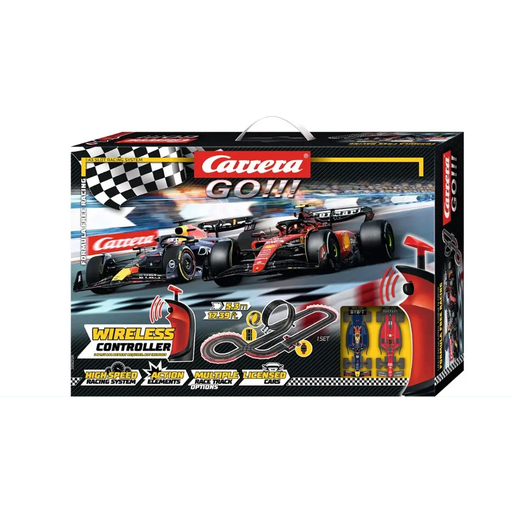
Why this product fits the profile: This set is designed for up to two people and offers a fixed racing track with two licensed Formula 1 cars.
The required setup area of approximately 180 × 75 cm and the batteries for the wireless controllers can be planned for in advance.
Track length of approximately 5.3 m, 1:43 scale and expandability with separately available accessories.
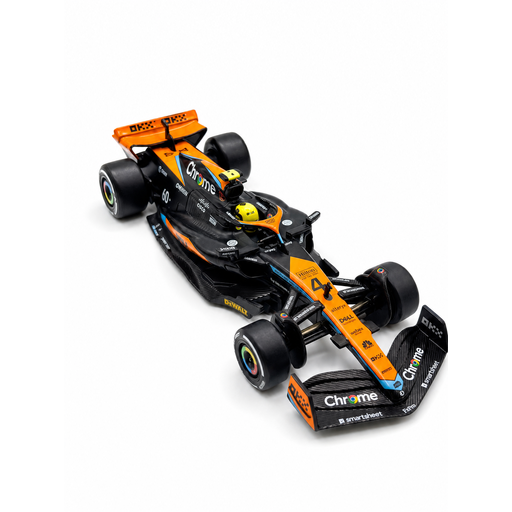
Why this product fits the profile: This F1 model car is intended for people aged 14 and over and comes with a display stand and a transparent acrylic cover.
Scale, material and what’s included are all clearly stated. The cover reduces dust build-up, but doesn’t replace careful handling.
Die-cast body, 1:43 scale, display stand and acrylic cover for cabinet presentation.
We’ve put together a full, regularly updated list of products that fully meet these strict selection criteria and the safety regulations in force in the EU.
LEGO Speed Champions and selected LEGO Technic models are intended for this age group. The key factors are the number of pieces, the building effort and the willingness to use an app or additional features. With small components, an adult should check the safety warnings and offer support if needed.
A Carrera racing track is ideal for racing together on a fixed track and usually works for two or more people. A remote-controlled racing car is more flexible, but needs a suitable open space and regular charging or battery changes. For smaller homes, a compact model car or a LEGO racing car can be more practical.
The lifespan depends on how it’s used, stored and looked after. With racing tracks, the rail contacts and plug connections should be checked regularly. Batteries should be charged according to the instructions and not left flat for long periods. Collector’s cars and F1 model cars stay in better condition when stored in a dust-free, dry place; moving parts should still be handled with care.