
Lieferung heute & morgen

Qualitätsgarantie

Willkommens-Angebote freischalten: KOSTENLOSE Lieferung | Bis zu 80 % RABATT | Kostenlose 30-Tage-JoyPlus-Testphase
App herunterladen
Racing car toys range from simple toy cars to portable race tracks, remote-controlled vehicles and detailed model kits. That variety can make choosing the right one tricky: a product may look substantial in photos, but could take up a lot of space, require extra batteries or have a specific age recommendation.
Three common buying mistakes are particularly easy to make:
Check these points before you buy, and you’ll find it easier to choose between racing cars, remote-controlled cars for children, F1 toy cars, LEGO Speed Champions and classic Hot Wheels cars.
The manufacturer’s age recommendation is an important guide. For children aged 3 and over, only consider products specifically approved for this age group. If a set contains small wheels, figures, building bricks or plug-in elements, younger children could swallow them.
A toy car for ages 9 and over often involves more than just driving: it may also require assembly, concentration and careful handling of detailed parts. LEGO Speed Champions models, for example, are generally intended for children aged 9 or 10 and over. A model racing car for adults, on the other hand, may be better suited to collecting than to everyday play.
A pull-back car doesn’t need batteries and is ready to play with straight away. A remote-controlled car, however, usually needs batteries or a rechargeable battery. Before you buy, check:
Electric race tracks bring a few extra things to consider: the power supply, plug connections, controllers and whether the cars are compatible with the track. The Carrera model below, for example, needs two AAA batteries for its wireless controllers; these aren’t included.
Not every racing car toy will fit in the same play area. A permanent race track can take up several square metres, while a flexible track can be rolled up and put away after play.
Also think about the surface:
The European toy safety standard EN 71 sets out requirements for aspects such as mechanical and physical properties. The specific age recommendation, warnings and manufacturer’s instructions remain essential, too.

Why it suits this profile: The flexible double-lane track is ideal for first races at home and can be rolled up after play. It’s recommended for ages 3 and over.
It doesn’t need batteries and has suction cups for flexible attachment to suitable smooth surfaces. Small parts should still be kept out of reach of children under 3.
A roll-up track, two lanes and compatibility with a range of small vehicles.
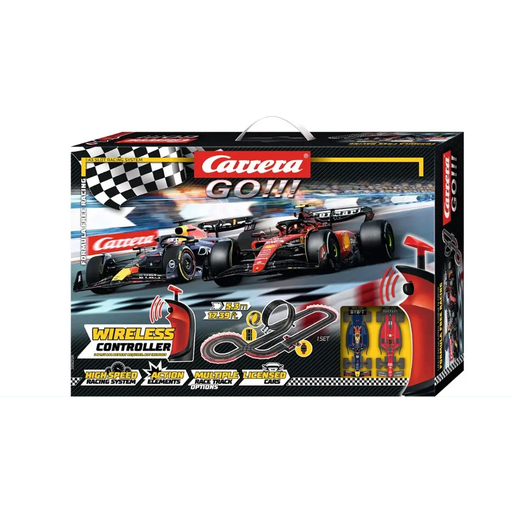
Why it suits this profile: This set is designed for children aged 5 and over and adults looking for an electric race track with two licensed Formula cars.
The specifications give a track length of around 5.3 metres and assembled dimensions of approximately 180 × 75 centimetres. They also specify the AAA batteries needed for the controllers.
Wireless controllers, two cars, a loop and the option to expand the set with accessories sold separately.
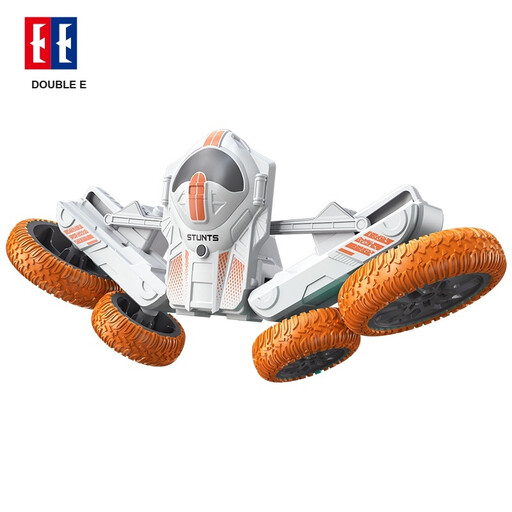
Why it suits this profile: This remote-controlled car is designed for children aged 6 and over. It’s an alternative to a traditional race track when stunts and changing direction are the main attraction.
The 2.4 GHz remote control and ability to drive on both sides are clearly listed features. Before buying, check the charge level, what’s included and which surfaces are suitable.
360-degree spins, rolls, LED lights and rechargeable power, according to the product description.
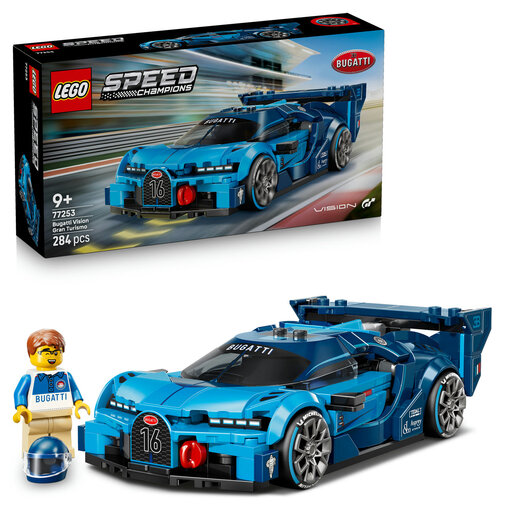
Why it suits this profile: This buildable model is designed for fans aged 9 and over. It combines building and imaginative play, then looks great on a shelf or desk.
The set’s 284 pieces, age recommendation and model length of around 14 centimetres are clearly stated. Small parts mean appropriate supervision is needed.
Authentic details include a Bugatti grille, rear wing, roof fin and driver minifigure.
We’ve put together a complete, regularly updated list of products that meet these strict selection criteria and fully comply with the safety regulations in force in the EU.
For children aged 3 and over, a simple track that doesn’t need batteries, with larger vehicles that are easy to hold, is often a good place to start. Do still check the warnings, as even these sets may contain small parts. Electric Carrera race tracks are generally intended for older children.
How long it lasts depends on the battery, charging habits, surface and availability of replacement parts. After play, store the vehicle somewhere dry and away from direct heat. If you have a remote-controlled car for children, check the wheels, body and remote control regularly for damage, too.
Battery-powered race tracks need batteries, which add to the running costs. With wired systems, the main thing to consider is the power supply. You may also need to budget for extra cars, extension tracks, controllers or accessories. Check what’s included and make sure everything is compatible before expanding a set.