
Lieferung heute & morgen

Qualitätsgarantie
App herunterladen
Kategorien
The launch of the Radeon RX 9070 XT, built on the AMD RDNA 4 architecture, marks a significant leap forward for PC systems designed for high-end graphics performance. With 16 GB of GDDR6 memory and a PCIe 5.0 interface, this GPU primarily targets the demands of 4K gaming, virtual reality, and compute-intensive creative applications. However, the decision to buy an RX 9070 XT hinges on selecting the right custom model. The differences between variants from manufacturers like Gigabyte and PowerColor lie in the details of their cooling design, factory clock speeds, and power delivery—factors that directly impact sustained performance and system compatibility.
Analysing specific technical parameters is essential for making an informed purchasing decision. The following criteria form the basis for comparing the available models.
Thermal performance is crucial for a graphics card's ability to consistently maintain its high clock speeds under load. Manufacturers employ various cooling solutions, typically consisting of multiple fans, a large heatsink with copper heatpipes, and sometimes a vapor chamber. A triple-fan design, common in many high-end models, generally offers a larger surface area for heat dissipation than a dual-fan system. This can lead to lower operating temperatures and reduced noise levels, as the fans can run at lower RPMs. Pay close attention to the card's dimensions (length, height, width in slots) to ensure compatibility with your PC case.
The boost clock speed specified by manufacturers is an indicator of the card's factory-set performance. Models with higher clock speeds offer potentially greater performance without manual overclocking. However, this performance is directly tied to the efficiency of the cooling system. A card can only sustain its maximum clock speed if its temperature remains below a certain threshold. Premium models, such as those in the AORUS series, often feature a binned GPU and a more robust cooling design to enable stably higher frequencies.
The Radeon RX 9070 XT is a powerful 16GB graphics card that requires an adequate power supply. Check the manufacturer's specifications for the recommended minimum power supply (PSU) wattage, which typically ranges from 800W to 850W. Equally important are the number and type of required power connectors. Most models require two or three 8-pin PCIe power connectors. Ensure your PSU has the necessary connectors and can stably deliver the required power.
The standard configuration for this GPU generation typically includes a combination of DisplayPort 2.1a and HDMI 2.1b ports. These standards support the high resolutions and refresh rates relevant for modern 4K gaming. Check the number of each port type to ensure your multi-monitor setup can be run without additional adapters.
Based on an analysis of their technical specifications, here are three recommended models of the Radeon RX 9070 XT.
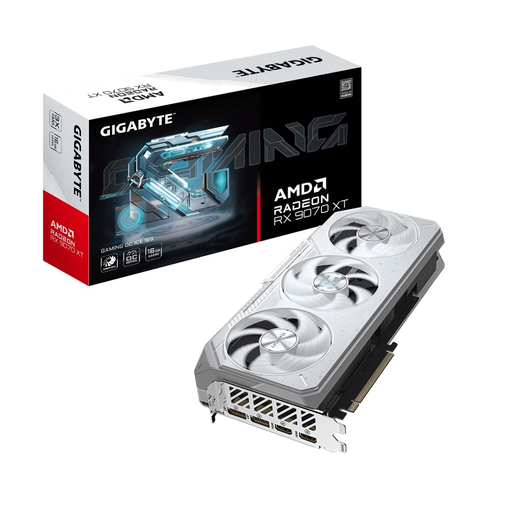
Why we recommend this product: The Gigabyte Radeon RX 9070 XT Gaming OC ICE model combines a high factory overclock with a striking white aesthetic. With a boost clock of 3060 MHz, it delivers solid performance right out of the box. The WINDFORCE 3X cooling system, featuring three counter-rotating fans, is designed to efficiently manage heat dissipation and ensure stable performance.
Pros:
Who it's for: This model is aimed at PC builders and gamers looking for a powerful 4K gaming graphics card with a specific white aesthetic for their system, and who value high out-of-the-box performance.
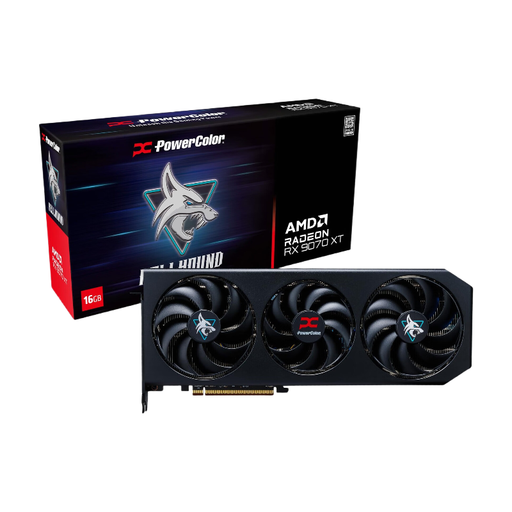
Why we recommend this product: The PowerColor RX 9070 XT Hellhound stands out with its Dual BIOS feature. Users can flip a switch to choose between a Performance mode for maximum power and a Quiet mode for silent operation. With a boost clock of up to 2970 MHz and a recommended PSU wattage of 800W, the card offers a flexible package.
Pros:
Who it's for: Users who value flexibility and want the ability to adjust their graphics card's acoustic profile based on the use case will find this to be an ideal solution.
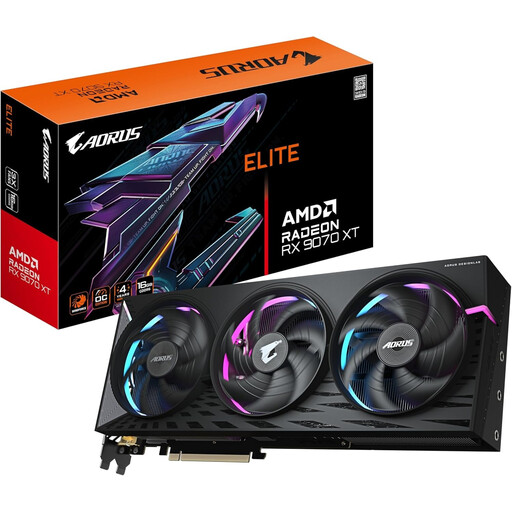
Why we recommend this product: As part of the premium AORUS brand, the AORUS RX 9070 XT Elite is engineered for maximum factory performance. With a core clock of up to 3100 MHz, it boasts the highest clock speed in this comparison. Its sophisticated cooling system, featuring a triple-slot design and large-scale heatpipes, is built to maintain this high performance stably, even under sustained load.
Pros:
Who it's for: This model is designed for PC enthusiasts who demand the highest possible performance straight from the factory and are willing to invest in a premium cooling solution and component quality.
If the models featured here don't perfectly match your requirements for design or specific features, you can find a wider selection of AMD graphics cards in our RX Graphics Card category. There you will find additional variants and performance tiers suitable for various system configurations and budgets.
1. What power supply is needed for a Radeon RX 9070 XT? Most custom model manufacturers recommend a power supply with a minimum wattage of 800W to 850W. It is advisable to check the specific requirements of your chosen model and ensure your PSU has the necessary 8-pin PCIe power connectors (usually two or three).
2. Is the Radeon RX 9070 XT suitable for 4K gaming? Yes, with its AMD RDNA 4 architecture, 16 GB of VRAM, and high compute power, the Radeon RX 9070 XT is primarily designed for smooth gaming at 4K resolution (3840 x 2160 pixels) with high to maximum graphics settings in current game titles.
3. What is the advantage of PCIe 5.0 on the RX 9070 XT? The PCIe 5.0 interface offers double the theoretical bandwidth compared to PCIe 4.0. This allows for faster data exchange between the graphics card and the rest of the system, which can be particularly advantageous for future applications and games that handle very large datasets, ensuring the system is future-proof.