Which recorder setup is right for you?

Speakers with big changes in volume

If you switch between a quiet delivery and a powerful shout, make a clean test recording and consider how much flexibility the recording format gives you when adjusting levels later. Zoom and Tascam list 32-bit float recording on the relevant models; Bonedo notes that this format cannot fix distortion before the audio is saved.

Speakers recording in an untreated room

If you’re not recording in a vocal booth, finding a quiet spot and keeping the microphone in a consistent position will help you assess your voice and the room sound in a test recording. Shure and RØDE explain why microphone position matters; Bonedo noted significant handling noise on the Zoom H1essential it tested.

Producers using a separate microphone

If you want to position a vocal microphone independently of the recorder or record additional sources separately, check that the inputs and tracks are suitable and that your entire recording chain is compatible. Zoom lists two XLR/TRS inputs on the H4essential, as does Tascam for the DR-40XP; Tascam also specifies phantom power for the DR-40XP.

What should you look for when choosing?

What matters What to check before buying Who is it important to?
Quiet and loud passages Check the recording format and listen to a test take that includes the intended volume extremes. If you want to combine a quiet delivery and a powerful shout in one take, having useful headroom for level adjustment matters. Around 36% of consumers say changes in volume are their top priority.
Voice, not room sound or handling noise Test a stable position in the intended room; listen for room ambience and noises caused by touching the device. If you’re recording outside a vocal booth, you’ll want to minimise unwanted room sound and noise from movement. Around 29% of consumers give room sound the highest priority when choosing.
Separate vocal microphone Check the inputs and connectors, and whether the microphone requires phantom power. If you want to position the microphone freely or record additional sound sources separately, you’ll need a suitable connection. Around 21% of consumers give having a separate microphone the greatest weight.
Simple setup Check whether the built-in microphones, storage and file transfer suit the way you plan to work. For short voice takes or alternative versions of a script, a straightforward setup may matter more than extra connections. Around 14% of consumers put simplicity first.

Handheld recorder with built-in microphones

A good fit if: you want to record a single spoken ident with minimal setup and can place the device securely in the room.

Trade-off: The microphone position depends more on where you place the device; Bonedo noted significant handling noise on the Zoom H1essential it tested.

Recorder with XLR/TRS inputs

A good fit if: you want to position a separate vocal microphone independently or record additional sources on separate tracks.

Trade-off: Check the microphone, cable, positioning and any power requirements; having the connections alone doesn’t give you a complete recording chain.

Which mistakes should you avoid?

  • Assuming 32-bit float guarantees a finished take

    The format can give you more flexibility when adjusting the levels of a saved recording, but it won’t fix a noisy room or every kind of distortion in the recording chain.

    At your intended recording spot, record both the quietest and loudest lines in your script, then listen back to the saved file.

    If a take isn’t usable, you may need to record it again and spend more time editing.

  • Holding the handheld recorder during the take

    Moving the device can create audible noise. Bonedo noted significant handling noise on the Zoom H1essential it tested; this observation applies to the model tested.

    Place the recorder securely for your test and listen for movement and table noise on playback.

    You may need additional accessories to position the recorder securely.

  • Assuming XLR inputs give you a complete vocal recording setup

    An input doesn’t automatically provide a suitable microphone, the positioning you want or the power you need.

    Choose your microphone and recording spot, then check the connectors, power requirements and exactly what’s included.

    Depending on the setup you already have, you may also need a microphone, cable, stand or storage media.

  • Confusing recording equipment with the rights to publish

    Using someone else’s music and recording another person’s private speech concern the specific recording or publication, not the recorder’s features.

    Before you begin, check whose voices will be recorded and whether you have the necessary rights to use any music in the background.

    Checking the rights may involve extra administration before recording or publication.

Key brands to consider

Zoom

Zoom offers handheld recorders with built-in microphones, as well as models with extra inputs and tracks.

  • Zoom lists 32-bit float recording for the H1essential and H4essential; the H4essential also offers four tracks and two XLR/TRS inputs.
  • Bonedo noted significant handling noise and a lack of accessories on the H1essential it tested. These observations relate to the model tested.

Tascam

The DR-07XP has adjustable built-in stereo microphones; the DR-40XP adds XLR/TRS inputs and four tracks.

  • Tascam lists 32-bit float recording for both models. The manufacturer also specifies phantom power for the DR-40XP.
  • Bonedo praised the controls and adjustable microphones on the DR-07XP it tested, but noted that its headphone output was a little weak and that accessories were missing.

Sony

The ICD-UX570 is described as a compact voice recorder with a built-in microphone and features for voice recording.

  • Sony lists Linear PCM recording, internal storage and USB file transfer.
  • These manufacturer specifications alone don’t show that this model is better suited to a final, dynamically delivered radio ident than a handheld or XLR setup.

Sound Devices

According to Sound Devices, the MixPre-3 II is designed for multiple microphone sources and voice-over work.

  • Sound Devices lists three preamps, recording to a compatible SD card and 32-bit float.
  • For a single short ident, consider whether you really need the additional connections and production features.

Recorders for short voice recordings

These Joybuy products are described as compact voice memo recorders. Use them for voice tests or alternative script versions, and check your final take with quiet and loud passages in the intended room.
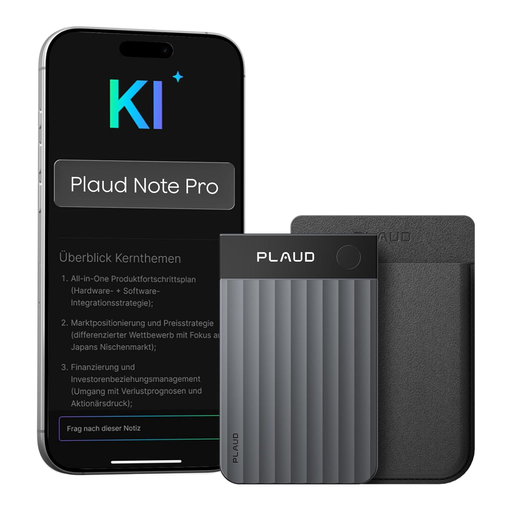
PLAUD Note Pro Voice Recorder, 64GB

PLAUD Note Pro Voice Recorder, 64GB

Described as a compact voice memo recorder for voice tests and alternative script versions; check your final take before using it.

The product details list 64 GB of storage, four MEMS microphones, USB-C and compatibility with Android and iOS.

View at Joybuy
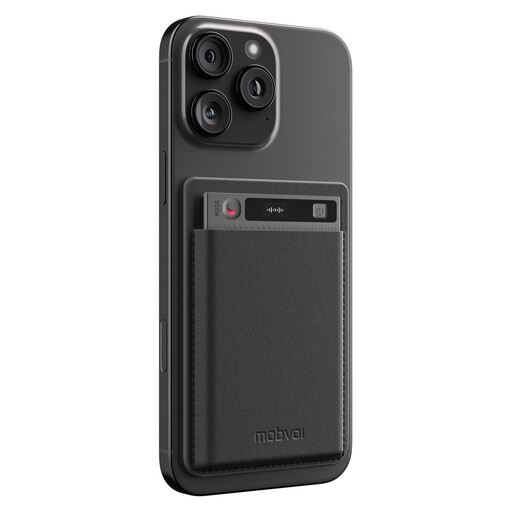
Mobvoi TicNote Lite AI Voice Recorder, 4GB

Mobvoi TicNote Lite AI Voice Recorder, 4GB

Described as a compact voice recorder; make a test with the full script before recording a final ident.

The product details list 4 GB of storage, a triple-microphone system and Bluetooth. According to the product description, the device has no headphone socket.

View at Joybuy
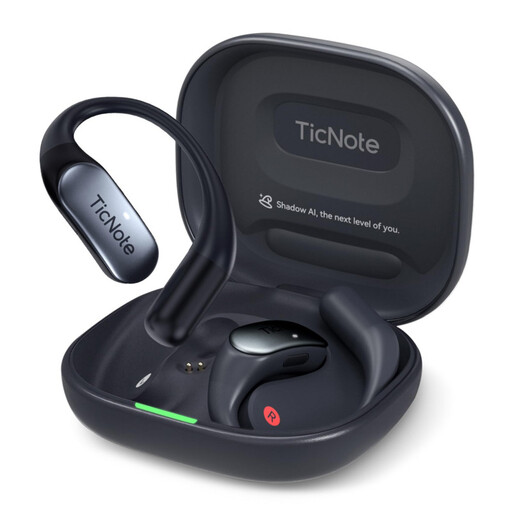
Mobvoi TicNote Pods 4G AI Voice Recorder, 32GB, Navy Blue

Mobvoi TicNote Pods 4G AI Voice Recorder, 32GB, Navy Blue

The product details describe a portable device for voice recording; use a test take to check whether it’s suitable for your ident in the intended room.

Features listed include 32 GB of storage, a dual-microphone array, 4G and a wireless charging case.

View at Joybuy
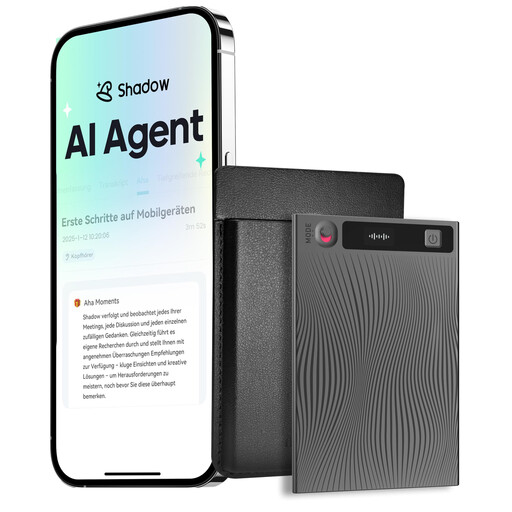
Mobvoi TicNote Standard AI Voice Recorder, 64GB, Dark Grey

Mobvoi TicNote Standard AI Voice Recorder, 64GB, Dark Grey

Described as a compact voice recorder for short takes; listen to the quiet and loud sections before choosing it for a final ident.

The product details list 64 GB of storage, a triple-microphone system, an OLED display, Wi-Fi and Bluetooth. “20H Recording” is also specified.

View at Joybuy
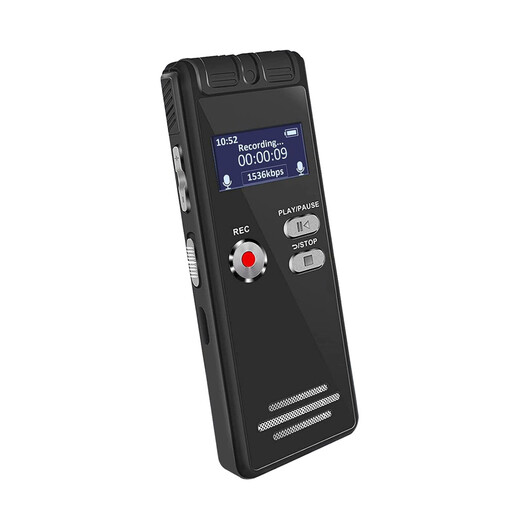
Rexsun 16GB Portable Digital Voice Recorder, Gray

Rexsun 16GB Portable Digital Voice Recorder, Gray

Described as a portable recorder for short voice recordings; test your voice and the room sound before making the final take.

The product details list a 16 GB TF card, two built-in microphones, USB-C, headphone playback and one-button recording.

View at Joybuy

Frequently asked questions

Will 32-bit float help if I suddenly speak much louder in one line?

32-bit float can give you more flexibility to adjust the level of a saved recording afterwards. It won’t remove background noise or fix poor microphone positioning or distortion introduced before the audio is saved. So listen to a take that includes your quietest and loudest passages.

How should I set up the recorder for my first test take?

Place the recorder or microphone securely in the intended room, record the full script including its quietest and loudest sections, then listen back to the file. If room sound, plosives or handling noise are distracting, try a different position; RØDE notes that the best microphone position depends on the microphone and its surroundings.

Will I need extra accessories for a recorder with XLR inputs?

If you want to use a separate microphone, check that its connector and power requirements match the recorder, and confirm whether the microphone, cable, stand and storage media are included. Two XLR/TRS inputs don’t mean suitable microphones are supplied.

Can I secretly record someone else’s voice for the ident?

Section 201 of the German Criminal Code (StGB) concerns the unauthorised recording of another person’s private speech. The Federal Ministry of Justice and the Federal Office of Justice include this provision in the Criminal Code. Check that you have the necessary authority or consent before recording in these circumstances.

Can I simply use someone else’s music under a published radio ident?

Recording music doesn’t give you the rights to use it. For music in the GEMA repertoire, GEMA points to licensing options for broadcasting and separate arrangements for uses such as web radio and other online services. The rights you need for a particular ident and how you distribute it depend on the music and how you use it.