Radishes for several meals
If you want to eat radishes raw on different days, a handy salad drawer and space for a sealed container are essential. The BZfE recommends removing the leaves first.


For crisp radishes, the salad drawer matters more than a large freezer compartment. The German Federal Centre for Nutrition (BZfE) recommends removing the leaves and storing the radishes in an airtight container in the salad drawer. Stored this way, they can keep for up to five days. When choosing a fridge-freezer, consider the usable fridge space, the dimensions and the stated annual energy consumption. The freezer compartment is for other foods you regularly freeze, not raw radishes you want to keep crisp.
If you want to eat radishes raw on different days, a handy salad drawer and space for a sealed container are essential. The BZfE recommends removing the leaves first.
If you regularly keep frozen food at home as well as fresh vegetables, weigh up the fridge and freezer capacity, the appliance dimensions and its stated annual energy consumption together. The Verbraucherzentrale recommends choosing an appliance size that matches your actual needs.
If space is tight in your kitchen, check the dimensions of the specific appliance and make sure the door can open wide enough for you to reach the drawers comfortably. The salad drawer is still the recommended place to store radishes.
For raw radishes, the BZfE recommends using the salad drawer rather than the freezer compartment. The Verbraucherzentrale advises choosing an appliance size that suits your needs. The EU energy label, introduced by the European Commission, shows details including fridge and freezer capacity and annual energy consumption.
| Buying priority | What to look for | Who should pay particular attention? |
|---|---|---|
| Keeping radishes fresh | Check that there is room in the salad drawer for an airtight container. Only associate freshness zones with the specific model they belong to. | If I want to eat radishes over several meals, a practical salad drawer is important; around 39% of consumers put keeping radishes fresh first. |
| Fridge space and room for the appliance | Compare fridge and freezer capacities separately. Allow for the external dimensions and the space needed to open the door. | If I need to store fresh and frozen food and have limited kitchen space, I compare the layout with the space available; around 23% of consumers prioritise suitable fridge capacity and space for the appliance. |
| Ongoing electricity consumption | Compare the annual consumption in kWh and the capacity figures on the EU energy label. Use your own electricity tariff to calculate your likely costs. | If running costs matter to me, I want to compare the stated consumption of appliances that are the right size; around 23% of consumers put running costs first. |
| Freezer space for other food | Choose the freezer capacity to suit your actual needs for frozen food. Store raw radishes in the salad drawer if you want to eat them crisp later. | If I regularly freeze other food, I need enough freezer space for it without planning to store radishes there; around 15% of consumers prioritise how they use the freezer compartment. |
The BZfE classifies radishes as a food with a high water content, which can turn mushy after defrosting.
Choose freezer capacity based on your other food and keep fresh radishes in the salad drawer.
Manufacturer claims about drawers or freshness systems do not, by themselves, prove that radishes will keep for a particular length of time. The BZfE recommendation of up to five days applies when radishes are stored in the salad drawer in a sealed container, with the leaves removed.
Check the features of the specific model and follow the recommended storage method, whatever the feature is called.
Total capacity does not show how much space is available in the fridge and freezer compartments separately. An energy efficiency class is no substitute for the stated annual energy consumption either.
Compare the separate capacity figures and annual kWh consumption of appliances that are the right size for your needs.
Features and specifications apply to the specific model named. They cannot automatically be assumed to apply to an appliance with a different full model number.
Before buying, compare the full model number and the product details for the specific appliance.
Bosch Home Appliances Germany lists 260 l of fridge space, 103 l of freezer space and VitaFresh for the KGN39VICT model.
For the CBNdgc 5723 model, Liebherr lists a Fruit & Vegetable-Safe and a separate freezer compartment.
Siemens Home Appliances Germany lists 260 l of fridge space, 103 l of freezer space and hyperFresh for the KG39NEIAF model.
Samsung Germany lists a total capacity of 387 l, as well as Twin Cooling+ and No Frost+, for the RB38C607AB1/EF variant.
LG Germany lists the GBBS726AEV as a fridge-freezer with a total capacity of 375 l and a FRESHConverter+ compartment.
These fridge-freezers feature information about salad drawers or fridge and freezer capacity. They’re suitable for households looking to store fresh food and other provisions in one appliance.
 No image available
A vegetable drawer provides a handy place to keep fresh radishes in the fridge compartment.
173 l total capacity: 121 l fridge space and 52 l freezer space. Energy class C and annual consumption of 124 kWh are stated.
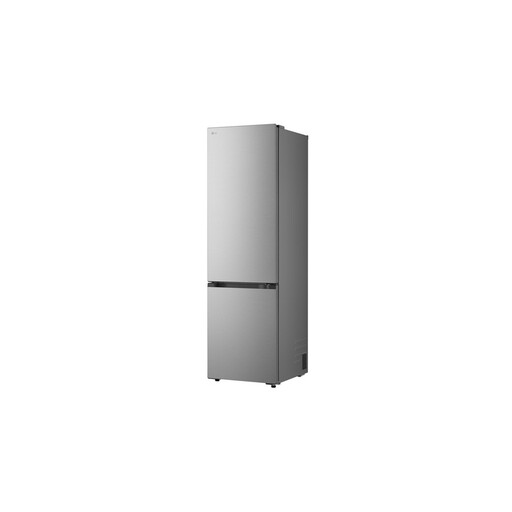 No image available
Two vegetable drawers provide separate spaces for fresh food.
375 l total capacity: 262 l fridge space and 113 l freezer space. No Frost and energy class C are stated.
 No image available
A full-width crisper drawer is described as suitable for salad and vegetables.
262 l total capacity: 187 l fridge space and 75 l freezer space. Low Frost, a width of 54 cm and a height of 176 cm are stated.
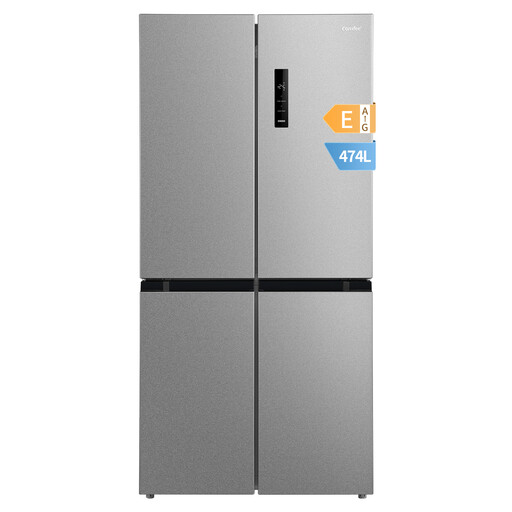 No image available
According to the product details, the vegetable drawer has three adjustable temperature settings.
474 l total capacity, four doors and freezer drawers that can be joined together are stated. The dimensions are 838 × 653 × 1775 mm; energy class E is listed.
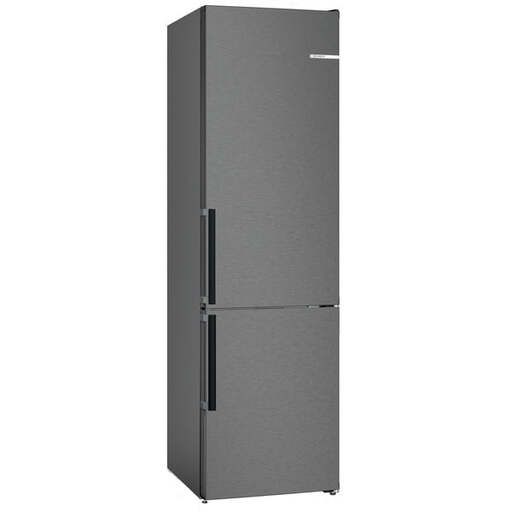 No image available
Two humidity-controlled drawers are described as suitable for storing fruit and vegetables together.
363 l total capacity: 260 l fridge space and 103 l freezer space. No Frost and dimensions of 203 × 60 × 66,5 cm are stated.
Remove the leaves and put the radishes in an airtight container in the salad drawer. The BZfE says they can keep for up to five days when stored this way.
Not if you want to eat them raw and crisp later: according to the BZfE, radishes can turn mushy after being frozen and defrosted.
Compare the dimensions of the specific model with the space available and check that the door can open wide enough for you to reach the drawers. Allow for the space needed at the sides as well as any clearances specified for that model.
The EU energy label, with classes from A to G, applies to household refrigeration and freezer appliances covered by the scheme. The European Commission lists other details, including annual consumption in kWh, fridge and freezer capacity, and noise emissions.
Compare the stated annual consumption in kWh for appliances with fridge and freezer capacities that suit your needs. To work out your individual costs, you’ll also need your own price per kWh.