Which buying criteria matter?
First, decide what matters most to you: clear details, desk space, a suitable PC connection or flexible positioning.
| What matters |
What to check before buying |
Who is it important to? |
| Clear details and usable screen space |
Consider screen size and native resolution together; check the text and menus in the game you use. |
If I want to see details and tool menus clearly while building a track layout, I pay particular attention to having the right screen size. Around 36% of consumers put readability and usable screen space first. |
| Fit on your desk |
Compare the available width and depth with the monitor’s external dimensions, including the stand. |
If I’m setting up the screen at home alongside other work equipment, it needs to fit on the desk I have. Around 29% of consumers prioritise desk space. |
| PC performance and connections |
Check that the graphics output, cable and monitor input support your chosen resolution and refresh rate. |
If I want to use my existing PC at my chosen resolution and refresh rate, I check the entire connection chain. Around 21% of consumers prioritise compatibility. |
| Screen positioning |
Check whether the specific model offers height adjustment, tilt and, where applicable, VESA mounting. |
If I use my monitor for long work and gaming sessions, I want to be able to position it to suit my seat and visual conditions. Around 14% of consumers put positioning first. |
Joybuy products for 27-inch QHD
These models are 27-inch QHD LCD monitors, offering a good starting point for track plans and menus on a screen used for both work and gaming.
 No image available
Z-Edge AGEX, 27-inch QHD monitor
A 27-inch QHD option for building layouts and office tasks on the same screen.
According to the product description: 2560 × 1440 pixels, Fast IPS, 144 Hz, FreeSync, HDMI and DisplayPort. The description specifies a DisplayPort cable and compatible graphics card for QHD at 144 Hz.
View at Joybuy
 No image available
TCL 27P2A Pro, 27-inch Mini LED monitor
A QHD option for track plans and menus on a 27-inch screen.
According to the product name: 2560 × 1440 pixels, Mini LED, HFS (IPS) panel and 320 Hz. The description lists an adjustable stand.
View at Joybuy
 No image available
INNOCN 2751S PLUS, 27-inch QHD monitor
A 27-inch QHD option for details and control panels when planning virtual layouts.
According to the product specifications: 2560 × 1440 pixels, Mini LED with 1152 zones, IPS display and 275 Hz. The description lists height, tilt and swivel adjustment.
View at Joybuy
 No image available
KTC H27D9, 27-inch QHD monitor
A 27-inch model for QHD gaming and office windows on the same screen.
According to the product name: 2560 × 1440 pixels, IPS panel, 120 Hz, Adaptive Sync, HDMI and DisplayPort. VESA mounting is also listed.
View at Joybuy
 No image available
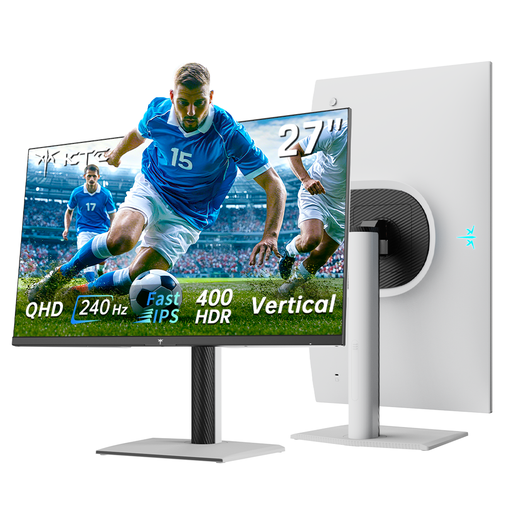
KTC H27E6S, 27-inch QHD monitor
A 27-inch QHD option for layout building and gaming, if the quoted refresh rate is compatible with your PC setup.
According to the product name: 2560 × 1440 pixels, Fast IPS and 240 Hz, overclocked to 275 Hz. The listed connections and features also include HDMI 2.0, DisplayPort 1.4 and VESA 100 × 100.
View at Joybuy
Frequently asked questions
Do I really need 240 Hz for building virtual railway layouts?
No, a high refresh rate isn’t always necessary. The rate you can use depends on the game, your PC’s performance and the connection. So first check readability, resolution and the connection combination you can actually use.
Will my railway game automatically show more of the track plan in 21:9?
No, the monitor’s resolution alone doesn’t tell you exactly how the game will look. Check the resolution and window settings, as well as the arrangement of the control panels, in the specific game you use.
How should I set up a 34-inch monitor in my home office?
Before buying, measure the available desk width and depth, and allow room for the stand. Position the screen to suit your seat and visual conditions. For workplace or home-working display screen equipment, you should also take the scope of ASR A6 into account.
Can I put an old PC monitor in household waste in Germany?
No. The German Environment Agency advises that old electrical equipment should be returned separately. The available return options depend, among other things, on the size of the device and the conditions for returning it to a retailer.


