For exhibition prints
If you want to show train details, landscapes or black-and-white images at a larger size, the print format and photo media need to suit your intended image size.


For a group wanting to display railway photos and share them with members, your choice of printer should start with the largest print size you need. Small dye-sublimation prints, regular batches up to A4 and A3+ exhibition prints call for different printing methods and media. Then compare paper, ink or paper-and-ribbon sets, and maintenance requirements. The yields quoted by Canon and Epson do not guarantee a particular cost for your images. If you’re using other people’s photos or images showing identifiable people, check that you have the rights needed to print them and share or display them as planned.
If you want to show train details, landscapes or black-and-white images at a larger size, the print format and photo media need to suit your intended image size.
If you’re printing for several members and across multiple events, consider consumables and maintenance requirements together.
If people mainly want small photos to take home, the right media format and a practical way to replenish supplies at the event are key.
Start by deciding on the largest print size you need. Then match the suitable photo media, printing frequency and maintenance requirements to how your group plans to use the printer.
| Buying consideration | What to look for | Who is this especially important for? |
|---|---|---|
| Format and photo media | Check that the image size, supported paper formats, borderless printing and paper feed are compatible with your chosen photo paper. Canon lists 100 × 148 mm for the SELPHY CP1500, while Canon and Epson both offer A3+ models in their photo printer ranges. | If you want to display train details as larger exhibition prints, the print format must suit your intended image size. Around 33% of consumers put format and photo media first. |
| Materials and maintenance | Compare paper with the appropriate ink or paper-and-ribbon sets. Manufacturer yields apply to the conditions specified and won’t necessarily reflect your images (Canon Germany; Epson Germany). | If you’re printing for your group across several events, materials and maintenance matter as much as the initial purchase. Around 33% of consumers prioritise consumables and maintenance. |
| Small prints on the spot | Canon lists 100 × 148 mm prints and a paper-and-ribbon set for the SELPHY CP1500. DNP quotes 400 prints from a 10 × 15-cm roll for the DP-DS620. Also check the power supply and connectivity available at your meeting place. | If you want to hand out individual photos for people to take home at an event, the right small format and a supply of media are essential. Around 17% of consumers give priority to small prints on the spot. |
| Black and white and storage | Assess a test print on the paper you plan to use. Canon lists ten separate pigment inks, including grey ink, for the PRO-310 and eight dye-based inks for the PRO-200S. Canon says the SELPHY CP1500’s stated colour stability applies to album storage under simulated conditions. | If black-and-white reproduction or how your images will be stored is your top priority, check the paper and ink technology together. Around 17% of consumers prioritise this consideration. |
The Canon SELPHY CP1500 uses media including the 100 × 148 mm format, while A3+ photo printers cater for a different image size. You may need a second printing method if you want both small prints and larger exhibition photos.
Before you buy, decide on the largest exhibition print size you actually need.
The quoted photo yields for tank printers aren’t based on your group’s specific images and formats.
Compare paper and consumables for the format you plan to use, and factor in the maintenance routine for the model.
The Canon ImagePROGRAF PRO-300’s historic ranking in F.A.Z. Kaufkompass’s photo printer test, as at 7 July 2026, doesn’t apply to the PRO-310, which is a different model. Canon Germany lists the PRO-300 as discontinued.
Check the model number, retailer and availability of consumables for the exact printer you plan to buy.
Having a file doesn’t automatically mean you’re allowed to reproduce or publicly display someone else’s photographs. If people are identifiable, you may also need to consider their image rights.
Before printing and sharing or displaying the images as planned, check which rights you need for the specific photo and intended use.
The relevant models here range from small SELPHY prints and photo printing up to A4 to A3+ devices (Canon Germany).
Epson offers the A3+ ET-8550, a tank printer with scanning and copying functions, and the XP-15000, an A3+ photo printer with individual cartridges (Epson Germany).
DNP positions the DP-DS620 as a dye-sublimation printer for events and the photo trade (DNP Photo Imaging Europe).
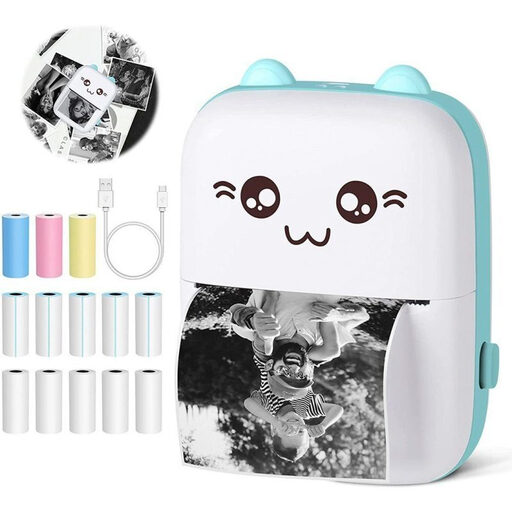
This selection covers portable thermal printing of smartphone photos and notes. Check that the print format actually offered suits the print size your group needs.
 No image available
The title describes a portable thermal printer for smartphone photos and notes. It may suit occasional printing on the go, provided the available print format matches the size of the prints you want to share with members.
Not without comparable information about the format, image, paper and actual materials used. Canon gives an estimated yield for 10 × 15 cm photos for the G650; Epson quotes up to 2,300 photo prints per set of bottles for the ET-8550. These are manufacturer figures, not measurements for your print jobs (Canon Germany; Epson Germany).
For Epson EcoTank and Expression printers, Epson recommends checking the nozzles first if prints are faint, streaky or have incorrect colours, then cleaning the print head if necessary. Check the ink level before cleaning and follow the instructions for your specific model (Epson Germany).
Not simply because the group has the image files. Photographs are protected under § 72 UrhG; the right to reproduce them under § 16 UrhG also covers making prints. Check with the photographer who holds the rights to find out which prints and what sharing or display they permit (Federal Ministry of Justice, Laws on the Internet).
Under § 22 KunstUrhG, consent is generally required to distribute or publicly display images of people. § 23 KunstUrhG sets out exceptions, including for people who appear only incidentally alongside a landscape or place; the legitimate interests of those depicted can limit these exceptions. Whether an exception applies to a particular photo and the group’s intended use must be assessed on a case-by-case basis. Processing personal data also requires a legal basis under Art. 6 GDPR (Federal Ministry of Justice, Laws on the Internet; Federal Commissioner for Data Protection and Freedom of Information).