
Lieferung heute & morgen

Qualitätsgarantie

Willkommens-Angebote freischalten: KOSTENLOSE Lieferung | Bis zu 80 % RABATT | Kostenlose 30-Tage-JoyPlus-Testphase
App herunterladen
Multicoloured 3D prints made from a single spool create an especially varied look on vases, figurines and decorative objects. However, for the colour gradient to be clearly visible and the print to run reliably, the word “Rainbow” on the packaging is not enough. The key factors are diameter, material type, spool weight and suitable print settings.
This buying guide from the Joybuy Product Recommendation Officer explains what German makers, model builders and FDM 3D printer users should look for when buying Rainbow PLA Filament 1.75 mm.
With gradient filament, the length of each individual colour section can vary considerably. Small models may only show one or two shades. If you want a pronounced gradient, you should therefore take the planned model size and the expected amount of filament required into account.
For larger vases or figurines, spools with clearly defined colour transitions are a sensible choice. For small pendants or figurines, a subtle gradient may be sufficient.
Silk PLA filament reflects light and can make surfaces appear smoother and more glossy. This makes it appealing for decorative models and art objects. However, the glossy appearance depends on the temperature, speed and layer height.
Matte PLA filament reduces visible light reflections and is more suitable for a subtle, even finish. A product with a silk texture is therefore not automatically suitable for every design.
Claims such as “High Speed Printing” refer to the manufacturer’s material formulation. The actual result also depends on the printer model, nozzle, cooling, retraction settings and first layer. Excessive speed can result in less shine, stringing or uneven extrusion when using silk material.
Before starting a larger print, it is advisable to carry out a small temperature or calibration test.
The PLA Filament 1.75 mm format is standard for many FDM 3D printers. Even so, you should check whether your own printer actually uses 1.75-mm filament. Devices designed for 2.85 mm or 3.00 mm are not compatible with this variant.
The following points are also relevant:
The statement “compatible with most FDM printers” should be treated as general guidance and does not replace checking your own model.
A PLA Filament 1 kg pack provides enough material for several decorative models, prototypes or larger vases. With rainbow filament, usage also affects how many colour transitions will be visible in a model.
A 1-kg spool is practical for frequent users, but it may remain open for longer if you only work on occasional craft projects. PLA absorbs moisture if stored in unsuitable conditions. The spool should therefore be kept in a sealed bag with desiccant after printing.
According to the product instructions supplied with CaiLab PLA Silk Tri-Color, a nozzle temperature of 195 to 220 °C and a bed temperature of around 60 °C for open-frame printers are recommended. For enclosed devices, a range of 45 to 60 °C is specified. These values are a starting point; the precise setting depends on the printer, nozzle and part geometry.
A bonding agent may be required when using glass beds. Depending on the surface, PEI sheets will often work without additional adhesion, but they should be clean. Moisture can reveal itself through stringing, bubbles, rough surfaces or uneven extrusion, among other symptoms. The product instructions recommend 50 °C for six to eight hours for storage and drying. A suitable filament dryer is preferable for this purpose.
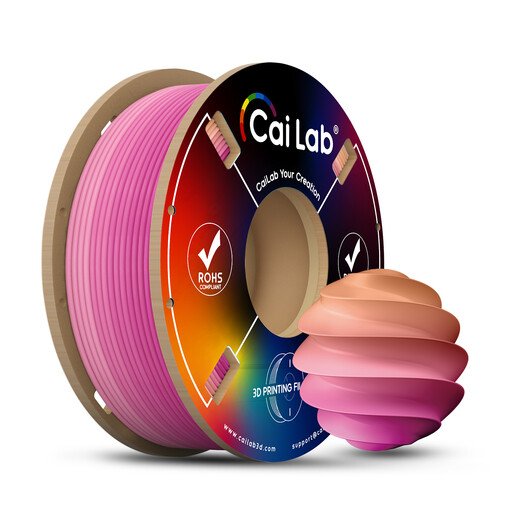
Why this product suits this profile: This variant is designed to create a multicoloured gradient and is suitable for first decorative 3D prints, figurines and smaller model-building projects.
Before buying, you should check the diameter and spool size against your own FDM printer instead of relying solely on the colour description.
PLA material in a rainbow design; suitable for creative models with changing colour tones.
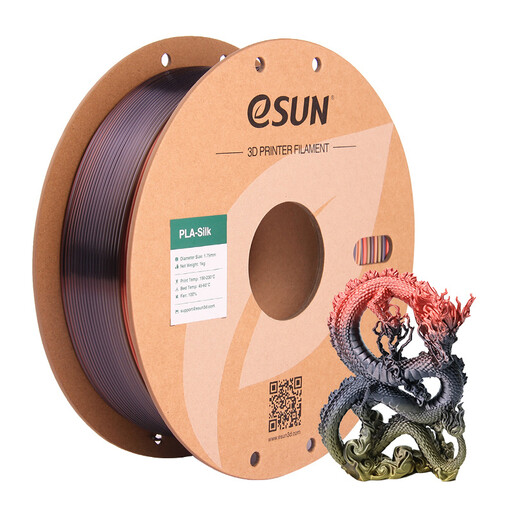
Why this product suits this profile: The product description specifies a 1.75 mm diameter, 1 kg spool weight, silk texture, vacuum packaging with desiccant and a design intended for FDM printers.
The stated format and packaging details make it easier to check compatibility and the condition of the material. Print speed should still be calibrated individually.
1.75-mm format; 1-kg spool; glossy silk surface; vacuum packaging with desiccant according to the product description.
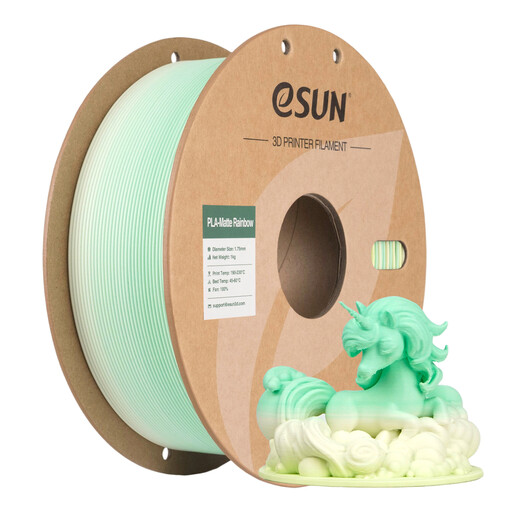
Why this product suits this profile: The matte rainbow version is aimed at users who prefer colour gradients without pronounced silk reflections for models, prototypes or display pieces.
The “Matte” designation clearly distinguishes the surface effect from Silk PLA. This makes it easier to match the material to the lighting and intended use.
1.75-mm filament; 1-kg spool; matte texture; multicoloured yellow, white and aqua tones according to the product description.
We have put together a complete, regularly updated list of products that fully meet these strict selection criteria and the safety regulations applicable in the EU.
No. The filament must be compatible with the extruder. With Rainbow PLA Filament 1.75 mm, you should particularly check whether the printer supports this size. You should also check PLA compatibility, the spool holder and the permitted temperature ranges.
The manufacturer’s recommendations can serve as a starting point. For the CaiLab Silk material mentioned above, a nozzle temperature of 195 to 220 °C is specified. A temperature tower or small test model can help you assess extrusion, shine and stringing on your own printer.
Shelf life cannot be determined by spool weight alone. Moisture, packaging and storage time all affect how well the material can be processed. After opening, PLA should be stored airtight with desiccant. If visible printing problems occur, drying the material may be worthwhile.