
Lieferung heute & morgen

Qualitätsgarantie

Willkommens-Angebote freischalten: KOSTENLOSE Lieferung | Bis zu 80 % RABATT | Kostenlose 30-Tage-JoyPlus-Testphase
App herunterladen
By: Joybuy Product Recommendation Officer
Rainbow gradient PLA filament adds a unique aesthetic dimension to 3D printing. Instead of a single-color object, you get prints with smooth color transitions that make every piece one-of-a-kind. However, choosing the right filament can be challenging due to variations in gradient, finish, and material composition.
This article serves as a practical guide. It explains the key criteria for selecting Rainbow PLA Filament and presents a curated selection of products to help you make an informed decision for your creative projects.
To achieve the desired results, it's important to consider a few technical aspects of the filament. The following points will help you find the right material for your project.
Gradient length indicates how many meters of filament must be printed before the color changes or a full cycle is completed.
When printing small objects, a filament with a long gradient may result in the finished part appearing in only one or two colors.
The finish has a significant impact on the print's visual appeal. The two most common variants for gradient PLA filament are standard and silk.
The most common filament diameter for desktop 3D printers (FDM/FFF) is 1.75 mm. Most 1.75mm Rainbow PLA filaments on the market are compatible with a wide range of printers, including models from Creality, Prusa, Anycubic, and many others. Nevertheless, always check your printer's specifications to ensure compatibility. A precise and consistent filament diameter is crucial for jam-free extrusion and high print quality.
Based on the criteria above, we've compiled a selection of CaiLab filaments that cater to different aesthetic needs.
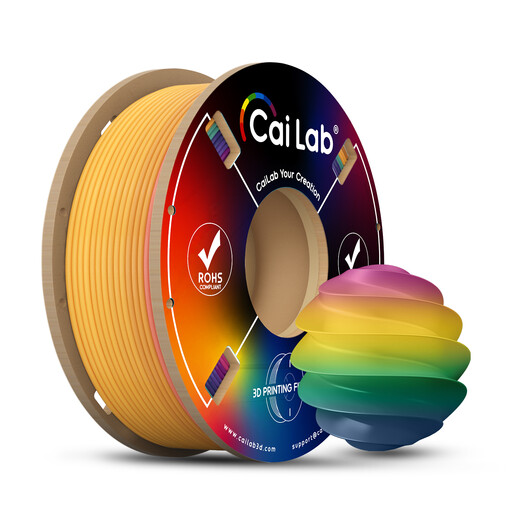
Why It Stands Out This filament offers a classic, vibrant rainbow spectrum. The color sequence is clearly defined, creating a dynamic visual effect that is well-suited for a wide variety of applications.
Pros
Who It's For For users seeking a traditional and color-rich rainbow effect for decorative objects, toys, or eye-catching prototypes. It's a solid choice for medium-sized prints where the color transitions can be fully appreciated.
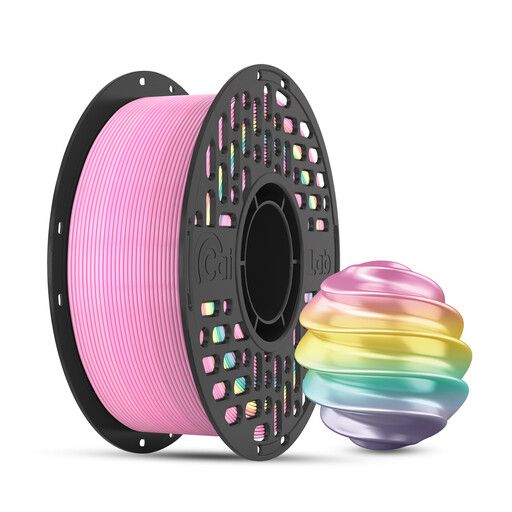
Why It Stands Out This variant combines a rainbow gradient with a pronounced silk sheen. The high-gloss surface reflects light, giving printed objects a luxurious, metallic-like appearance.
Pros
Who It's For For makers, artists, and designers who want to achieve maximum visual impact. Its silky finish makes it the top choice for objects where aesthetics are paramount and a smooth, polished surface is desired.
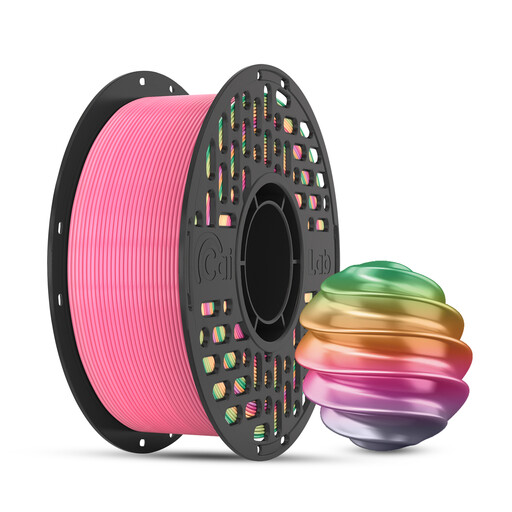
Why It Stands Out Unlike the bold colors of traditional rainbow filaments, the "Silk Candy" variant offers a palette of soft pastel shades. Combined with the silk sheen, it creates a subtle and stylish look reminiscent of candy.
Pros
Who It's For For users looking for an alternative to classic, bright rainbow colors. It is perfectly suited for projects that require a delicate and modern aesthetic, such as nursery decorations, jewelry dishes, or seasonal decor.
The filaments featured here are just a sample of the available options. If you're looking for different gradients, finishes, or specific properties for your next project, you might find the perfect material in our broader collection.
Explore Our Full Range of Rainbow Gradient PLA
The visible color effect heavily depends on the size and geometry of the printed object. To see as many colors as possible from a Rainbow 3D Printer Filament, either print one large object or multiple small objects simultaneously on the print bed. A higher infill percentage also increases material consumption, thus speeding up the color changes.
For most decorative applications and prototypes, the mechanical strength of rainbow PLA is comparable to that of standard PLA. Filaments with special additives, like those used for the silk gloss effect, may have slightly different mechanical properties. For high-stress functional parts, however, specialized engineering filaments should be considered.