
Lieferung heute & morgen

Qualitätsgarantie

Willkommens-Angebote freischalten: KOSTENLOSE Lieferung | Bis zu 80 % RABATT | Kostenlose 30-Tage-JoyPlus-Testphase
App herunterladen
As a pet owner, you want to make your dog or cat's daily life as comfortable as possible. An elevated feeding bowl is often promoted as a simple solution for better posture and digestion. However, the market is flooded with products whose practical utility doesn't always live up to the marketing hype. Before you make a decision, it's crucial to understand the common pitfalls that can lead to a poor purchase.
This guide will help you identify the essential features and make an informed choice that truly meets your pet's needs.
Many products look convincing at first glance but reveal their weaknesses only with daily use. Pay special attention to these three points:
To avoid these pitfalls, you should base your purchase decision on objective criteria. The following parameters are critical for the functionality, hygiene, and longevity of a feeding bowl.
The choice of material directly impacts hygiene and durability.
A bowl should stay in place during mealtime. Stability is determined by several factors:
Depending on your pet's specific needs, special features can be beneficial.
Based on the criteria above, we have compiled a few products for specific requirement profiles.
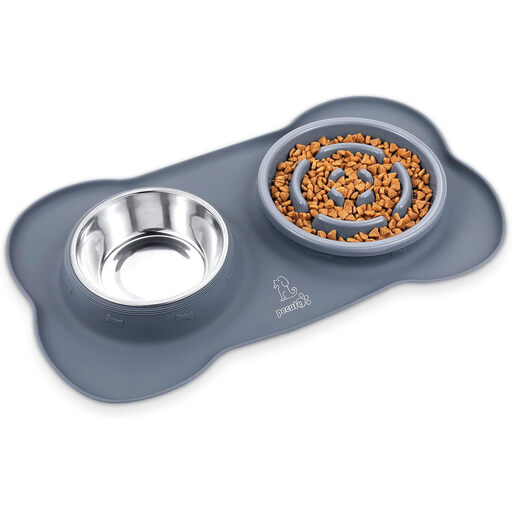
Why It's a Great Fit: This 3-in-1 solution is designed for owners whose pets eat too hastily. The combination of a slow-feeder bowl, a water bowl, and a non-slip silicone mat provides a complete and stable feeding station.
The integrated silicone mat acts as a non-slip base, preventing tipping (Pitfall 1). The use of food-grade silicone and stainless steel facilitates cleaning and prevents bacterial buildup (Pitfall 2).
The textured interior of the food bowl slows down eating pace. The bowls are dishwasher-safe, and the mat is foldable for easy storage or travel.
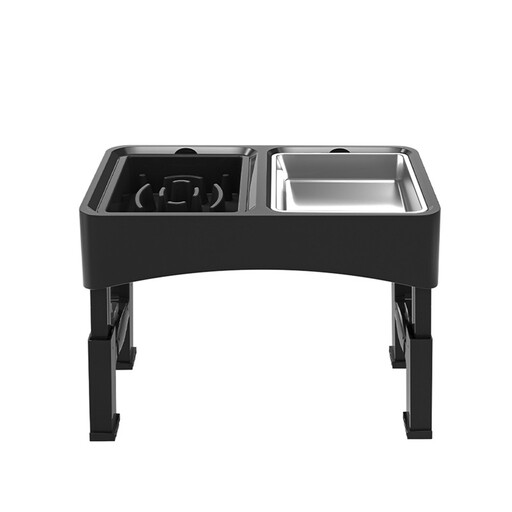
Why It's a Great Fit: Perfect for owners of growing puppies or for households with dogs and cats of different sizes. The height-adjustability makes this feeding station a long-term, adaptable investment.
The four-level height adjustment (10/23/27/31 cm) solves the problem of a fixed, incorrect height (Pitfall 3). The foldable yet sturdy structure provides a secure stand (Pitfall 1). The combination of a stainless steel and a slow-feeder bowl is versatile and hygienic (Pitfall 2).
Dual-bowl combination for food and water. The foldable design makes storage easy. The bowls are interchangeable, offering maximum flexibility.
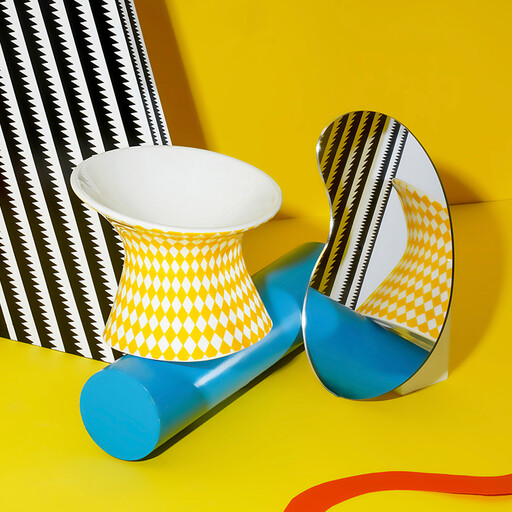
Why It's a Great Fit: For cat and small dog owners who value both design and hygiene. This elevated cat bowl achieves its height through its own shape, blending into your living space like a decorative element.
The substantial weight of the ceramic provides excellent stability (Pitfall 1). The smooth, glazed surface is hygienic and easy to clean, unlike scratched plastic (Pitfall 2). The height and tilt are ergonomically designed for cats and small dogs (Pitfall 3).
Combines functionality with aesthetics. The 12-degree tilt and wide opening make it easier for the pet to access food. The material is robust and durable with proper handling.
We've curated a complete, up-to-date list of products that meet these strict selection criteria and comply with current safety regulations.
A general guideline is that the rim of the bowl should be level with the bottom of your pet's chest while standing. The animal should be able to lower its head slightly to eat without overextending its neck or bending down too far. Measure the shoulder height (distance from the floor to the top of the shoulder) and subtract about 10-15 cm (4-6 inches), depending on the breed and size, to find a good starting point.
Both materials are very hygienic with proper care. A stainless steel bowl is generally more resistant to drops and scratches, often making it the more practical choice in the long run. However, a high-quality, undamaged ceramic bowl with an intact glaze is just as non-porous and easy to clean. The choice often comes down to personal preference for weight and design.
While not every cat absolutely needs an elevated bowl, many can benefit from one. Older cats with arthritis, pets with joint problems, or flat-faced breeds (like Persians) often eat more comfortably from a slightly raised position. An elevated cat bowl can reduce pressure on the neck and joints and, for some animals, may decrease vomiting after meals. Observe your pet while it eats to assess its individual needs.