
Lieferung heute & morgen

Qualitätsgarantie

Willkommens-Angebote freischalten: KOSTENLOSE Lieferung | Bis zu 80 % RABATT | Kostenlose 30-Tage-JoyPlus-Testphase
App herunterladen
For competitive PC gamers, where milliseconds can mean the difference between victory and defeat, a Rapid Trigger keyboard has become an essential tool. However, the market is flooded with marketing jargon and technical specs that make an informed decision difficult. This guide will help you understand the key features and avoid common purchasing pitfalls.
As a Joybuy Product Recommendation Officer, I filter the relevant information for you, so you can find a keyboard that actually improves your performance in fast-paced games like Valorant, CS:GO, or Apex Legends, without falling for exaggerated advertising claims.
Before we dive into the technical details, let's look at the typical stumbling blocks that often lead to a bad purchase.
To make an informed decision, you should understand three technical fundamentals that define a true performance keyboard.
The heart of every Rapid Trigger keyboard is its switches. Unlike traditional mechanical or optical switches, Hall Effect keyboards use magnetic fields to measure the exact position of a key at any given moment.
This magnetic technology is the prerequisite for the following two crucial performance features.
These two functions work hand-in-hand and are the main reason why esports enthusiasts rely on this technology.
The polling rate indicates how often the keyboard reports its status to the computer. A standard keyboard often has a 1000 Hz rate (1000 times per second). An 8000 Hz gaming keyboard reports its data 8000 times per second, reducing latency from 1 ms to 0.125 ms. This reduction in input lag is noticeable in fast-paced gaming situations and can provide a decisive advantage.
Based on the criteria above, we have identified a few models that are suitable for different needs and budgets.
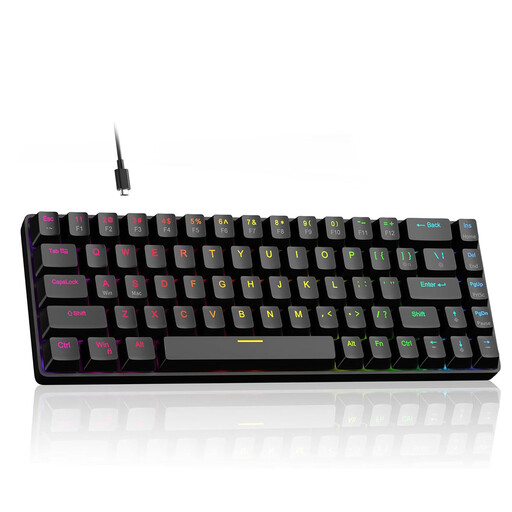
Why This Fits Their Persona: This model offers core technologies like Hall Effect switches, Rapid Trigger, and an 8000 Hz polling rate at an accessible price point. It's a solid choice for gamers who want to experience the benefits of this technology without making a major investment right away.
Focuses on essential performance features instead of expensive add-ons. You get the crucial technology without paying for unnecessary frills.
Delivers a full-fledged Rapid Trigger experience with an 8000 Hz polling rate and an adjustable actuation point (0.1-4.0 mm) in a compact 60% form factor.
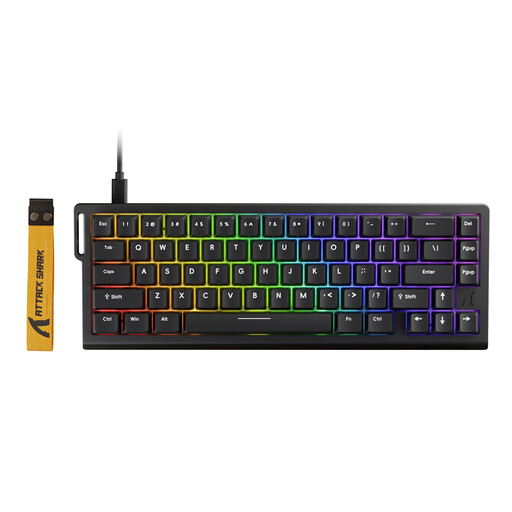
Why This Fits Their Persona: For players seeking maximum performance and customisability, the X68 is a strong Wooting alternative. It combines all high-end specifications with premium materials like PBT keycaps and a web driver for platform-independent settings.
Offers a web driver and on-board memory. Settings are saved directly on the keyboard, which avoids reliance on background software.
Extremely fine actuation point adjustment (0.1-3.4 mm) and advanced features like Dynamic Keystrokes (DKS) for assigning multiple actions to a single key. Hot-swappable with compatible magnetic switches.
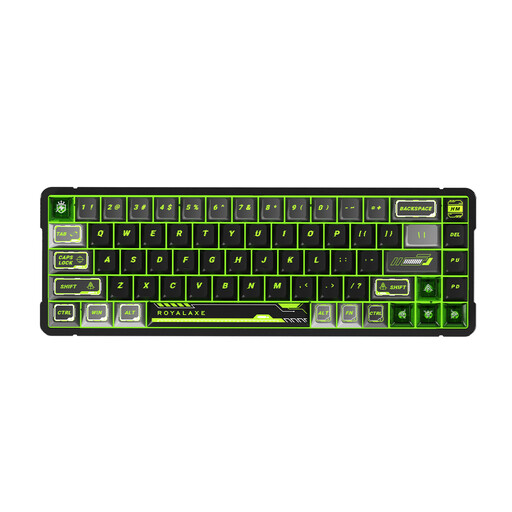
Why This Fits Their Persona: Ideal for gamers who value not only pure performance but also premium build quality and feel. The aluminium alloy case gives the keyboard a substantial weight and tremendous stability, which is an advantage during intense gaming sessions.
Relies on proven esports features in a robust chassis, rather than focusing on fleeting design trends. The investment here is in longevity and performance.
Combines the advantages of a magnetic switch keyboard with the stability and premium feel of an aluminium case. The compact 68-key layout saves desk space.
If you want to customise your keyboard further, we offer a selection of components that meet strict selection criteria.
Is a Rapid Trigger keyboard worth it for casual gamers? The main advantage of Rapid Trigger lies in extremely fast and repeated key presses, which makes a difference primarily in competitive FPS or rhythm games. For casual gamers or users who mainly play single-player titles or type, the added value is less significant. A conventional mechanical keyboard may be sufficient in these cases.
What is the difference between Hall Effect and optical switches? Both technologies are designed for speed but work differently. Optical switches use a beam of light that is interrupted when a key is pressed to trigger a signal. They are fast but usually have a fixed actuation point. Hall Effect switches continuously measure the key's position via a magnetic field. Only this analogue measurement enables features like a dynamically adjustable actuation point and Rapid Trigger.
Do I need special software for a keyboard with an adjustable actuation point? Often not for basic adjustments. Many models allow you to change the actuation point via key combinations. However, for advanced functions like individual per-key configuration, setting up macros, or firmware updates, manufacturer software or a web driver is usually required. Look for models with on-board memory so your settings remain active even without the software running.