
Lieferung heute & morgen

Qualitätsgarantie

Willkommens-Angebote freischalten: KOSTENLOSE Lieferung | Bis zu 80 % RABATT | Kostenlose 30-Tage-JoyPlus-Testphase
App herunterladen
By a Joybuy Product Recommendation Officer, August 30, 2026
For competitive PC gamers, choosing the right gear is crucial. A Rapid Trigger keyboard promises a tangible advantage in fast-paced games thanks to its innovative technology. But the market is flooded with models whose marketing promises often create more confusion than clarity. Many gamers invest in a new esports keyboard only to be disappointed when the expected performance boost doesn't materialize.
This is often due to common misconceptions and exaggerated advertising claims. Before you make a decision, you should know the most common pitfalls that can lead to a bad purchase.
To make an informed decision, it's essential to understand the core technologies and their practical benefits.
The performance of a modern gaming keyboard depends on a few critical parameters. Instead of being swayed by marketing buzzwords, you should focus on these objective specifications.
The term Rapid Trigger (RT) is more than just a marketing buzzword; it describes a feature that can fundamentally change the way you play. Unlike conventional mechanical keyboards, where a key must return almost completely to its starting position to be actuated again, Rapid Trigger works dynamically.
This mechanism enables extremely fast, repeated keystrokes. In an FPS gaming keyboard, this is a huge advantage for techniques like "counter-strafing" (e.g., in Valorant or CS2), as movements can be stopped instantly and changes in direction can be initiated without delay. A good Wooting alternative must implement this feature with precision.
The Rapid Trigger function is made possible by gaming keyboards with magnetic switches. These use the Hall effect to measure a key's position. Instead of a physical contact that closes at a specific point, a sensor measures the change in a magnetic field as the key is pressed.
This offers two key advantages:
The polling rate indicates how often the keyboard sends information to the computer per second. An 8000 Hz keyboard reports inputs every 0.125 milliseconds, while a standard 1000 Hz keyboard does so every 1 millisecond.
Theoretically, a higher polling rate leads to lower latency. In practice, however, the noticeable benefit depends heavily on three factors:
An 8000 Hz feature is a worthwhile addition for high-end setups, but it shouldn't be the sole purchasing criterion.
Based on the criteria above, we have identified a few models that are particularly well-suited for different requirement profiles.
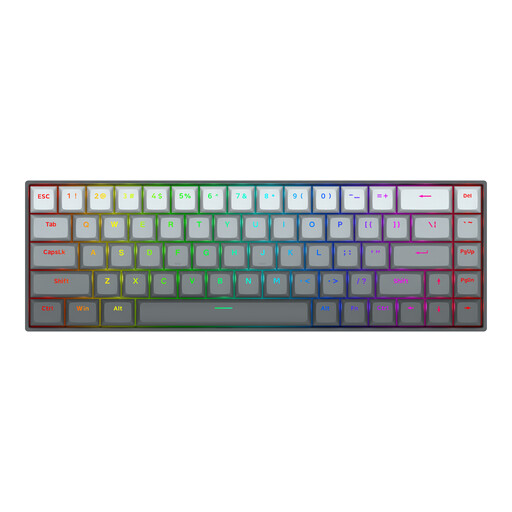
Why This Fits Their Persona: This model offers crucial esports features like Rapid Trigger and 8000 Hz at an accessible price point. It's ideal for gamers looking to upgrade from a standard keyboard to gain a real competitive edge without breaking the bank for absolute high-end gear.
This keyboard avoids the "aesthetics-only" trap by integrating a sturdy metal top plate that prevents case flex—a common problem in more budget-friendly models. The specifications are clearly defined, including a wide actuation point adjustment range (0.2–4.0 mm).
Stable 8000 Hz implementation; compact 65% layout for more mouse room; metal top plate for enhanced stability.
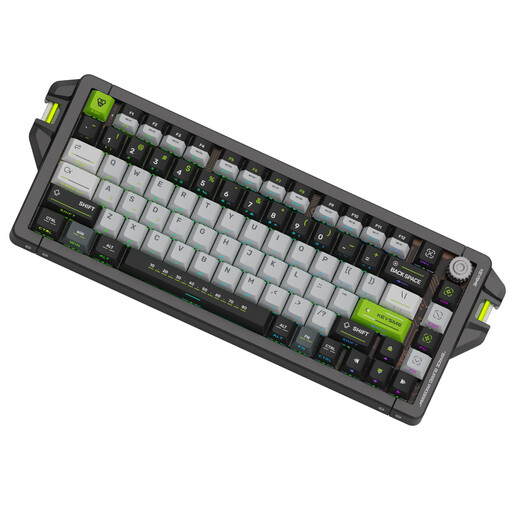
Why This Fits Their Persona: For users who refuse to compromise on performance and build quality. This model combines top-tier specs with a solid CNC aluminum case and a thoughtful internal design (Gasket Mount) for a superior typing and gaming experience.
This keyboard doesn't just boast high specs; it provides the physical foundation to back them up. The heavy aluminum case ensures absolute stability during intense gaming sessions. Furthermore, the Gateron Magnetic Jade Switches offer defined tactile and acoustic feedback that goes beyond standard linear switches.
Full CNC aluminum case for maximum stability; gasket-mount structure for a cushioned typing feel; high-precision actuation point adjustability (0.05 mm increments).
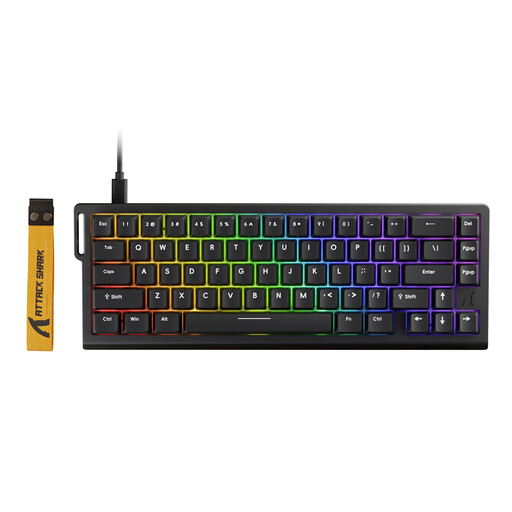
Why This Fits Their Persona: This model is designed for gamers who prefer an extremely compact setup to maximize space for mouse movement. The 65% layout (66 keys) delivers full esports performance without compromising on crucial specifications.
Despite its small form factor, it doesn't neglect critical specs. With an adjustable actuation point starting at 0.1 mm and an RT precision of 0.01 mm, it delivers a level of accuracy often found only in larger, more expensive models. The specifications are transparent and performance-focused.
Extremely fine actuation point adjustment range (0.1–3.4 mm); very compact 66-key layout; hot-swappable switches for easy maintenance and customization.
We've compiled a complete, real-time updated list of products that fully meet these strict selection criteria.
An 8000 Hz keyboard places higher demands on the CPU than a standard 1000 Hz keyboard. For stable performance without micro-stutters, a modern processor (e.g., a recent-generation Intel Core i5/AMD Ryzen 5 or higher) is recommended. Older systems may struggle to process the high data rate, which can negate the benefits.
A conventional mechanical keyboard actuates at a fixed point and must return almost completely to its starting position to actuate again. A Rapid Trigger keyboard registers input as long as the key is pressed and instantly resets the actuation point the moment the key moves upward, even by just 0.1 mm. This allows for extremely fast, repeated inputs, which is crucial for techniques like 'counter-strafing' in FPS games.
Magnetic switches, which are based on the Hall effect, have a significant advantage in longevity. Since they operate without physical contact, they are not subject to the mechanical wear and tear that affects the metal contacts in conventional switches. Many manufacturers rate magnetic switches for a lifespan of over 100 million keystrokes, which is often double that of standard MX-style switches.