
Lieferung heute & morgen

Qualitätsgarantie

Willkommens-Angebote freischalten: KOSTENLOSE Lieferung | Bis zu 80 % RABATT | Kostenlose 30-Tage-JoyPlus-Testphase
App herunterladen
For competitive gamers, where milliseconds decide between victory and defeat, choosing the right equipment is of paramount importance. A Rapid Trigger keyboard has established itself as a game-changing factor for precision and reaction speed. However, the market is flooded with technical jargon and marketing promises that make an informed decision difficult.
As your Joybuy Product Recommendation Officer, I'm here to help you separate the wheat from the chaff. In this guide, we'll analyse the critical features that define a true performance keyboard and show you how to avoid common purchasing pitfalls.
Before you make a decision, it's important to know the most common traps that often lead to disappointment and unnecessary expense.
To ensure you get a keyboard that gives you a tangible advantage in fast-paced FPS or rhythm games, you should pay close attention to the following three technical features.
The heart of any Rapid Trigger keyboard is its switches. Unlike traditional mechanical switches that require physical contact to actuate, gaming keyboards with magnetic switches (also known as Hall Effect keyboards) use a magnetic field to measure the exact position of a key.
This enables the most important feature: an adjustable actuation point. You can define in the software whether a key should trigger with a light touch of just 0.1 mm or only after a deeper press of up to 4.0 mm. This customisability is the foundation of Rapid Trigger functionality.
Rapid Trigger is more than just a fast-actuating switch. The technology ensures that a key resets the moment it begins to travel upwards—not after it reaches a fixed reset point. This means you can press the same key again in extremely rapid succession. For actions like "strafing" in Valorant or hitting fast note sequences in rhythm games, this is a decisive advantage that conventional keyboards cannot offer.
The polling rate indicates how many times per second the keyboard reports its status to the computer. A standard gaming keyboard has a 1000 Hz polling rate (1,000 reports per second). An 8000Hz polling rate keyboard reports 8000 times per second, reducing the theoretical latency from 1 ms to 0.125 ms. To take full advantage of this, a sufficiently powerful PC processor is required to handle this amount of data. For esports athletes looking to optimise every millisecond, this is a relevant feature.
Instead of presenting an overwhelming list, we have selected models that meet specific user needs and avoid the pitfalls mentioned above.
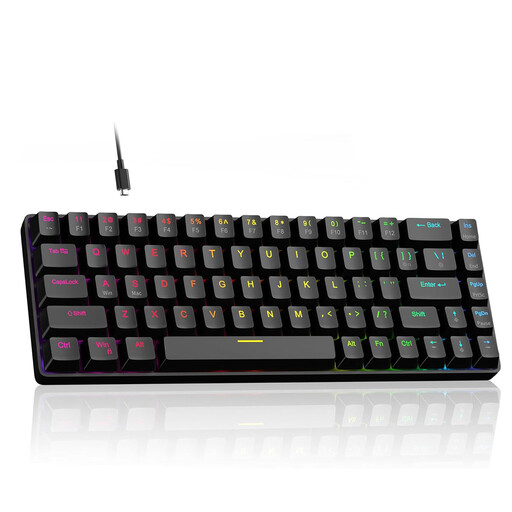
Why This Fits Their Persona: This model is an excellent choice for gamers who want to experience the core benefits of Rapid Trigger technology without needing a premium budget. The compact 60% form factor saves desk space, leaving more room for mouse movements in FPS games.
It delivers the real technology (Hall Effect, Rapid Trigger, 8000 Hz) and isn't just a marketing label. The actuation point is adjustable from 0.1 mm to 4.0 mm.
Offers a complete high-end feature set in a compact and accessible package. The hot-swap capability also allows for easy customisation of the switches.
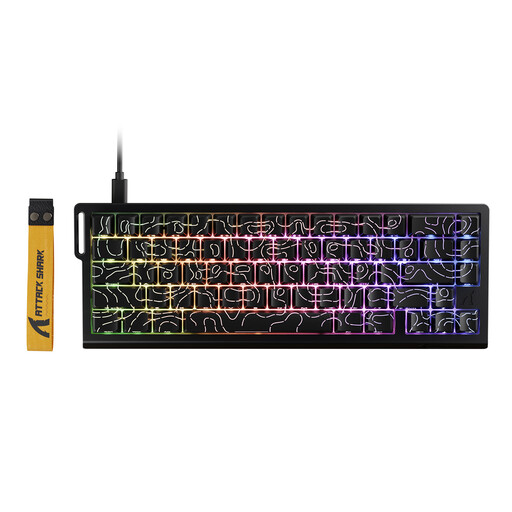
Why This Fits Their Persona: For gamers looking for a high-performance Wooting alternative, the ATTACK SHARK X68 HE offers a compelling combination of precision and customisability. The 66-key layout is a great compromise between compactness and functionality, as it retains dedicated arrow keys.
The keyboard offers transparent, verifiable specifications, such as an RT accuracy of 0.01 mm and an adjustable actuation range of 0.1-3.4 mm. The web-based driver also avoids cumbersome software installations.
Enables extremely fine-grained control through high RT accuracy and advanced software features like Dynamic Keystrokes (DKS). Ideal for players who want to customise their equipment down to the smallest detail.
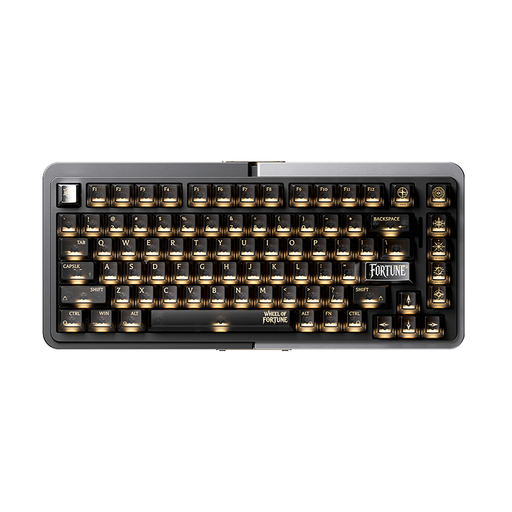
Why This Fits Their Persona: For users who value haptics, durability, and a premium aesthetic in addition to pure performance. The aluminium alloy case gives the keyboard stability and a first-class feel that goes beyond standard plastic cases.
This model combines the necessary performance technology (RT mode, magnetic switches) with a tangible quality feature—the aluminium case. It delivers substance, not just specs.
The combination of a robust aluminium case and TTC magnetic switches creates a durable and reliable FPS Gaming Keyboard with a premium look and feel for any desk.
We have compiled a full list of products that meet our strict selection criteria for performance and quality.
1. Is a Rapid Trigger keyboard really worth it for me? For players of competitive FPS games (e.g., Valorant, CS:GO) or rhythm games where fast, repetitive keystrokes are crucial, Rapid Trigger technology offers a clear and tangible advantage. For everyday typing or casual gaming, the benefit is less pronounced, and a conventional mechanical keyboard may be sufficient.
2. Do I need a special PC for an 8000Hz polling rate keyboard? While an 8000 Hz keyboard will work on most modern PCs, a sufficiently powerful processor (CPU) is recommended to fully and stably leverage its benefits. This ensures the high data rate can be processed without causing in-game performance drops. Additionally, a high-refresh-rate monitor (e.g., 144 Hz or higher) is necessary to visually perceive the reduced latency.
3. What is the difference between Rapid Trigger and an adjustable actuation point? This is an important distinction. The adjustable actuation point determines how deeply a key must be pressed to trigger an action. Rapid Trigger, on the other hand, is a dynamic function that resets a key for re-actuation as soon as it starts to travel upwards—regardless of the initially set actuation point. Both features complement each other and are hallmarks of a modern Hall Effect keyboard.