
Lieferung heute & morgen

Qualitätsgarantie

Willkommens-Angebote freischalten: KOSTENLOSE Lieferung | Bis zu 80 % RABATT | Kostenlose 30-Tage-JoyPlus-Testphase
App herunterladen
The search for a competitive edge in gaming inevitably leads to specialized hardware. A Rapid Trigger keyboard promises just that: a reaction speed that can mean the difference between victory and defeat. But the market is filled with technical jargon and marketing promises that make it difficult to make an informed decision. Many gamers invest in expensive models, only to find that the advertised benefits are barely noticeable in practice or that the keyboard has fundamental flaws. This guide will help you understand the crucial features and avoid common purchasing traps.
Before we dive into the technical details, it's important to know the most common issues that can lead to a bad purchase:
To make an informed choice, you should focus on three core technical aspects. These define the performance and utility of a modern esports keyboard.
The heart of a Rapid Trigger keyboard is its ability to reset a key not at a fixed point, but instantly upon release. This is made possible by magnetic keyboard switches (also called Hall Effect keyboard switches). Instead of a physical contact, a sensor measures the exact position of the key by detecting changes in a magnetic field.
This allows for two decisive advantages:
The polling rate indicates how often the keyboard reports its status to the computer. A standard keyboard operates at 1000Hz (1000 times per second), which corresponds to a latency of 1 ms. An 8000Hz gaming keyboard reports its status 8000 times per second, reducing the theoretical latency to 0.125 ms. For competitive players, this difference in input lag can be noticeable and provide an advantage. Make sure the manufacturer guarantees a "true" 8000Hz rate without interpolation.
A compact gaming keyboard (e.g., in a 65% or 75% layout) provides more desk space for wide mouse movements—a critical factor for players with low mouse sensitivity. Equally important is the case material. A frame made of CNC-milled aluminum offers superior stability compared to plastic. It prevents any bending (flex) and ensures that every keystroke is registered precisely and consistently.
Based on the criteria above, we have identified several models suitable for different user profiles.
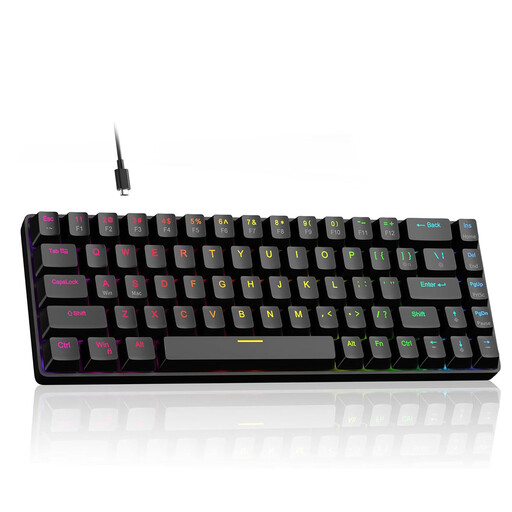
Why This Fits Their Persona: Offers the core technologies (Rapid Trigger, 8000Hz) in a compact format at an accessible price. Ideal for gamers who want to try the technology without breaking the bank and are looking for an alternative to established brands like Wooting.
Focuses on the hardware (Hall Effect, 8000Hz) instead of superfluous software gimmicks, offering a solid technical foundation despite its price point.
Adjustable actuation point from 0.1 mm to 4.0 mm and an 8000Hz polling rate in a very compact 60% layout that includes arrow keys.
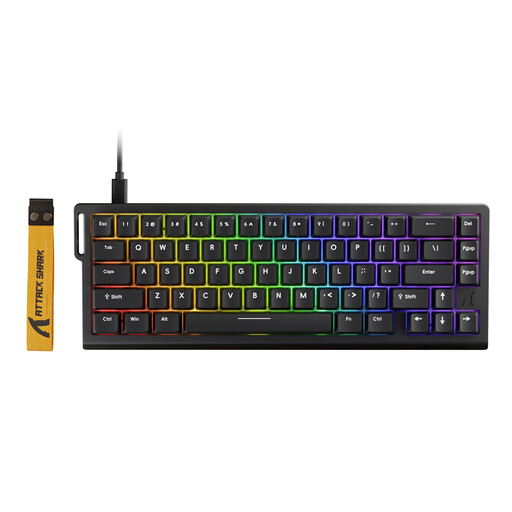
Why This Fits Their Persona: Needs an ultra-compact tool for maximum mouse freedom and instant response. The 65% layout and speed-optimized features (Rapid Trigger, 8000Hz) are designed directly for competition.
Delivers measurable performance advantages through a true 8000Hz polling rate and 0.01 mm Rapid Trigger precision, rather than relying on vague "gaming mode" labels.
Extremely compact 65% layout (66 keys) and an 8000Hz polling rate for minimal latency. Supports advanced features like Snap Tap and Dynamic Keystrokes (DKS).
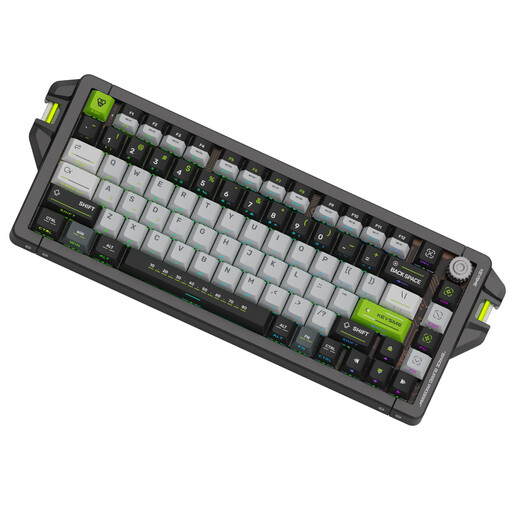
Why This Fits Their Persona: Seeks maximum performance and superior build quality. The CNC-milled aluminum case and high-quality Gateron switches meet the highest standards for stability, feel, and durability.
The solid aluminum case prevents any flex, ensuring that the precision of the magnetic switches is not compromised by an unstable base.
CNC aluminum case and Gateron Magnetic Jade Switch Pro for outstanding stability and a defined typing feel. The gasket-mount design provides a dampened, pleasant typing experience.
We've compiled a complete, up-to-date list of products that fully meet these strict selection criteria and applicable regulations.
Yes, although the main advantage is for FPS gaming keyboards, other genres also benefit. Rhythm games (like Osu!) or other titles that require fast, repetitive keystrokes can profit from the instant key reset. Furthermore, the ability to customize the actuation point is useful for anyone who wants to personalize their typing feel.
Conventional mechanical keyboards use a physical contact to register a keystroke, where a metal leaf must touch another. A Hall Effect keyboard (or magnetic keyboard) is contactless. It uses a magnet in the key's stem and a sensor on the PCB to measure the key's exact position. This analog measurement enables features like an infinitely adjustable actuation point and Rapid Trigger, which are not possible with mechanical switches.
In most cases, yes. To configure the full functionality, including the 8000Hz polling rate, adjustable actuation point, and RGB lighting, manufacturer-specific software or a web-based driver is required. Some models offer the ability to save settings directly to the keyboard's on-board memory, so the software doesn't need to be running constantly after the initial setup.