Choose a laptop only after testing a sample record to check that your cataloguing software supports custom item fields, images and exports as needed: Data Crow documents additional fields, while Koha requires MARC frameworks to be set up in advance. For long cataloguing sessions, a larger built-in screen may be preferable; for working at the shelves, a more compact device may suit you better. In either case, check the ports and test restoring a backup against your actual workflow.
Who needs what
Collectors using custom item fields
If you want to record provenance, binding details or condition notes for each book, check whether your cataloguing software supports these fields and handles backups and exports. Data Crow documents custom modules and additional fields; the Library of Congress covers details relating to individual items.
Cataloguers working at a desk
For long entries with image references and multiple views, the built-in screen size can be an important factor in your choice. Lenovo and HP list specific 14- and 16-inch configurations with WUXGA displays; check how your own forms look on screen.
Cataloguers working at the shelves
If you often move between locations, dimensions, keyboard and a suitable range of ports all matter. Also check that your specific cataloguing software and existing devices are compatible with the laptop; actual battery life will depend on how you use it.
What to look for in a cataloguing laptop
First, find out how the software handles custom fields and backups. Then compare screen size and specifications with where you work and the devices you plan to keep using.
| Criteria |
What to check before buying |
Who needs it? |
| Custom fields and software |
Create a sample record with custom fields and an image; check editing, searching and exporting on the operating system you plan to use. |
If I want to record details such as provenance and condition for each item, the software needs to let me edit and export them. Around 33% of consumers put customisable catalogue fields first. |
| Desk workspace |
Open your forms at the screen size you plan to use and check whether you’ll also need an external monitor. |
If I’m editing long descriptions and image references side by side, I want to be able to read entries comfortably. Around 27% of consumers prioritise a fixed desk workspace for this. |
| Cataloguing at the shelves |
Compare dimensions, keyboard and ports; don’t treat stated battery life as a guarantee of how long it will last for you. |
At the shelves, I want to carry the laptop between locations and enter information comfortably. Around 20% of consumers focus on cataloguing in different workspaces. |
| Backups and device connections |
Back up a sample catalogue along with custom modules and images, test restoring it, and check the ports against your existing peripherals. |
If I need to be able to use my database, custom fields and images again after a failure, I’ll plan a backup and test restoring it. Around 20% of consumers prioritise backups and connecting their devices. |
Avoiding buying and usage pitfalls
-
Don’t confuse more processing power with better catalogue fields
Custom fields depend on your cataloguing software and how it’s set up. A more powerful laptop won’t make up for missing field types or an unsuitable export.
Before choosing a device, create a sample record with your fields and test editing and exporting. With Koha, the relevant MARC frameworks need to be set up before cataloguing.
Moving to different software or a new platform later may mean setting up the fields again and carrying out further export tests.
-
Don’t mistake a large internal SSD for a backup
An internal SSD and a separate backup serve different purposes. If a device fails, the database, images and custom modules may all be affected.
Plan regular backups and test that you can restore the files. Germany’s Federal Office for Information Security recommends backing up data regularly.
Depending on how you back up, you may need a separate storage device or another suitable backup option.
-
Check the included accessories and ports for the exact model
Specifications vary by model: the power adapter for the HP ProBook 4 G2i 14, DM9H7EA#ABD, is sold separately, while it’s included with the HP ProBook 4 G2i 16, E04G0ET#ABD. Apple lists two Thunderbolt 4 ports for the 13-inch MacBook Air M5.
Before buying, check the exact model number, what’s included and the ports against your existing devices.
If the power adapter or ports aren’t compatible with your setup, you may need to buy additional equipment or arrange extra connections.
Brands to consider
Lenovo
The ThinkPad E14 Gen 7 is a specific 14-inch Windows configuration for working in different locations.
- For model 21SX000RGE, Lenovo lists Windows 11 Pro, 16 GB RAM, a 512 GB SSD, a matte WUXGA display and a German keyboard.
- These specifications apply to model 21SX000RGE and shouldn’t be assumed to apply to all ThinkPads.
HP
The ProBook 4 G2i range includes specific 14- and 16-inch configurations for different workspace needs.
- HP lists Windows 11 Pro, 16 GB RAM and a 512 GB SSD for both DM9H7EA#ABD and E04G0ET#ABD.
- The power adapter is sold separately for the 14-inch DM9H7EA#ABD, but included with the 16-inch E04G0ET#ABD. These details apply to these specific models.
Apple
The 13-inch MacBook Air M5 is a macOS option if your chosen cataloguing software and existing devices are compatible.
- Apple lists a 13.6-inch display, at least 16 GB of unified memory and two Thunderbolt 4 ports for this model.
- These manufacturer specifications don’t confirm that an existing Windows catalogue or every peripheral you own will work without adjustments.
Dell
The Dell Pro 14 PC14250 is another range to consider when looking for a specific configuration that suits your needs.
- Dell offers a choice of configurations for the PC14250.
- Memory, ports and suitability for your cataloguing software depend on the configuration you choose; check the exact model.
Joybuy laptops for cataloguing
The Windows laptops below include larger screen sizes for desk-based work and a more compact 14-inch model for working in different locations. Before buying, check that your cataloguing software and peripherals are compatible with the specific configuration.
 No product image available
Acer TravelMate TMP216-41-TCO, 16-inch WUXGA
This 16-inch configuration is an option for longer catalogue entries at a desk; first check that your software and exports work as required.
Named in the product title: AMD Ryzen 3 PRO 7335U, 16 GB DDR5, 512 GB SSD, AMD Radeon 660M and Windows 11 Pro Education.
Listed ports include USB4, USB-A, HDMI 2.1 and RJ-45.
View at Joybuy
 No product image available
Lenovo ThinkPad E16 Gen 3 21ST, 32 GB RAM, 1 TB SSD
This 16-inch model may suit you if you mainly edit longer descriptions and field lists at a desk; test your forms at the screen size you plan to use.
Specifications listed include AMD Ryzen 7 250 at 3.3 GHz, Radeon 780M, 32 GB RAM, a 1 TB NVMe SSD and Windows 11 Pro.
Listed ports include USB4-C, USB-A, HDMI 2.1 and RJ45.
View at Joybuy
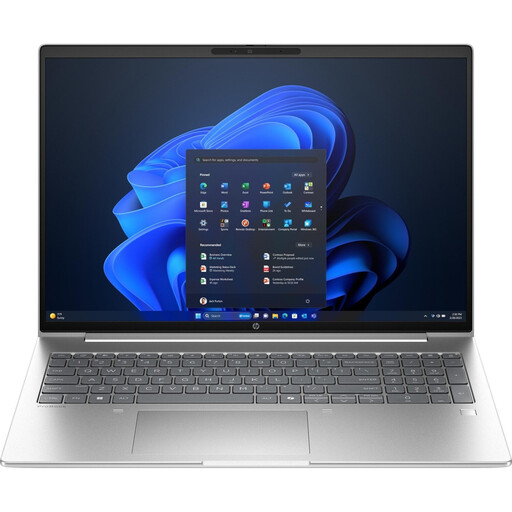 No product image available
HP ProBook 4 16 G1i, 32 GB RAM, 1 TB SSD
The 16-inch display may be useful if you mainly work at a desk. Check that your cataloguing software works with Windows 11 Pro and the devices you need.
Specifications listed include Intel Core Ultra 7 255U, 32 GB RAM, a 1 TB NVMe SSD and Intel Graphics.
The display is listed as 16-inch IPS with a resolution of 1920 × 1200 pixels; Wi-Fi 7 is also specified.
View at Joybuy
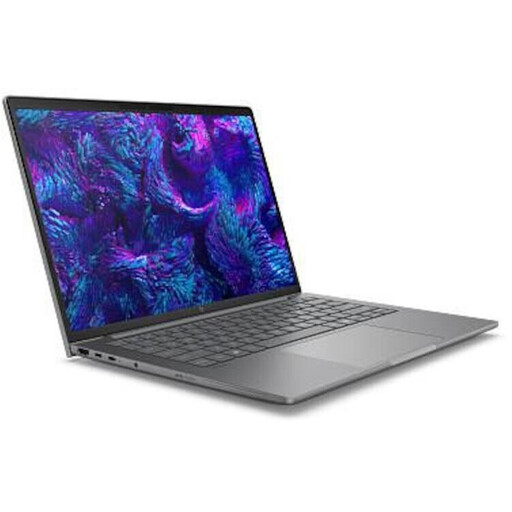 No product image available
HP ZBook 8 G1i, 14-inch, 64 GB RAM, 1 TB SSD
This 14-inch configuration is the more compact option in this selection if you catalogue in different locations. Compared with the 16-inch models, it has less built-in screen space.
Named in the product title: Intel Core Ultra 9 285H, 64 GB RAM and a 1 TB SSD. Windows 11 Pro is also listed.
View at Joybuy
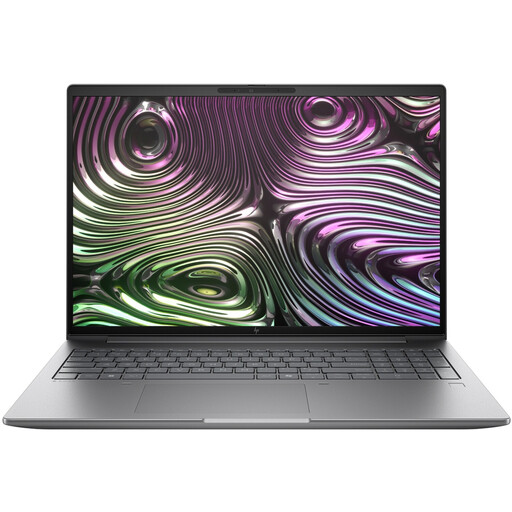 No product image available
HP ZBook X G1i, 16-inch, 32 GB RAM, 1 TB SSD
This 16-inch model is an option for longer descriptions and field lists at a desk; check that the ports suit your scanner, monitor and storage devices.
Specifications listed include Intel Core Ultra 7 255H, 32 GB RAM, a 1 TB SSD and Windows 11 Pro.
The 16-inch WUXGA display, along with USB, HDMI and Gigabit Ethernet ports, is listed.
View at Joybuy
Frequently asked questions
Does the laptop itself need to support custom catalogue fields?
No. Fields are created in your cataloguing software, not through a special laptop feature. Data Crow documents custom modules and additional fields; with Koha, the relevant MARC frameworks need to be set up before cataloguing. Test your specific workflow using a sample item.
How do I back up custom fields and images?
If you use Data Crow, back up the database, modules, images and settings, then test restoring them. Germany’s Federal Office for Information Security recommends backing up data regularly; simply saving a copy doesn’t show whether it can be restored.
What should I check about the power adapter and ports?
Compare what’s included and the ports on the exact model with your existing setup. The power adapter for the HP ProBook 4 G2i 14, DM9H7EA#ABD, is sold separately, while it’s included with the HP ProBook 4 G2i 16, E04G0ET#ABD. Apple lists two Thunderbolt 4 ports for the 13-inch MacBook Air M5.
What are my rights if my laptop is faulty in Germany?
If you buy as a consumer, Your Europe’s consumer information states that you have a minimum two-year guarantee from the date you receive the goods, provided by the seller. This applies to consumer purchases and doesn’t necessarily apply to purchases for commercial or self-employed professional use.
Do I need to consider personal data when cataloguing?
If you process personal details, for example about living former owners or borrowers, data protection law may apply. The obligations that apply to a particular private or institutional catalogue depend, among other things, on its purpose, the data it contains and who is responsible for it; your choice of laptop alone won’t resolve this.


