For a batch of raspberry coulis, a stick blender is a good fit if you blend in a suitable container and are happy to work in several batches. A jug blender makes sense if its usable jug capacity, as stated in the instructions, suits the amount you want to make. For the smoothest sauce with as few seeds as possible, you’ll also need to push the purée through a sieve – more motor power won’t replace this step. If you’re using berries that have already been frozen, the German Federal Institute for Risk Assessment recommends heating them thoroughly before eating. Blending and freezing them again doesn’t replace heating.
Which type of blender is right for you?
Batch-prep blender users
You want to make raspberry coulis in several portions for the freezer, so you need to balance the amount you can blend at a time, the number of batches and the size of the container. The Consumer Advice Centre recommends leaving room at the top of containers when freezing liquids, so they can expand.
Cooks making seed-free dessert sauces
You’d rather have the smoothest sauce possible than save a step, so you’re prepared to sieve it and wash the sieve afterwards. The recipe site French Cooking by Aurélie Bastian describes blending and sieving as separate steps.
Occasional purée makers
You’re more likely to make smaller batches and want a blender that’s easy to store and useful for other puréeing jobs too. The German broadcaster SWR’s comparison of jug and stick blenders points out that a stick blender can be used directly in a suitable container for small amounts.
What should you look for when buying?
Stick blender
A good fit if: You’re blending in a suitable separate container or pan and need to save worktop space.
The trade-off: You may need to blend a large batch in several goes. Make sure the container size and splash guard are suitable for the amount you’re making.
Jug blender
A good fit if: You regularly blend larger batches and the jug’s usable capacity is sufficient.
The trade-off: The jug sets a fixed working capacity and needs space on your worktop or in a cupboard.
Compact personal blender
A good fit if: You mainly make small batches and would also like to use the blender for drinks.
The trade-off: The cup size may mean extra batches if you’re making a larger amount for the freezer. Also check separately whether the container is suitable for freezing.
First, work out how much you plan to blend at a time. Then decide whether you want to sieve the sauce. Only then can you properly weigh up the type of blender and the cleaning involved.
| What matters to you |
What to check before buying |
Who is this most important to? |
| Batch size and number of blending sessions |
Compare the amount you plan to blend at a time with the fill mark and instructions for the specific model; don’t assume the stated capacity is the usable working capacity. |
If I’m making several portions for the freezer, what matters most is how much I can blend at a time. Around 36% of consumers prioritise having the right batch size. |
| Seeds and texture |
Decide before buying whether seeds will bother you, and choose a suitable sieve for the amount you plan to make if needed. |
For a smooth dessert sauce, I’d plan to sieve it from the outset rather than rely on the motor’s power rating. Around 29% of consumers prioritise a texture with as few seeds as possible. |
| Cleaning and freezing |
Check the cleaning instructions for removable parts and choose suitable portion containers, leaving room for expansion in the freezer. |
I want to know which parts need washing after blending and sieving, and whether my portion containers are suitable for freezing. Easy cleaning is a priority for around 21% of consumers. |
| Compact size for small batches |
Check the smallest practical quantity, the shape of the cup and the storage space available for the specific appliance. |
If I’m only making small portions, I want an appliance that takes up little storage space. Around 14% of consumers prioritise a compact design for small batches. |
Which buying and preparation mistakes should you avoid?
-
Assuming more watts means seed-free coulis
The motor’s power rating won’t tell you whether the raspberry seeds will be removed from the sauce. French Cooking by Aurélie Bastian describes sieving as an extra step after blending.
Decide what texture you want before blending, and have a suitable sieve ready if needed.
Sieving and washing the sieve take extra time; you may also need to buy a separate sieve.
-
Planning around the jug’s stated capacity as though it were its working capacity
The stated capacity isn’t automatically the right fill level for every batch. Bosch lists the VitaBoost MMBH6P6BDE as 2.5 l in its description and 2.0 l in its technical specifications.
Check the fill mark and instructions for the specific model against the amount you plan to blend at a time.
If the usable capacity is smaller than your batch, you may need to blend it in several goes.
-
Assuming blending or refreezing makes frozen berries safe to eat without heating
The German Federal Institute for Risk Assessment recommends heating frozen berries thoroughly before eating, particularly to protect vulnerable groups. Blending and then freezing them again doesn’t replace this step.
If you’re using berries that have already been frozen, take this recommendation into account when planning your recipe and heat the berries thoroughly before eating.
Which brands and product ranges are worth considering?
Bosch
Bosch sells both stick blenders, such as the ErgoMixx MSM66110, and jug blenders, such as the VitaBoost MMBH6P6BDE.
- Bosch lists a removable metal blending foot, two speed settings and a measuring beaker with the MSM66110.
- Bosch lists the VitaBoost MMBH6P6BDE as 2.5 l in its description and 2.0 l in its technical specifications. Before planning your batch size, check the instructions and maximum fill mark for the specific model.
Braun
MultiQuick 7 includes stick blenders with different features, while PowerBlend 3 is a jug blender range. The specific model makes all the difference.
- Braun lists variable speed control and a measuring beaker for the MQ7000X. The MQ7025X also comes with a 350 ml chopper and a whisk.
- Extra accessories won’t replace a sieve if you want to remove the raspberry seeds from your coulis.
Philips
The ProMix HR2534/00 is listed as a stick blender model. Check the exact model designation when comparing versions.
- A product overview by essen & trinken lists a stainless steel blending shaft for the HR2534/00.
- Philips explicitly labels the HR2534/00R1 as refurbished. Don’t assume this R1 version is new without checking.
WMF
The Kult X Mix & Go is a compact personal blender to consider for smaller batches of coulis and other uses, such as making drinks.
- WMF lists a 0.6 l blending container and 300 W for this model.
- The container size may mean extra blending sessions if you’re making a larger batch. Check separately whether the container is suitable for freezing.
Joybuy products for coulis and fruit purée
This selection includes stick blenders for blending in a suitable separate container, as well as a jug blender for fruit purée. Whichever type you choose, you’ll need to sieve the mixture as well if you want coulis with as few seeds as possible.
 No image available
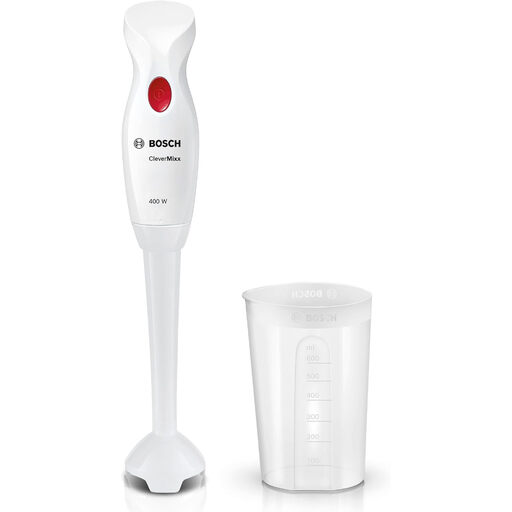
Bosch CleverMixx MSM14000 stick blender, 400 W
For blending raspberries in a suitable separate container. The product description lists a removable blending foot, a four-blade blending foot and a measuring beaker. It also states that the removable parts are dishwasher-safe.
View at Joybuy
 No image available
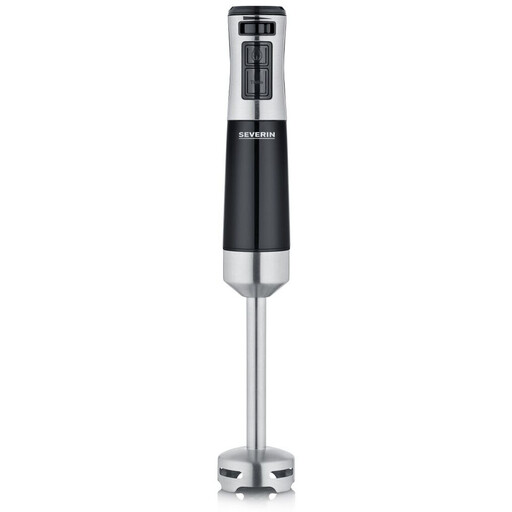
Severin SM 3771 stick blender, 600 W
For fruit purées and sauces made in a suitable container. The product description lists variable speed control and a removable blending shaft. It also states that the removable parts are dishwasher-safe.
View at Joybuy
 No image available
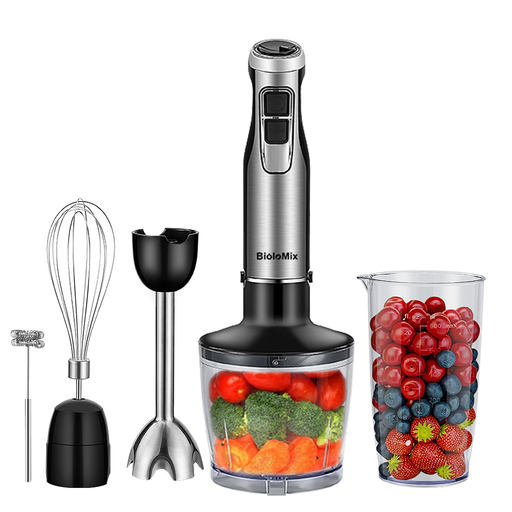
BioloMix HB1200 4-in-1 stick blender, 6 speed settings, 1200 W
For blending fruit and vegetables in a suitable separate container. The product title lists six speed settings, a removable blending shaft and a stainless steel blending foot.
View at Joybuy
 No image available
ochama multifunction blender, 1.5 l, 600 W
For making fruit purée in the jug, if its usable capacity is right for your batch. The product title lists a 1.5 l jug and three speed settings. Check the model specifications to confirm its actual working capacity.
View at Joybuy
 No image available
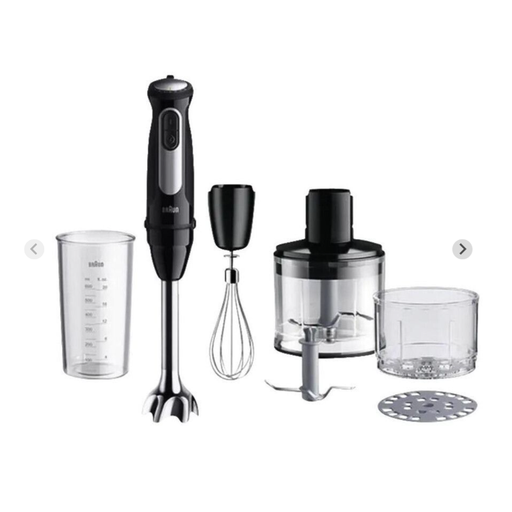
BRAUN MultiQuick Pro MQ55254M stick blender
For sauces and purées made in a suitable container, when you want to adjust the speed. The product description lists 25 speed settings and a turbo function.
View at Joybuy
Frequently asked questions
Will a particularly powerful blender make raspberry coulis seed-free?
No, you shouldn’t count on it. The recipe site French Cooking by Aurélie Bastian describes blending and then pushing the mixture through a sieve as separate steps.
Can I blend frozen raspberries without heating them, then freeze the coulis again?
The German Federal Institute for Risk Assessment recommends heating frozen berries thoroughly before eating, particularly to protect vulnerable people. Blending and freezing them again doesn’t replace heating. This recommendation applies to berries that have already been frozen; it doesn’t mean that every coulis made with fresh berries needs to be cooked.
What should I freeze portions of liquid coulis in?
Use suitable freezer containers and label them with the contents and date. The Consumer Advice Centre recommends filling containers for liquids to only three-quarters full, to allow for expansion as they freeze. A blender drinking cup isn’t automatically suitable for use as a freezer container.
How can I keep my blender and accessories clean when making batches?
Wash your hands and kitchen utensils before you start and between steps. Whether blender parts can go in the dishwasher depends on the instructions for the specific model.
What do the CE marking and warranty tell me about a blender?
According to the European Union, the CE marking is a manufacturer’s declaration that the product meets the relevant EU requirements; it says nothing about the texture of raspberry coulis. If goods are faulty or not as described, you have statutory consumer rights against the trader. These are separate from any voluntary manufacturer’s warranty.


