
Lieferung heute & morgen

Qualitätsgarantie

Willkommens-Angebote freischalten: KOSTENLOSE Lieferung | Bis zu 80 % RABATT | Kostenlose 30-Tage-JoyPlus-Testphase
App herunterladen
A versatile ratchet screwdriver set is an indispensable tool for DIY enthusiasts and hobbyists. Whether you're assembling furniture, repairing a bike, or performing delicate electronics work, the combination of a ratchet, handle, and a variety of bits promises efficiency and flexibility. However, the market is flooded with sets that look very similar at first glance. In practice, the useless tools are quickly separated from the truly useful ones.
Many buyers invest in sets that look comprehensive, only to find they are unsuitable for practical use. We'll show you the three most common pitfalls and what to look for when choosing a set to avoid a bad investment.
To avoid these problems, you should check three technical features before buying. These determine the durability and practicality of your tool.
The durability of a screwdriver set lives and dies by the material of its bits. Look for the following specifications:
Plain carbon steel, often found in no-name sets, should be avoided as it frequently fails to withstand the demands of everyday DIY tasks.
The ratchet is the heart of the set. Its efficiency is determined by the number of teeth inside. A higher tooth count allows for a smaller return angle—the movement you need to make with the handle to engage the mechanism.
A good multi-tool set is defined not by the sheer number of bits, but by their thoughtful selection. Check if the set covers the profiles relevant to your projects:
Based on these criteria, we have identified a few products that are a suitable solution for different user profiles.
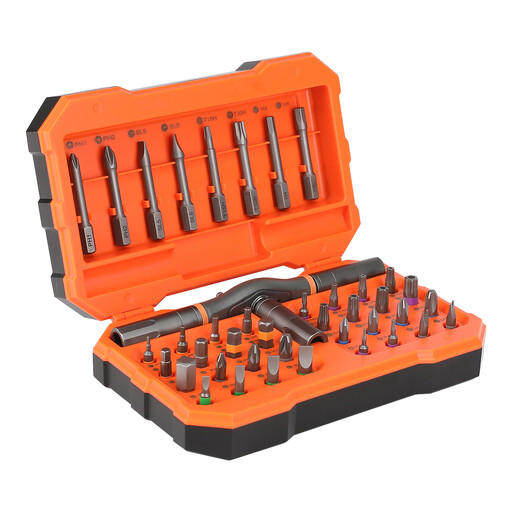
Why it's a good fit: This set is designed as a classic multi-tool kit. With 40 bits, including extended versions, and a convertible handle, it covers a wide spectrum from furniture assembly to minor electronics repairs. It's the ideal starter kit for any home.
According to the manufacturer, the bits are made from S2 tool steel, which avoids the pitfall of soft, unusable material. The multi-functional handle allows it to be used as a standard or T-handle, making it suitable for tighter spaces.
Combines ratchet screwdriver and wrench functions. Includes 8 extended 45mm bits for deep-set screws.
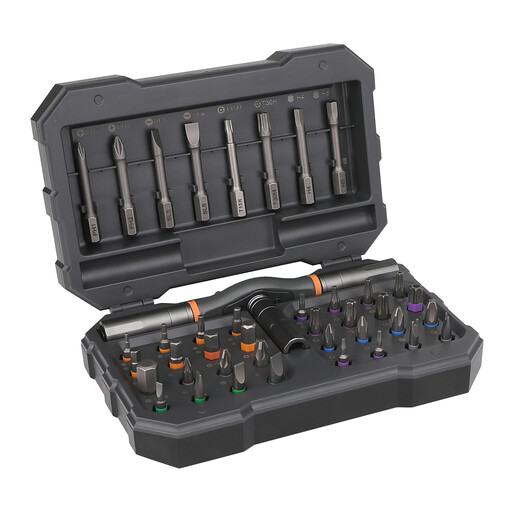
Why it's a good fit: For anyone looking for a solid basic kit without a large initial investment. This set offers a comparable range of functions to more expensive models and is a great choice for occasional household repairs.
Here too, the manufacturer claims to use S2 tool steel for the bits, which is not a given in this price range. The magnetic interface also ensures a secure hold on the bits, preventing the frustration of dropped parts.
Comprehensive kit with 40 bits and a T-handle option at an accessible price. The compact case ensures neat storage.
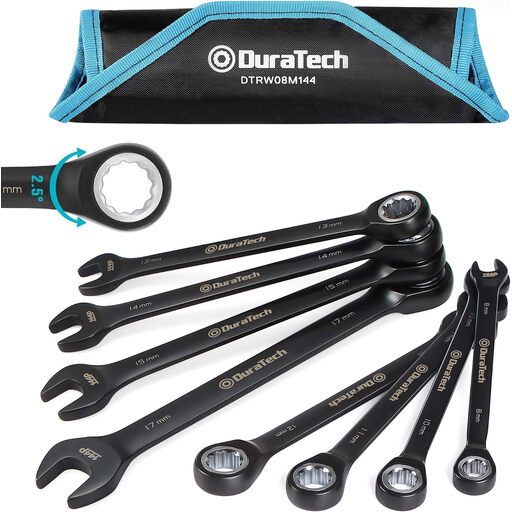
Why it's a good fit: This isn't a screwdriver set, but a set of ratcheting combination wrenches. It's the right choice for users who regularly work on bikes, cars, or machinery and need a high-torque tool for hex bolts. It's a valuable addition to any bike tool kit.
The 144-tooth ratchet mechanism offers an extremely small 2.5-degree swing arc, solving the problem of working in very tight spaces like an engine bay. The material is robust Chrome Vanadium steel.
Extremely fine toothing for precise work in the tightest of spaces. The included roll-up pouch allows for organized and portable storage.
We have compiled a complete, up-to-date list of products that fully meet these strict selection criteria and applicable regulations.
1. What is the difference between S2 steel and Chrome Vanadium steel in a ratchet screwdriver set? S2 tool steel is generally harder and more wear-resistant, making it ideal for the bits that come into direct contact with the screw. Chrome Vanadium steel (Cr-V) is very tough and corrosion-resistant, which is why it's well-suited for the body of the ratchet or for sockets that must withstand high forces. A good combination is a Cr-V ratchet body with S2 steel bits.
2. How many teeth should a good ratchet have? For general household tasks, a ratchet with 72 teeth (5° return angle) is a good standard. If you frequently work in very tight spaces, such as in auto repair or with a precision tool kit for electronics, a mechanism with over 100 teeth (e.g., 144 teeth for a 2.5° angle) offers a significant advantage, as minimal movement is required to engage the next tooth.
3. Do I need a set with a T-handle? A T-handle screwdriver is advantageous when you need to apply more torque than is possible with a straight handle. This is useful for loosening stuck screws or tightening screws securely, for example, during furniture assembly or on bike components. This function is less relevant for delicate electronics work.