
Lieferung heute & morgen

Qualitätsgarantie

Willkommens-Angebote freischalten: KOSTENLOSE Lieferung | Bis zu 80 % RABATT | Kostenlose 30-Tage-JoyPlus-Testphase
App herunterladen
A good ratchet set is the cornerstone of any well-equipped workshop and every ambitious DIY project. However, the market is crowded and confusing, full of offers that promise more than they deliver. Before you invest in a seemingly comprehensive socket set that later proves to be useless, it's important to know the common pitfalls. This guide will help you separate the wheat from the chaff and make an informed decision.
Many buyers focus on the sheer number of pieces or on grandiose marketing claims. This often leads to disappointment. Pay special attention to these three points:
To avoid a bad purchase, you should focus on the core technical features. These three factors determine the longevity and practical usability of your new tool.
The drive size (the square drive that the socket fits onto) defines the range of applications. The most common sizes are:
A good ratchet tool case often contains ratchets and sockets in two different sizes to cover a broad spectrum of tasks.
Look for tools made from Chrome Vanadium Steel (Cr-V). This alloy is known for its high strength, toughness, and wear resistance. A high-quality surface finish (e.g., matte chrome) not only protects against corrosion but also provides a better grip and prevents the flaking of chrome chips, a common issue with cheap, shiny polished sets.
The tooth count in the ratchet head is a direct indicator of quality. It determines the required backswing angle:
A fine-toothed mechanism not only makes work in tight areas possible but also significantly more efficient and pleasant.
Instead of making a one-size-fits-all recommendation, we have selected products for specific user groups and their requirements.
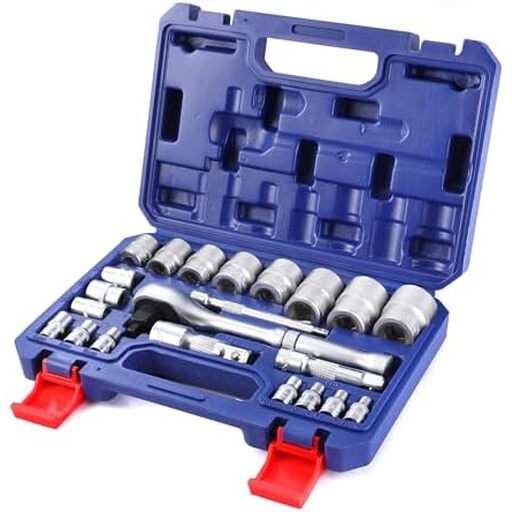
Why This Fits Their Persona: Perfect for home use, furniture assembly, or simple repairs. This set is compact but covers the most important drive sizes thanks to its clever 3-in-1 handle, without carrying unnecessary bulk.
It avoids the "comprehensive-but-useless" trap. Instead of many filler pieces, it focuses on a sensible selection of sockets and a single, versatile handle.
The 3-in-1 ratchet handle for 1/4", 3/8", and 1/2" drives is extremely space-saving. The tools are made from durable Cr-V steel.
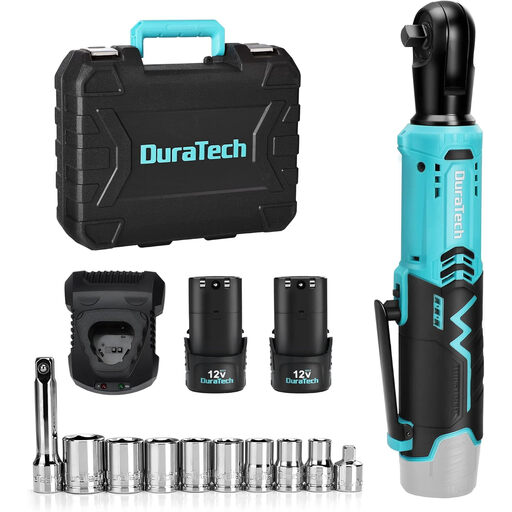
Why This Fits Their Persona: For anyone who regularly works on cars or motorcycles and values efficiency. This cordless ratchet wrench enormously speeds up loosening and tightening bolts, especially for repetitive tasks.
This tool bypasses the coarse mechanism trap by replacing the manual ratcheting motion with a motor. This allows for fast work even where there's no room to swing the handle.
The powerful motor delivers up to 65 Nm of torque. Two batteries and a fast charger ensure uninterrupted work. The integrated LED light is very useful in dark engine bays.
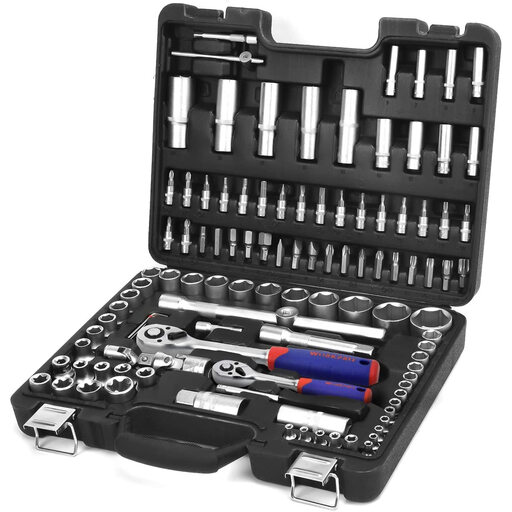
Why This Fits Their Persona: For professional users or very ambitious DIYers who need a complete, durable solution. This socket set covers almost all conceivable applications with its 1/4" and 1/2" drives.
Although it has 108 pieces, it is a logically structured collection made from high-quality Cr-V steel. The fine-toothed 72-tooth ratchets are precise, and the parts are designed for professional use.
Comprehensive coverage with two drive sizes. Includes essential accessories like extensions, universal joints, and spark plug sockets. Everything is neatly organised in a sturdy case.
We have compiled a complete, up-to-date list of products that fully meet these strict selection criteria and German safety regulations.
The choice depends on your primary use case. For delicate work on electronics or model building, 1/4-inch is ideal. The 3/8-inch drive is the most versatile and a great choice for general repairs on vehicles and around the home. For high torque requirements, such as loosening lug nuts or suspension components, the 1/2-inch drive is indispensable. Many comprehensive sets include both 1/4-inch and 1/2-inch components.
The tooth count indicates how finely the ratchet mechanism is geared. A higher tooth count (e.g., 72, 90, or more) means a smaller angle you need to move the ratchet back to engage the next tooth (e.g., 5° for 72 teeth). This is crucial when working in places with very little room to move, as you can tighten or loosen a bolt even with minimal movements.
Proper care ensures the longevity of your tools. Keep the sockets and ratchet clean and dry to prevent rust. Wipe off oil and dirt after use. The ratchet mechanism itself is often low-maintenance but can occasionally benefit from a drop of penetrating or fine-mechanism oil to ensure smooth operation. Always store the set in its case to avoid losing parts and to protect the tools from moisture.