
Lieferung heute & morgen

Qualitätsgarantie

Willkommens-Angebote freischalten: KOSTENLOSE Lieferung | Bis zu 80 % RABATT | Kostenlose 30-Tage-JoyPlus-Testphase
App herunterladen
A good ratchet set is the heart of many toolkits. Whether you're assembling furniture, maintaining your bike, or working on your car, the right tool makes the difference between success and frustration. But the market is overwhelming, and many products don't live up to their promises. As your Joybuy Product Recommendation Officer, I'll help you recognize the typical pitfalls and make an informed decision.
Many DIY enthusiasts invest in a comprehensive socket set, only to find it's unsuitable for the task at hand. Watch out for these three common problems to avoid buyer's remorse:
To find the right tool, you should be guided by technical facts, not marketing promises. Here are the three most important criteria for your selection.
The longevity of a ratchet set depends directly on the steel used. Look for these designations:
The drive size, specified in inches, determines the size of the sockets and the maximum torque.
Closely related is the gearing of the ratchet mechanism. A ratchet with 72 teeth requires only a 5-degree arc swing. This is a decisive advantage in tight workspaces. Models with 90 or more teeth offer even more flexibility.
Alongside the classic manual socket set, the cordless ratchet is gaining popularity. It significantly speeds up repetitive fastening tasks and makes overhead work easier. For occasional use, a manual set is often sufficient. However, anyone who frequently works with fasteners will benefit from the time and effort saved by a cordless model.
Based on these objective criteria, we have selected a few products for typical user profiles.
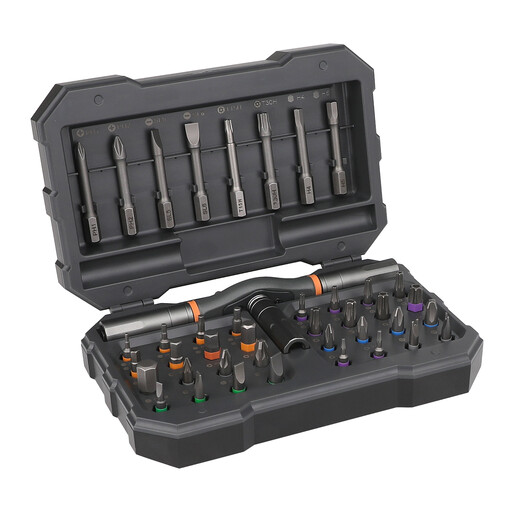
Why This Fits Their Persona: This set is a compact solution for users who need a single tool for diverse tasks ranging from furniture assembly and electronics to bicycle repairs. The multifunctional handle adapts flexibly to any situation.
It bypasses the "mismatched contents" trap with 40 different bits, including extended bits for recessed areas. The bits, made of S2 tool steel, also prevent rapid wear.
The handle can be used as a ratchet screwdriver and a T-handle wrench, increasing leverage and flexibility in tight areas. The magnetic bit holder ensures a secure grip.
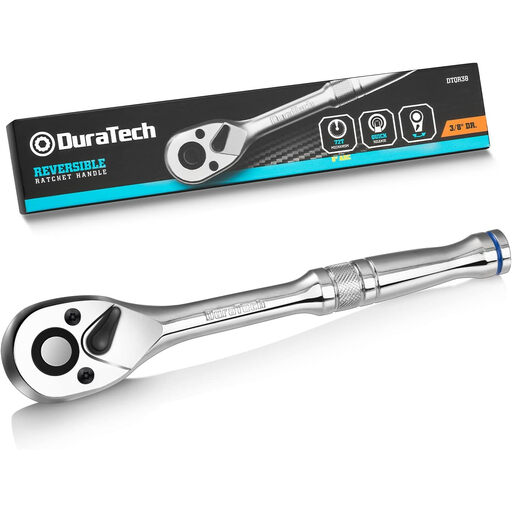
Why This Fits Their Persona: Ideal for users who regularly work on cars or motorcycles and need a robust tool with high torque capacity. This model combines the three most common drive sizes in one handle.
The ratchet head, made of CR-MO steel, withstands high loads and prevents material fatigue. The 72-tooth mechanism, with its 5° swing arc, enables work in tight engine bays.
Combines 1/4", 3/8", and 1/2" drives in one tool. The maximum torque ratings are clearly specified (e.g., 350 Nm for 1/2"), ensuring safe application.
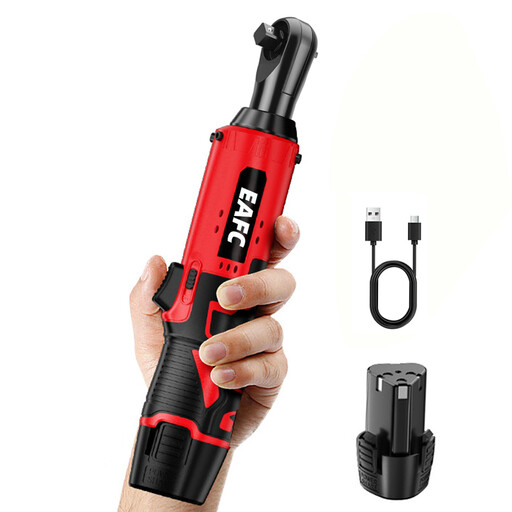
Why This Fits Their Persona: Perfect for anyone who performs frequent, repetitive fastening jobs and wants to save time and effort. The battery-powered assistance makes working on machinery, furniture, or stage construction significantly more comfortable.
The electric drive almost completely eliminates the swing arc problem. The 3 cm slim head provides access to extremely tight spots where a manual ratchet would fail.
Delivers 45 Nm of electric torque and variable speed control. Features like an LED work light and a quick-release chuck further enhance work efficiency.
We have compiled a comprehensive, up-to-date list of products that fully meet these strict selection criteria.
For most applications, a ratchet with 72 teeth is an excellent choice. It offers a small 5-degree arc swing, which is sufficient in most situations. For extremely confined spaces, like deep in an engine bay, models with 90, 120, or more teeth can be advantageous as they have an even finer mechanism. A tooth count lower than 72 is not recommended for flexible work.
This depends entirely on your primary use case:
A cordless ratchet is a worthwhile investment if you frequently need to loosen or tighten many screws. It saves an enormous amount of time and is easier on your joints. For occasionally tightening a single screw, the extra cost compared to a manual set is not necessarily justified. However, if you regularly undertake projects involving many fasteners (e.g., deck building, assembling a series of furniture, engine work), you will quickly come to appreciate the convenience.