
Lieferung heute & morgen

Qualitätsgarantie

Willkommens-Angebote freischalten: KOSTENLOSE Lieferung | Bis zu 80 % RABATT | Kostenlose 30-Tage-JoyPlus-Testphase
App herunterladen
A ratchet set can replace several individual tools for vehicle repairs, furniture assembly and workshop jobs. But a large case doesn’t automatically mean you’ll get the right selection. The key considerations are the drive size, range of sizes, material, mechanism and suitability for the job you have in mind.
A ratchet set with a high piece count may seem versatile at first. In practice, it might contain lots of bits or duplicate sockets, while missing commonly used metric sizes. For work on a vehicle, a metric socket set is usually a more practical choice than a set made up mainly of imperial sizes.
Before buying, check:
A 72- or 90-tooth ratchet needs less movement to reach the next click than a coarser mechanism. This is particularly useful in tight spaces, such as an engine bay or underneath furniture. However, the tooth count alone doesn’t tell you how much load the ratchet can handle.
For high-torque jobs, check the torque range specified by the manufacturer. A 1/4-inch ratchet is typically suited to smaller fasteners, while a 1/2-inch ratchet can handle larger sockets and heavier loads. A 3/8-inch ratchet sits between the two and is handy for many general assembly and automotive jobs.
Chrome or nickel plating makes tools easier to clean and can help protect them against corrosion. But it’s no substitute for keeping them dry and looking after them. Moisture, road salt, cleaning products and workshop dust can damage the finish and ratchet mechanism over time.
After use, clean and dry your tools, and apply a little oil to moving parts if needed. A sturdy case or fitted storage tray also helps prevent sockets from going missing.
The drive size refers to the square fitting that sockets and accessories attach to. The most common sizes are:
A ratchet and socket set with several drive sizes covers more types of work, but takes up more space. Adapters can make a set more versatile, but should only be used within their specified load limits.
Sockets and ratchets are often listed as being made from chrome vanadium steel (Cr-V) or another steel alloy. As well as the material, consider the heat treatment, surface finish and ratchet head design.
Look for:
A quick-release ratchet makes it easier to change sockets, which is particularly useful when you’re regularly switching between sizes. For seized fasteners, it’s important not to use a ratchet as a substitute for a breaker bar or torque wrench designed for the job.
A car tool set shouldn’t just contain lots of pieces; they should be a useful selection. Extensions help you reach recessed bolts, while a universal joint is useful when access is slightly offset. Bits let you work with Phillips, Pozidriv or slotted screws.
For automotive repairs, these points are also worth considering:
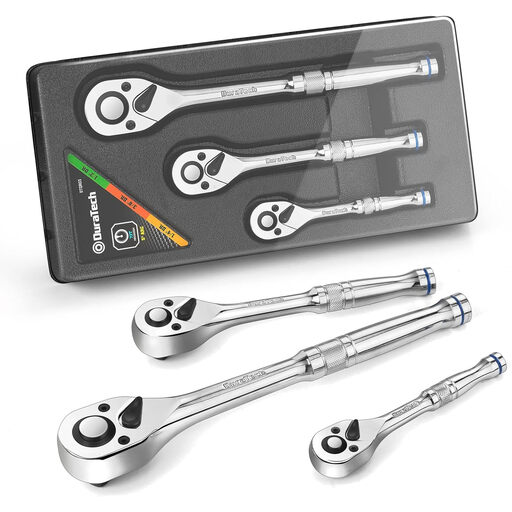
Why this product suits this type of user: Three ratchets in the most common drive sizes provide a straightforward starter set for DIYers and occasional repairs.
The drive sizes are clearly differentiated. The 72-tooth mechanism and stated 5-degree working angle are useful technical details, rather than a focus on piece count alone.
Three drive sizes, reversible ratchet direction, quick-release function and storage in a plastic tray.
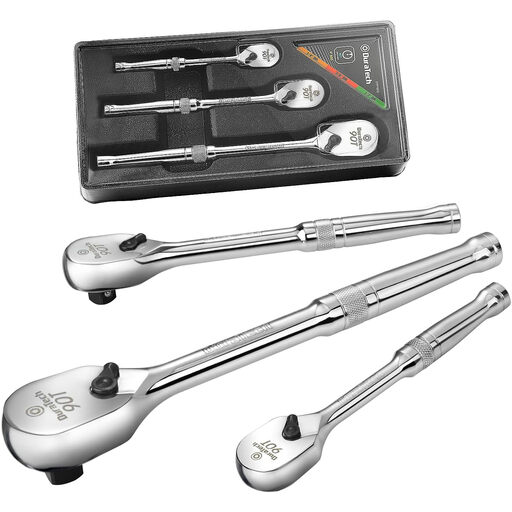
Why this product suits this type of user: If you assemble or repair things regularly, you may appreciate the finer ratchet mechanism and enclosed head, which is suited to dusty working environments.
The product details specify 90 teeth and a 4-degree movement angle. The fully enclosed head is designed to help keep dust and dirt out.
Cr-V steel, polished chrome finish, direction switch and storage case with three drive sizes.
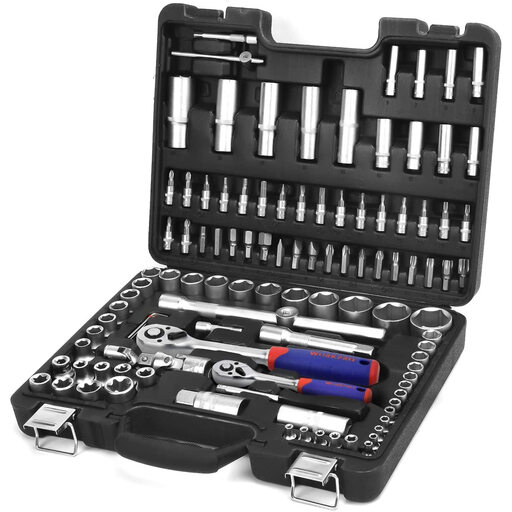
Why this product suits this type of user: For workshop owners, car enthusiasts and frequent users, the combination of sockets, bits, extensions and joint accessories is designed to handle a range of jobs.
The 108 pieces are listed by component, so you can check before buying whether the 1/4- and 1/2-inch ratchets, sockets, spark plug sockets and extensions suit your needs.
Cr-V steel, 72-tooth ratchet with quick release, accessories for a range of jobs and a plastic case measuring 37 × 8 × 28 cm.
We’ve put together a complete, regularly updated list of products that meet these strict selection criteria and fully comply with the safety regulations in force in the EU.
A 3/8-inch ratchet is suitable for many general jobs on a vehicle. Smaller fasteners can be handled with a 1/4-inch ratchet, while a 1/2-inch ratchet may be suitable for larger bolts and jobs requiring more force. The right size always depends on the fastener and the manufacturer’s specifications.
After use, wipe off oil, dust and moisture with a dry cloth. Store the tools in their closed case in a dry place. You can apply a small amount of suitable maintenance oil to the moving parts of the ratchet. Don’t continue using damaged or worn sockets.
No. A large set is worthwhile if you regularly use the sizes and accessories it contains. For occasional DIY jobs, a compact socket set with the right metric sizes may be more practical. What matters is a well-chosen selection, a secure fit and a ratchet suited to the amount of force required.