
Lieferung heute & morgen

Qualitätsgarantie

Willkommens-Angebote freischalten: KOSTENLOSE Lieferung | Bis zu 80 % RABATT | Kostenlose 30-Tage-JoyPlus-Testphase
App herunterladen
A ratchet set should loosen bolts, tighten nuts and perform reliably during repairs. In practice, unclear size information, overfilled cases and incompatible drives often lead to the wrong purchase. This applies to DIY enthusiasts as well as vehicle technicians, fitters and homeowners.
A large socket set may contain numerous bits, adapters and sockets, yet still be missing important metric sizes. For typical jobs in the UK, a clearly specified metric tool set is often more practical than one with the highest possible piece count. Before buying, check:
A reversible ratchet with a higher tooth count usually needs a smaller swing arc. This is useful in confined spaces, such as an engine bay or around furniture fittings. However, the tooth count alone tells you nothing about the permitted load.
For example, the models featured here are specified as having 72 teeth with an operating arc of around 5 degrees or 90 teeth with an operating arc of around 4 degrees. Another supplier lists a ring ratchet spanner with 144 teeth and a 2.5-degree operating arc. These figures matter when working in tight spaces, but they don’t replace checking the permitted torque.
A chrome finish can make cleaning easier and help resist corrosion. However, it doesn’t by itself prove that a tool is mechanically strong. Look for specific material details such as chrome vanadium steel (Cr-V), heat treatment or, for certain components, chrome molybdenum steel (Cr-Mo).
When working on seized fasteners, don’t use a ratchet, extension or adapter if its permitted torque is unknown. For particularly high loosening torque, choose a tool designed for the job.
The drive size affects the tool’s design, socket range and typical uses:
A set with several drive sizes can broaden the range of jobs you can tackle. Ideally, sockets should fit each drive directly, rather than relying on adapters.
6-point sockets grip the flats of a correctly sized nut or bolt evenly. The size must be an exact match, as an oversized or incorrect socket can slip and damage the fastener head.
For a car and household tool set, metric sizes from around 4 to 24 mm are often useful. SAE sizes may also be relevant for some vehicles or imported machinery. If so, make sure the case clearly identifies both measurement systems.
An easy-to-use direction switch and a quick-release button make changing sockets easier. A non-slip handle can improve control. For confined spaces, a low-profile ratchet head, a pivoting head or an extension bar can come in handy.
Storage should also suit the way you plan to use the set:
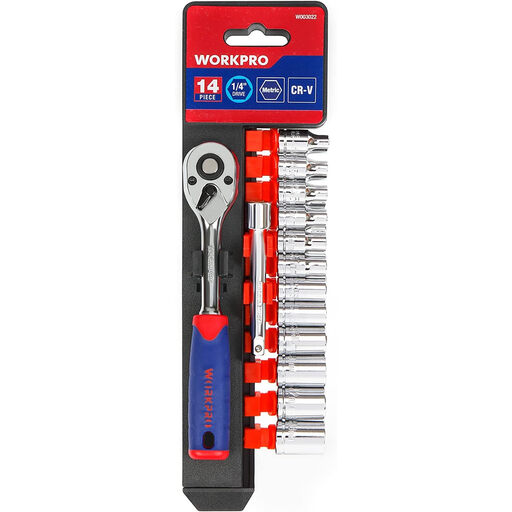
Why this product suits this type of user: This 1/4-inch set covers metric sizes from 4 to 13 mm, making it suitable for general DIY, household repairs and light mechanical jobs.
The included sizes, 72-tooth mechanism and extension bar are listed specifically, rather than relying on a high total piece count to sell the set.
Cr-V steel, 1/4-inch drive, quick-release button, 76 mm extension and socket holder.
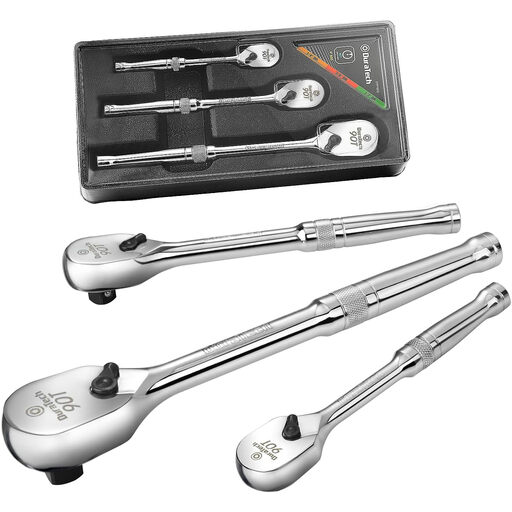
Why this product suits this type of user: Three drive sizes cover different socket ranges, making this set suitable for the workshop, vehicle maintenance and a variety of assembly jobs.
The drive sizes are listed separately. The 90-tooth mechanism is described as having an operating arc of around 4 degrees and a closed head.
Heat-treated chrome alloy steel, reversible mechanism, polished finish and storage case.
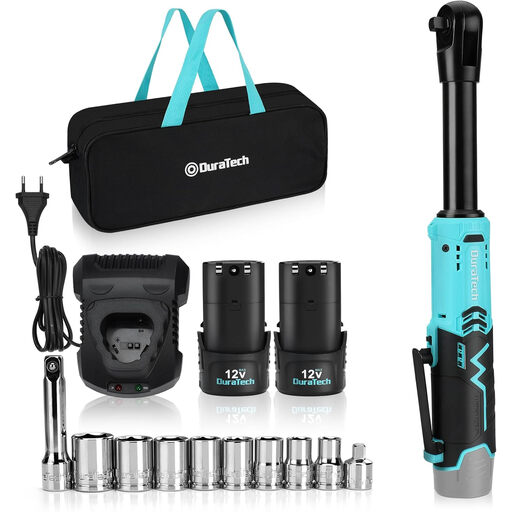
Why this product suits this type of user: For repetitive assembly and maintenance jobs, the cordless drive can be an alternative to a manual ratchet, particularly in hard-to-reach places.
The package contents specify the number of batteries, voltage, torque rating, charger, sockets and adapters. This lets you check what the set can actually do before buying.
12 V drive, stated maximum torque of 60 Nm, LED light, two 2.0 Ah batteries and 3/8-inch drive.
Always use a socket that exactly matches the fastener. A ratchet is not a substitute for a torque wrench when a specific tightening torque is required. Never use metal tools on live parts when carrying out electrical work.
After use, store tools somewhere clean and dry. Moving mechanisms can be lightly oiled according to the manufacturer’s instructions. Don’t continue using a ratchet mechanism that is damaged, stiff or slipping.
We’ve put together a complete, regularly updated list of products that meet these strict selection criteria and fully comply with the safety regulations in force in the EU.
A 3/8-inch ratchet is versatile enough for many vehicle jobs. A 1/4-inch ratchet can be easier to use on smaller fasteners. For larger bolts and heavier-duty work, a 1/2-inch ratchet is often a good choice. The right socket size, available space and permitted torque remain key considerations.
A higher tooth count can reduce the swing arc required, making it easier to work in confined spaces. When choosing a ratchet, also compare the material, head design, handle, quick-release function and stated load limits.
Its lifespan depends on the load, care, storage and how it’s used. Clean and dry the tool after use, avoid overloading it and don’t use unsuitable lever extensions. For regular vehicle maintenance or assembly work, a set with several drive sizes can help reduce wear on individual ratchets.