
Lieferung heute & morgen

Qualitätsgarantie

Willkommens-Angebote freischalten: KOSTENLOSE Lieferung | Bis zu 80 % RABATT | Kostenlose 30-Tage-JoyPlus-Testphase
App herunterladen
A ratchet set can be a useful addition to your toolkit for repairs, assembly and maintenance. However, unclear details about tooth count, drive size or torque often lead to the wrong purchase. Whether you’re a DIY enthusiast, work on cars, own a bike or run a workshop, the key isn’t having the most pieces possible: it’s choosing the right combination of features, durability and suitability for the job.
A set with plenty of bits and sockets may look versatile at first glance. What matters, though, is whether the sizes included fit the fasteners you need to work with. For many jobs around bikes, furniture and household appliances, metric sizes from 4 to 13 mm are enough. Cars and machinery may also require larger sockets up to 24 mm, as well as several drive sizes.
Before you buy, check:
A higher tooth count reduces the swing arc required to turn the ratchet. This is handy in confined spaces, but it doesn’t, on its own, tell you how much load the tool can take or how long it will last. For example, a reversible ratchet with 72 or 90 teeth can be useful when space is limited. For particularly tight spots, look for details such as a 4- or 5-degree working angle.
You still need to consider the load limit, material and connection between the drive and socket. A ratchet is not a substitute for an extension pipe or an impact tool.
A digital torque wrench can display readings and alert you when you reach a target value, using sound, lights or vibration. That doesn’t automatically make it suitable for every job. A wrench with a range of 1.5 to 30 Nm is better suited to smaller fasteners than wheel nuts or larger machinery fittings.
A mechanical torque wrench also needs to be used within its specified range. Before buying, check the manufacturer’s details on accuracy, calibration, storage and resetting.
The drive size refers to the square drive that the socket fits onto:
An adapter can make a tool more versatile, but it’s no substitute for using the right ratchet for sustained high loads.
Many tools are made from chrome vanadium steel, or Cr-V for short. The material is a useful point of comparison, but it’s best considered alongside the quality of the finish. A chrome coating can make cleaning easier and help protect against corrosion. Fully enclosed ratchet heads can also help keep out dust and dirt.
Also look for:
A quick-release ratchet lets you change sockets at the push of a button. This saves time, especially when you need to use several sizes in succession. A small working angle is helpful in confined spaces. For example, a 144-tooth ratchet spanner is listed in the product description as having a 2.5-degree swing arc; other models specify 4 or 5 degrees.
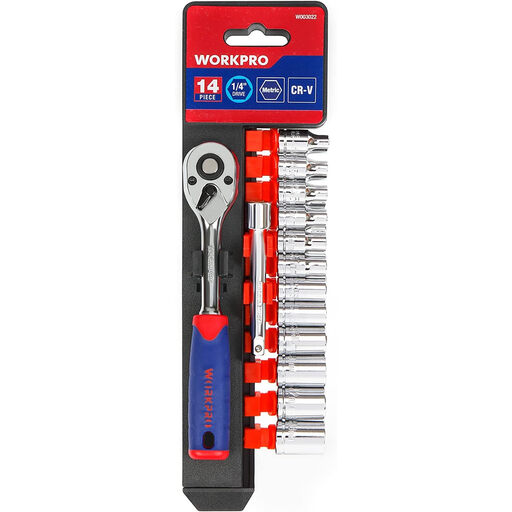
Why this product suits this user: With metric sizes from 4 to 13 mm, this set is suitable for general DIY, household repairs and light mechanical tasks.
The metric sizes included and clearly specified 1/4-inch drive make it easier to choose than a set with a confusing mix of sizes.
72-tooth ratchet, quick-release button, 76 mm extension and Cr-V steel sockets.
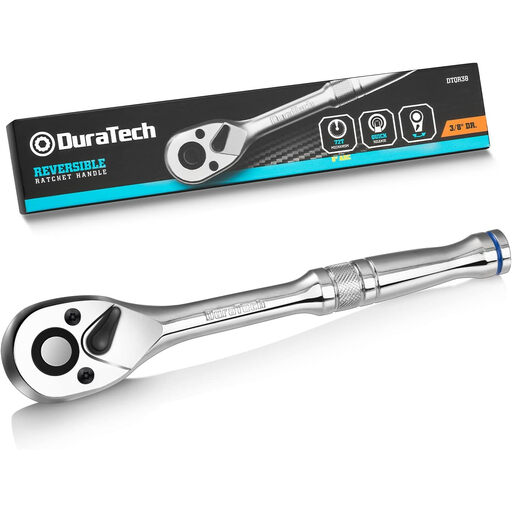
Why this product suits this user: One handle offers 1/4-, 3/8- and 1/2-inch drives, so you can use different socket sizes with a single tool.
The product details list separate maximum torque values for each of the three drive sizes. Check these limits before applying force.
72-tooth mechanism, 5-degree swing arc and reversible direction in one handle.
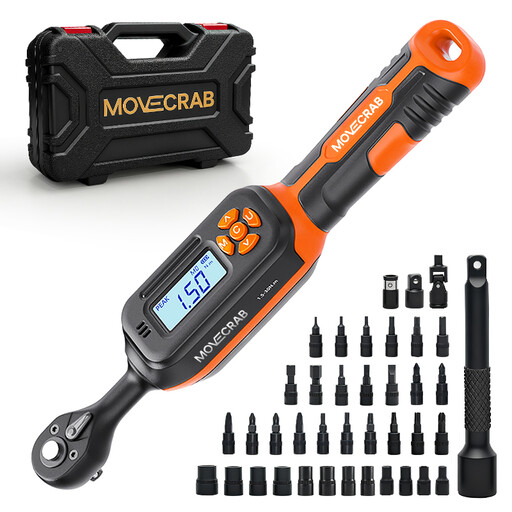
Why this product suits this user: This set combines a digital torque wrench with bits, adapters and sockets for bike, motorbike and selected car jobs.
The torque range of 1.5 to 30 Nm is clearly stated, so you can check in advance whether it matches the torque requirements for your vehicle or component.
According to the product details: ±2% accuracy, 10 memory settings, Track and Peak modes, plus audible, visual and vibration alerts.
We’ve put together a complete, regularly updated list of products that meet these strict selection criteria and the safety regulations applicable in the EU.
Clean sockets and ratchets with a dry cloth after use. If your ratchet tool set comes with a roll-up pouch or plastic case, return each piece to its designated place. This keeps the sizes easy to see and makes missing parts quicker to spot.
Always use the right socket and don’t exceed the stated torque range. A torque wrench should not be used as a regular ratchet or impact tool. Store digital models in a dry place and protect them from heat, moisture, dust and strong magnetic fields. For safety-critical fastenings, also follow the vehicle, component or appliance manufacturer’s instructions.
For many bike repairs, a 1/4-inch ratchet with small metric sockets is a good choice. For carbon parts or delicate components, you should also use a suitable torque wrench. The required torque range depends on the bike manufacturer’s specifications.
In German, Ratschenschlüssel and Knarrenschlüssel are often used interchangeably. Both refer to a tool with a ratchet mechanism that lets you turn a fastener without lifting the handle fully after each movement. With a ratchet ring spanner, the ratchet mechanism is built into the ring spanner; with a socket set, it works with interchangeable sockets.
Its lifespan depends on how it’s used, cared for and stored, and whether the manufacturer’s instructions are followed. Regular cleaning, dry storage and using the correct drive size help reduce unnecessary wear. Damaged teeth, a loose square drive or a direction switch that no longer works reliably are all reasons to stop using the tool.