
Lieferung heute & morgen

Qualitätsgarantie

Willkommens-Angebote freischalten: KOSTENLOSE Lieferung | Bis zu 80 % RABATT | Kostenlose 30-Tage-JoyPlus-Testphase
App herunterladen
A good ratchet wrench is the cornerstone of many toolkits. However, the sheer number of options can be overwhelming and lead to poor purchasing decisions. Too often, tools end up in the shopping cart that are unsuitable for the intended job or whose advertised features fail to deliver in practice. Two common pitfalls are buying oversized socket sets where half the parts go unused, and focusing solely on a high tooth count while neglecting material quality. A fine-toothed mechanism made from inferior steel can fail under load faster than a more robust model with fewer teeth. This guide will help you avoid these and other traps to make an informed decision.
To find the right ratchet wrench, it's essential to understand the technical basics. Three parameters are particularly relevant for your selection: the drive size, the type of gearing, and the tool's functionality.
The drive size, specified in inches, determines which sockets fit the ratchet and what kind of load the tool is designed for. Choosing the wrong size can lead to either damaged bolts or a tool that can't withstand the applied force.
The number of teeth in the ratchet head determines the swing arc—the minimum angle the ratchet must be moved to engage the next tooth. A fine-toothed mechanism (e.g., with 72, 90, or more teeth) has a small swing arc, often only 4-5 degrees. This is a clear advantage when working in very tight spaces.
However, the tooth count is only half the battle. The quality of the steel used (often Chrome Vanadium or Chrome Molybdenum) is crucial, as finer teeth made from low-grade material are more susceptible to wear and breakage. A robust reversible ratchet with 72 teeth made from high-quality steel is often more durable in practice than a model with over 100 teeth made from a softer material.
Besides the classic, manual reversible ratchet, there are specialized versions for different requirements:
Based on the criteria mentioned, we have compiled a few products for typical user profiles.
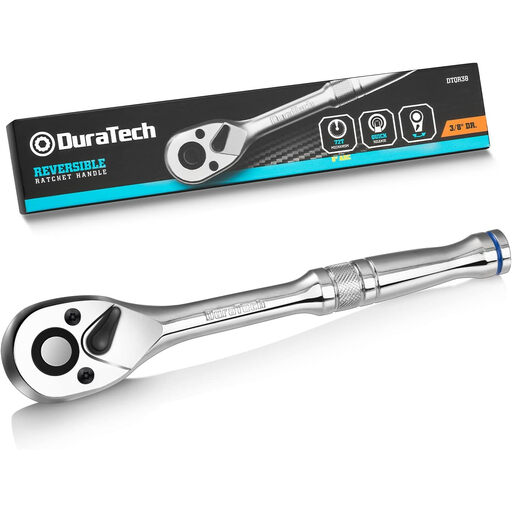
Why This Fits Their Persona: Ideal for users who occasionally work on various items like bicycles, cars, and home appliances and don't want to buy three separate ratchets. This tool saves space and money.
This model prevents the purchase of multiple individual ratchets that are rarely used. It combines the three most common drive sizes (1/4 inch, 3/8 inch, 1/2 inch) into a single, compact handle.
The 3-in-1 design offers maximum flexibility. The CR-MO steel head and 72-tooth mechanism ensure durability and precise work.
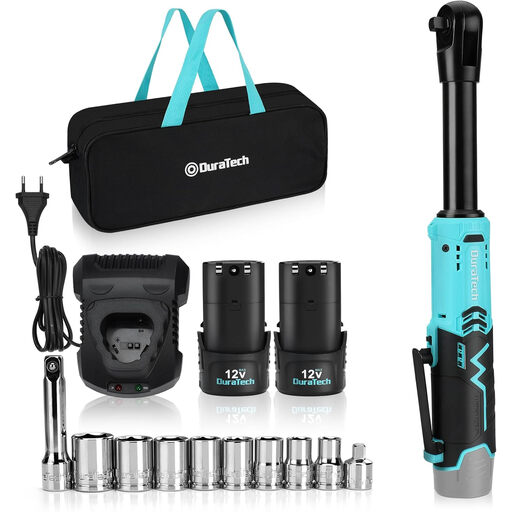
Why This Fits Their Persona: Perfect for anyone who regularly works on their car or motorcycle. The cordless ratchet saves a huge amount of time on repetitive fastening tasks in tight engine bays or hard-to-reach areas.
This tool solves a specific problem: the tediousness of manual fastening. It's not a gimmick, but an efficiency tool that quickly pays for itself with frequent use.
The extended neck and LED light improve accessibility in dark, tight spaces. With 60 Nm of torque and two batteries, you can work without interruption.
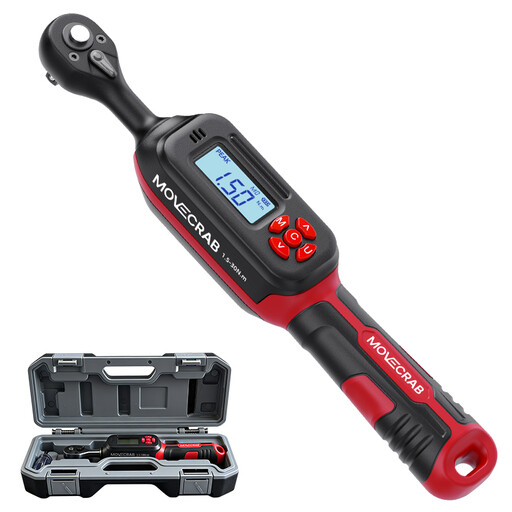
Why This Fits Their Persona: Indispensable for maintaining modern bicycles (especially those with carbon components) or for precision work on engine parts where exact torque specs are critical to prevent damage.
This tool actively prevents the most costly mistake: over-tightening bolts and damaging components. It replaces guesswork with measurable precision.
An accuracy of ±2% and the triple alarm system (vibration, sound, LED) ensure the target torque is reached under all conditions. The digital screen simplifies setup.
We have compiled a complete, real-time list of products that fully satisfy these strict selection criteria and UK safety regulations.
A high tooth count is advantageous for working in tight spaces. A 72-tooth mechanism, which allows for a 5-degree swing arc, is an excellent standard for most applications. However, more important than the sheer number is the quality of the material and the craftsmanship of the ratchet head. A robust 72-tooth wrench is preferable to a poorly made 100-tooth one.
This depends entirely on your application:
For occasional furniture assembly or minor repairs, a manual ratchet is usually sufficient. However, if you frequently work on projects that involve a lot of fastening, such as restoring a vehicle or performing regular maintenance, a cordless ratchet can significantly reduce your workload and make the job much more pleasant. It's an efficiency-boosting tool for frequent users.