
Lieferung heute & morgen

Qualitätsgarantie

Willkommens-Angebote freischalten: KOSTENLOSE Lieferung | Bis zu 80 % RABATT | Kostenlose 30-Tage-JoyPlus-Testphase
App herunterladen
A good ratchet wrench, often simply called a ratchet, is the cornerstone of any toolbox. But making the right purchase can be tricky, and a bad choice can lead to quick disappointment. A tool that fails after just a few uses or a mechanism that jams in tight spaces costs you not only money but also your sanity. Before you make a decision, it's crucial to understand the common pitfalls that often hide behind shiny finishes and lofty marketing promises.
As your Joybuy Product Recommendation Officer, I'm here to help you navigate these hurdles. We'll focus on the facts that truly matter, ensuring you find a tool that meets your specific needs.
Many buyers focus on price or extensive accessory kits, overlooking critical quality features. This often leads to two main problems:
To avoid a bad purchase, you should focus on three core aspects. These determine the functionality, durability, and usability of your tool.
The drive size, specified in inches, defines which sockets will fit the ratchet. Your choice depends directly on your primary application.
The number of teeth in the ratchet head is an often underestimated yet critical feature. It determines the swing arc—that is, how far you need to move the handle back for the mechanism to engage the next tooth.
The classic manual ratchet is robust and reliable. However, for certain tasks, modern variants offer significant advantages.
We have selected some products from our range that are tailored to the specific needs of DIY enthusiasts and hobby mechanics.
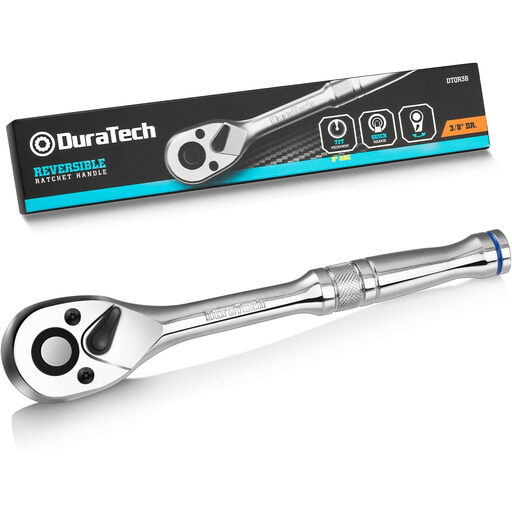
Why This Fits Their Persona: Ideal for users who want a flexible solution for occasional repairs on their car, bicycle, and around the house without having to buy three separate ratchets. Maximum versatility with a minimal footprint in the toolbox.
This tool solves the problem of needing a different ratchet for every task. Furthermore, its 72-tooth mechanism provides a small 5-degree swing arc, making it easier to work in tight areas.
Combines 1/4", 3/8", and 1/2" drives in a single handle. The CR-MO steel ratchet head is designed for durability.
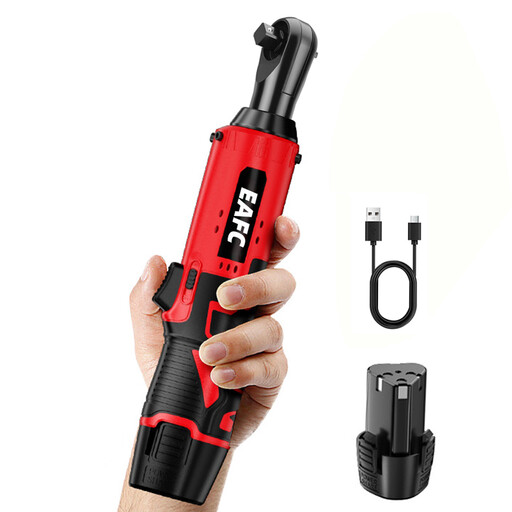
Why This Fits Their Persona: Perfect for hobby mechanics who regularly work on cars or motorcycles and want to speed up repetitive fastening jobs. The slim head and cordless operation make working in a cramped engine bay significantly more comfortable.
This cordless ratchet eliminates tedious manual turning in hard-to-reach places. The variable speed control gives the user full control and prevents rapid, uncontrolled tightening.
45 Nm of torque and a slim 3 cm head for tight spots. The integrated LED light improves visibility in dark work areas.
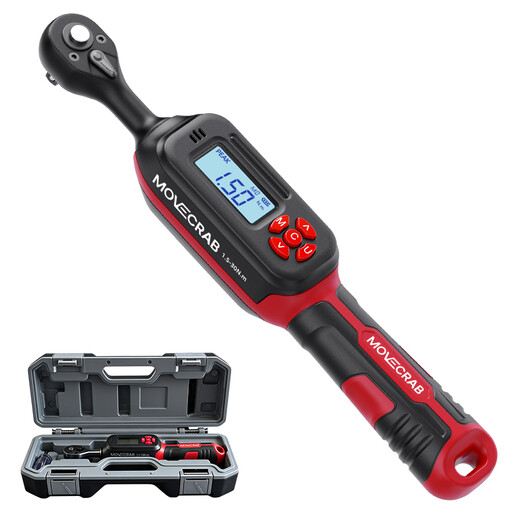
Why This Fits Their Persona: Indispensable for anyone working on sensitive components like carbon fibre bike frames, engine parts, or aluminium components. Here, precise tightening torque is critical to prevent costly damage.
This tool prevents the most common and expensive pitfall: over-tightening bolts. While a normal ratchet provides no feedback, this digital wrench actively warns you when the target torque is reached.
High accuracy of ±2%. A triple-alarm system (vibration, buzzer, LED) unmistakably signals when the set torque has been reached.
We have compiled a complete, up-to-date list of products that fully meet these strict selection criteria and rigorous safety and quality standards.
For most applications, especially when working in confined spaces like in the automotive sector, a ratchet with 72 or 90 teeth is an excellent choice. This allows for a small swing arc of 5° or 4°, respectively, which makes work much easier. For rough jobs with plenty of space, a more robust ratchet with fewer teeth may also suffice.
The difference lies in the size of the square drive that the sockets attach to. 1/4 inch is for small bolts and low-torque applications (e.g., bicycles, electronics). 3/8 inch is the universal standard for most repairs on cars and around the house. 1/2 inch is needed for large bolts and high-torque requirements, such as on suspension or lug nuts.
A torque wrench is required whenever a fastener must be tightened to a precise force specified by the manufacturer. This is critical for safety-related components (e.g., brakes, cylinder head on a car) or with sensitive materials (e.g., carbon fibre, aluminium) to prevent material fatigue or failure from over- or under-tightening. A regular ratchet cannot guarantee this level of precision.