Ravioli makers using prepared dough
If you make the dough yourself and mainly need evenly rolled sheets with an adjustable thickness, a motorised roller could be a good fit. Marcato and Imperia offer standalone models.


If your main priority is controlling the thickness of your ravioli dough sheets, a motorised roller is likely to suit you better. You can choose a standalone model or an attachment for a compatible stand mixer. A pasta maker can also mix and knead the dough, but it extrudes it through a suitable shape. Check exactly what comes with the version you’re considering, and remember that filling, sealing and cleaning are still part of the process.
If you make the dough yourself and mainly need evenly rolled sheets with an adjustable thickness, a motorised roller could be a good fit. Marcato and Imperia offer standalone models.
Want to use your existing mixer to roll out dough? Check that the specific attachment is compatible with your mixer model and connection. KitchenAid and Kenwood describe their roller attachments for use with compatible machines.
If you want the machine to process the ingredients too, an automatic pasta maker could be right for you. Philips and Springlane list a lasagne attachment for certain models. Check that it’s included with the exact version you’re considering.
A good fit if: You want to roll prepared dough into sheets without using a stand mixer.
Worth bearing in mind: Preparing the dough, filling and sealing are still separate steps. Marcato lists ten thickness settings for the Atlasmotor+, while Imperia lists six for the Electric iPasta Classic.
A good fit if: You already own a compatible KitchenAid or Kenwood mixer and mainly want to roll out dough.
Worth bearing in mind: The attachment can’t be used on its own. KitchenAid lists eight settings and Kenwood ten; older Kenwood connections may require an adapter.
A good fit if: You’d like the machine to mix and knead the dough as well as produce the sheets.
Worth bearing in mind: The dough is extruded through a shape rather than rolled out using an adjustable roller. Check that the attachment is included with the exact model version; you’ll still need to fill and shape the ravioli yourself.
| What matters | What to check before buying | Who is it important for? |
|---|---|---|
| Control over dough sheets | Check whether the machine has a roller or a suitable sheet attachment, and what thickness settings it offers. | If you want to roll out the sheets for ravioli yourself and control their thickness, this feature is key. Around 36% of consumers put control over sheet thickness first. |
| Work involved once you’ve finished | Compare which steps the machine handles and how the roller, shapes and removable parts are cleaned. | If you want to minimise dough-related jobs in the evening and have washing up that feels manageable, consider the whole process, not just rolling. Around 29% of consumers prioritise ease of use and cleaning. |
| Compatibility with your stand mixer | Check the exact model name and, for older Kenwood connections, whether an adapter is needed. | If you want to keep using your existing stand mixer, the attachment must be compatible with its model and connection. Around 21% of consumers prioritise using the machine they already own. |
| Automatic mixing and kneading | Check whether the lasagne attachment is included with the specific version and what quantity of dough the stated capacity refers to. | If you want the machine to mix and knead the dough but still need flat sheets, having the right attachment is essential. Around 14% of consumers put automatic kneading first. |
A pasta maker can extrude dough through a shape, while a roller rolls out prepared dough to an adjustable thickness. The name ‘pasta maker’ alone doesn’t tell you which of these features a particular machine offers.
First decide whether you want to roll out dough you’ve prepared yourself or have the machine mix and knead it too. Then check whether the exact version comes with a suitable attachment for making dough sheets.
The KitchenAid 5KSMPSA and Kenwood KAX980ME are powered by a compatible stand mixer. Without one, you can’t use them like a standalone electric roller.
Before buying, compare your stand mixer’s exact model name and connection with the manufacturer’s information. Older Kenwood connections may require an adapter.
Without a compatible stand mixer, there’s no power source; an older Kenwood connection may also require an adapter.
KitchenAid says not to clean the Pasta Roller in a dishwasher or immerse it in water. A general claim from a retailer shouldn’t override these instructions for the specific component.
When cleaning, follow the manufacturer’s instructions for the exact component you’re using.
The Atlasmotor+ is a standalone motorised roller for prepared dough sheets.
The Electric iPasta Classic is another standalone motorised roller.
The 5KSMPSA is a roller attachment for a compatible KitchenAid stand mixer.
The KAX980ME is a sheet roller for compatible Kenwood stand mixers.
According to Philips, the Pastamaker HR2665/96 is an automatic alternative that also mixes and kneads.
The Nina automatic pasta machine is available with a lasagne attachment.
This selection includes rollers and stand mixer attachments, as well as automatic pasta machines. For automatic models, check that the right shaped attachment is included if you need flat sheets for ravioli.
 No image available
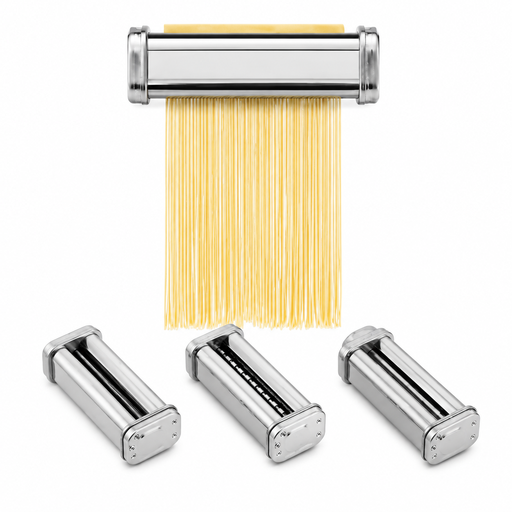
A good option if you own a compatible KitchenAid stand mixer and want to roll out dough sheets with it.
The set is described as including three rollers for different types of pasta, including lasagne. It needs a KitchenAid stand mixer to power it.
 No image available
This standalone electric roller is an option if you want to roll out prepared dough to your chosen thickness.
The product description lists seven thickness settings from 0.5 to 3 mm, a 60-W motor and lasagne sheets. It recommends cleaning with a dry cloth and brush; do not immerse the machine in water.
 No image available
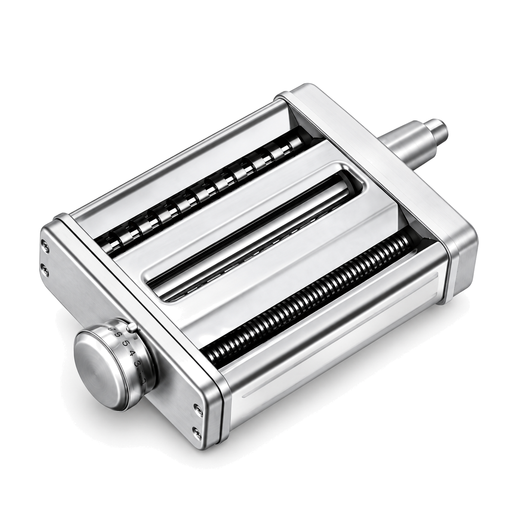
This attachment could be a good fit if you own a compatible KitchenAid stand mixer and want to make dough sheets using a roller.
The description lists eight thickness settings and cutter attachments for spaghetti and fettuccine. It needs a KitchenAid stand mixer to power it.
 No image available
Automatic dough processing could suit you if you want the machine to mix and shape the dough.
The description lists nine interchangeable shapes and options for spaghetti, fettuccine, hollow pasta and dumpling wrappers. This doesn’t confirm that it can produce flat ravioli sheets, so check the shapes for your needs.
 No image available
This automatic pasta machine is an option if you want the machine to process and shape the dough.
The product name lists 180 W; the description lists nine interchangeable shapes for pasta and dumpling wrappers. This doesn’t confirm that it can produce flat ravioli sheets, so check the specific shapes.
No. The motorised rollers described here roll prepared dough into sheets. Filling and sealing are separate steps and may require additional accessories.
No. KitchenAid says not to clean the Pasta Roller in a dishwasher or immerse it in water. The instructions recommend cleaning it with a brush once any dough residue has dried.
When you buy from a trader, you’re generally entitled to a statutory guarantee of at least two years from the date you receive the goods. Online purchases generally come with a 14-day right to cancel; exceptions and the relevant terms and conditions should be checked. Your Europe, the European Union’s information portal, distinguishes these statutory rights from a voluntary manufacturer’s guarantee.
The German Federal Institute for Risk Assessment recommends good kitchen hygiene and keeping perishable foods properly chilled until they’re eaten. This is general food hygiene advice, not a feature of any particular pasta machine.