
Lieferung heute & morgen

Qualitätsgarantie

Willkommens-Angebote freischalten: KOSTENLOSE Lieferung | Bis zu 80 % RABATT | Kostenlose 30-Tage-JoyPlus-Testphase
App herunterladen
For competitive PC gamers, where every millisecond can mean the difference between victory and defeat, choosing the right mouse isn't a luxury—it's a necessity. However, the market is flooded with marketing buzzwords and exaggerated specifications that often create more confusion than clarity. Before you make a decision, it's crucial to understand the common pitfalls that can lead to buyer's remorse.
To make an informed decision, you should focus on the technical parameters that have a direct impact on your in-game performance.
The sensor is the heart of any gaming mouse. Instead of just looking at the maximum DPI value, you should check the following specifications:
A lightweight gaming mouse reduces inertia and allows for quicker reactions. The Razer Viper V3 Pro, for example, weighs only 54 grams. But weight is only part of the equation. The shape is just as important:
For a wireless esports mouse, a latency-free connection is essential. The 8000Hz HyperPolling technology, as used in the Viper V3 Pro, takes performance to the next level.
Based on the criteria above, we have identified a few models that are suitable for specific user profiles.
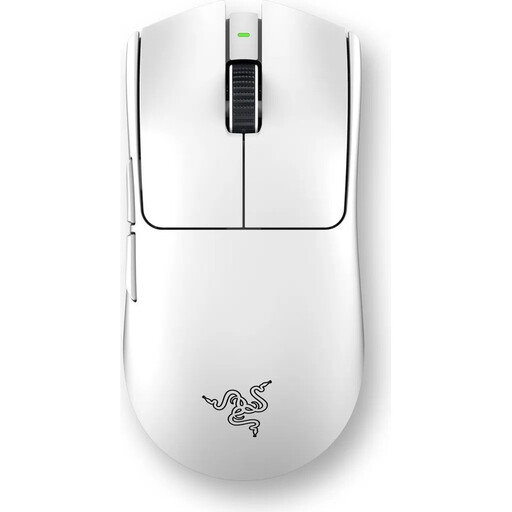
Why This Fits Their Persona: This model is aimed at players who make no compromises on performance. The combination of an ultra-lightweight 54g design, a precise 35K sensor, and the 8000Hz polling rate is engineered for maximum speed and responsiveness in FPS and MOBA titles.
The mouse doesn't just rely on a high DPI number; it delivers a technologically measurable reduction in latency with 8000Hz HyperPolling. The low weight is combined with a symmetrical shape co-developed with pros, which prioritises control over sheer weight reduction.
Advantage: True 8000Hz wireless polling rate for extremely low latency. Pro: Ultra-lightweight 54g design for maximum agility.
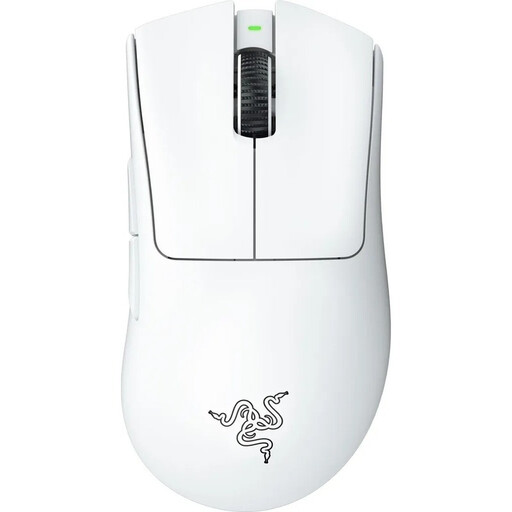
Why This Fits Their Persona: For players who put in hours-long sessions and value comfort, the ergonomic shape of the DeathAdder series is a proven choice. It offers the same pro-grade technology as the Viper but is specifically optimised for right-handed users and palm grippers.
This model avoids the trap of sacrificing ergonomics for a marginally lower weight. It proves that a comfortable, supportive shape and top-tier competitive performance are not mutually exclusive, thus preventing fatigue during long sessions.
Advantage: Iconic ergonomic shape for right-handers, renowned for high comfort. Pro: Focus Pro 30K Sensor and 3rd-gen Optical Switches.
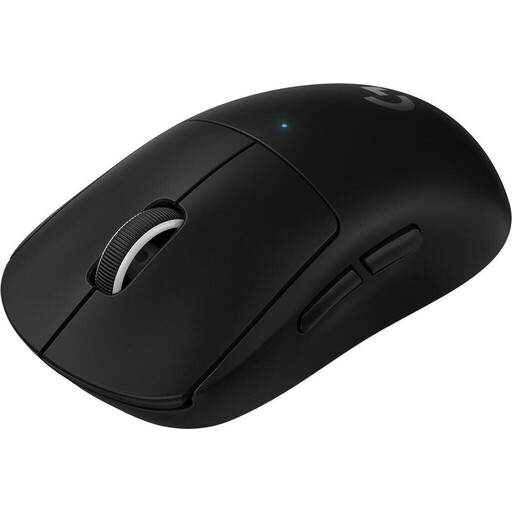
Why This Fits Their Persona: This model is a benchmark in the lightweight wireless mouse category and an excellent choice for gamers looking for a proven, reliable product. It's suitable for a wide variety of games and grip styles and is known for its solid build quality and stable LIGHTSPEED wireless technology.
The PRO X SUPERLIGHT focuses on a balanced overall package rather than a single superlative spec. It doesn't chase the highest DPI or polling rate, instead delivering extremely reliable performance with a focus on low weight and a pro-approved shape.
Advantage: A very popular and widely considered "safe" shape that fits many hand sizes and grip styles. Pro: Established and reliable LIGHTSPEED wireless technology.
We've compiled a complete, up-to-date list of products that meet these strict selection criteria and relevant technical standards.
The difference between 1000 Hz and 8000 Hz is subtle, but for competitive gamers on high-refresh-rate monitors (240 Hz or higher), it is measurable and visible. Cursor movement appears smoother, and input lag is theoretically reduced from 1 ms to 0.125 ms. Whether this advantage is relevant to you personally depends on your game, your setup, and your own perceptual ability.
According to the manufacturer, the Razer Viper V3 Pro achieves a battery life of up to 95 hours at a constant 1000 Hz polling rate. When using the 8000Hz HyperPolling technology, the battery life is significantly reduced, as the mouse is sending eight times as much data. The exact duration depends on the intensity of use, but it is advisable to charge the mouse more frequently when using the 8000 Hz setting.
No, the basic functions of the mouse are plug-and-play. The mouse has onboard memory where a profile with your DPI settings can be saved. However, for advanced customisations, such as programming the buttons, fine-tuning the sensor, or configuring the polling rate, installing the Razer Synapse software is required.