
Lieferung heute & morgen

Qualitätsgarantie

Willkommens-Angebote freischalten: KOSTENLOSE Lieferung | Bis zu 80 % RABATT | Kostenlose 30-Tage-JoyPlus-Testphase
App herunterladen
A remote-controlled buggy car for children should be robust, easy to control and suitable for the intended surface. In practice, however, exaggerated speed claims, unclear age recommendations and short battery life often lead to disappointing purchases. Before buying, it is therefore worth checking the drive system, remote control, power supply and safety information rather than focusing solely on eye-catching product images.
A fast remote-controlled car can be entertaining on smooth surfaces, but may be more difficult for younger children to control. Figures such as “up to 18 km/h” also depend on the surface, battery charge and load. For children aged 3 and over, simple driving functions and easy-to-regulate controls are often more important than maximum speed.
An all-wheel-drive RC car can distribute its power more effectively across several wheels. However, how well it drives on grass, gravel or uneven ground also depends on the tread pattern, ground clearance, shock absorption and vehicle weight. For example, a small stunt buggy with Mecanum wheels is designed for sideways drifting, while a classic RC off-road car with grippy tyres may be more suitable for outdoor surfaces.
A rechargeable RC car reduces the need for disposable batteries. However, the specific battery capacity, charging time and availability of a replacement battery are also important. Some models have a stated driving time of up to 20 minutes, while charging can take considerably longer. For longer play sessions, a model with two batteries or a replaceable battery may be more practical.
The manufacturer’s age recommendation is a key factor when choosing a model. Small parts, rapidly rotating wheels and complex controls are not suitable for every child. A remote-controlled toy car for children aged 3 and over should only be used under direct supervision if this is stated in the product information. For children aged 5 and over, models with a conventional 2.4 GHz remote control are often suitable. Stunt and gesture controls are frequently designed for older children aged 8 and over.
You should also check:
A 2WD buggy may be sufficient for level paths, driveways and simple lawn surfaces. An RC off-road buggy with 4WD, on the other hand, is generally better suited to changing surfaces, provided that the tyres and suspension are appropriate. Rubberised, non-slip tyres can provide more grip on grass or gravel. Shock absorbers and a reinforced chassis are important design features when driving frequently on uneven terrain.
“Water-resistant” should not automatically be interpreted as “suitable for use in water”. Even with vehicles advertised in these terms, deep puddles, rain and immersion should be avoided unless the instructions specify clear usage limits.
A remote-controlled stunt car may support 360-degree turns, flips or driving on both sides. A remote-controlled drift car, by contrast, is designed for controlled sideways movements and spins. LED lighting improves the vehicle’s visibility in low light, but does not replace a safe environment and should not be treated as the sole indicator of quality.
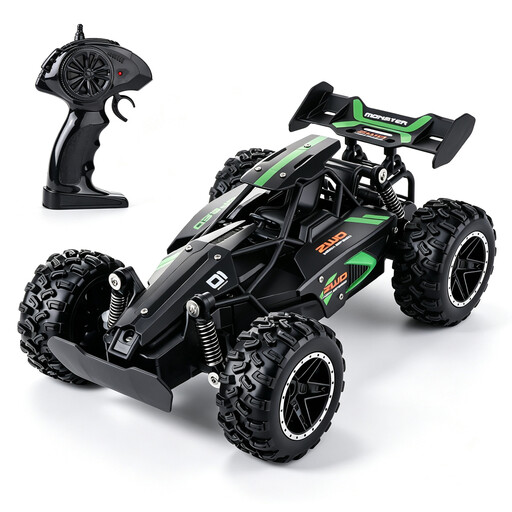
Why this product suits this profile: This model is aimed at families looking for a simple off-road vehicle for children aged 3 and over, with the added convenience of rechargeable batteries.
The product details specify 2.4 GHz control, shock absorption, non-slip tyres and two USB batteries. This makes the key running costs and features easy to understand.
2WD drive, a stated speed of over 15 km/h, two rechargeable batteries, and the ability to drive on grass, gravel and paved paths.
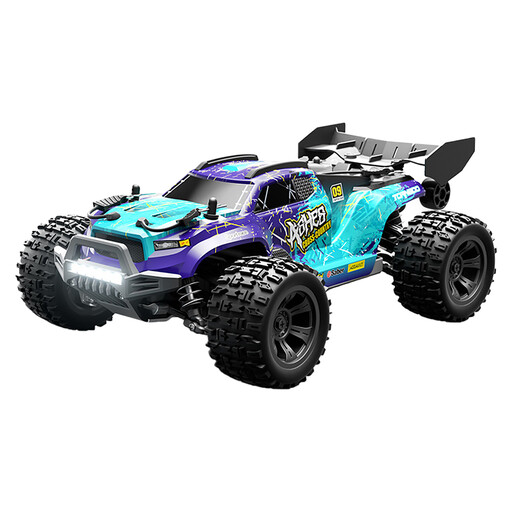
Why this product suits this profile: Teenagers, adults and users who enjoy regular off-road driving get a vehicle with several purposeful off-road design features.
Rather than focusing solely on speed, the product specifically lists 4WD drive, an aluminium chassis, differential, metal drivetrain components and shock absorbers.
7.4-volt battery with 1,500 mAh capacity, large grippy tyres, LED headlights and a 2.4 GHz multifunction remote control. The remote control requires three AA batteries.
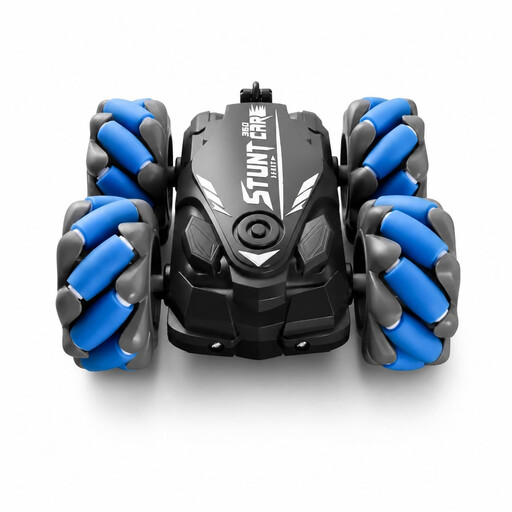
Why this product suits this profile: Designed for children aged 8 and over who want to try stunts, sideways drifting and different control methods, this model offers several play modes.
Its suitability is clearly stated as “8+”. The integrated battery, USB charging cable and 2.4 GHz remote control are also specified in detail.
4WD drive, 360-degree turns, two-sided driving, gesture control, LED lighting and music. The Mecanum wheels are intended for indoor use and flat outdoor surfaces.
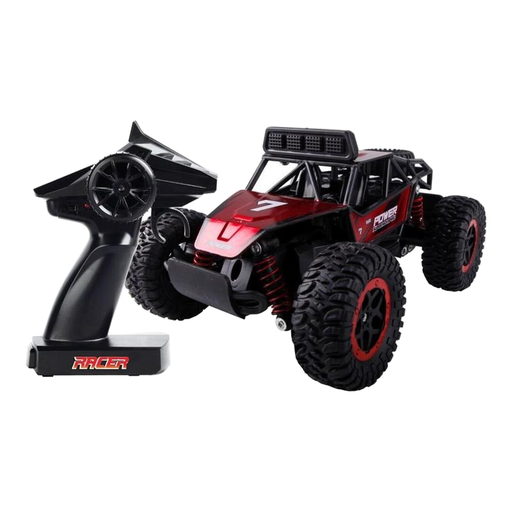
Why this product suits this profile: The combination of conventional remote control, lighting and stated driving time is well suited to first races on manageable surfaces.
The specifications state a range of up to 30 metres, a charging time of 180 minutes and a driving time of up to 20 minutes. This makes it easier to plan breaks during play.
Stated top speed of 18 km/h, 2.4 GHz radio technology, omnidirectional control and a rechargeable 3.7-volt battery with 500 mAh capacity.
We have put together a complete, regularly updated list of products that fully meet these strict selection criteria and the safety regulations applicable in the EU.
The key factors are the specific manufacturer’s recommendation, a manageable speed and direct adult supervision. Models with small parts or complex stunt functions should not be selected based solely on the age shown in an advert. Warnings and operating instructions are the decisive sources of information.
Actual running time depends on the surface, driving style, weight and battery condition. For example, the product details may state up to 20 minutes of driving time with a 3.7-volt battery rated at 500 mAh. After play, the battery should be charged according to the instructions, disconnected from the power supply and stored in a dry place.
This should only be done if the manufacturer expressly permits use under the specific conditions. Water-resistant components do not necessarily prevent water from getting inside. After driving on damp surfaces, the vehicle, wheels and connectors should be checked and dried.