
Lieferung heute & morgen

Qualitätsgarantie

Willkommens-Angebote freischalten: KOSTENLOSE Lieferung | Bis zu 80 % RABATT | Kostenlose 30-Tage-JoyPlus-Testphase
App herunterladen
The thrill of drifting—the art of controlled oversteer through corners—has long since made the leap from professional motorsport to the world of remote-controlled models. An RC drift car offers the chance to master this demanding driving technique on a smaller scale. However, the market is overwhelming and filled with products that overpromise and underdeliver. Before you make a decision, it's crucial to understand the common pitfalls that often lead to disappointment and unnecessary expense.
Many beginners invest in a model only to find it's unsuitable for true drifting. Watch out for these three common problems:
To avoid a bad purchase, you should carefully examine three key technical features. These form the foundation of a high-performance and durable remote-controlled drift car.
An all-wheel drive (4WD) system is a clear recommendation for newcomers to the drifting hobby. It distributes motor power to all four wheels, which stabilises the vehicle and makes it easier to initiate and hold a drift. Even more important is proportional control. It allows you to modulate the throttle and steering angle with precision. This is the only way to accurately control your speed and drift angle—a fundamental requirement for advanced manoeuvres and an authentic hobby-grade experience, which is also crucial for a remote-controlled car for adults.
An RC car with a gyro is a huge help, especially for beginners. This electronic gyroscope system detects when the car's rear is about to break loose and instantly counter-steers automatically. This prevents uncontrolled spin-outs and helps maintain a clean drift. On many models, the gyro's sensitivity can be adjusted or disabled entirely, allowing advanced drivers to take full manual control. A drift car for beginners should ideally include this feature.
A good RC drift package often includes two sets of tires: hard drift tires for sliding and softer rubber racing tires for maximum grip and high speeds. This versatility makes the car an all-rounder. Also, look for a durable chassis and independent suspension. This design ensures the wheels maintain optimal contact with the ground and effectively absorb impacts, which secures the longevity of the components. Models in the 1:24 RC car scale often offer a great balance of detail and manageability.
Instead of presenting a confusing list, we have matched models to typical user profiles.
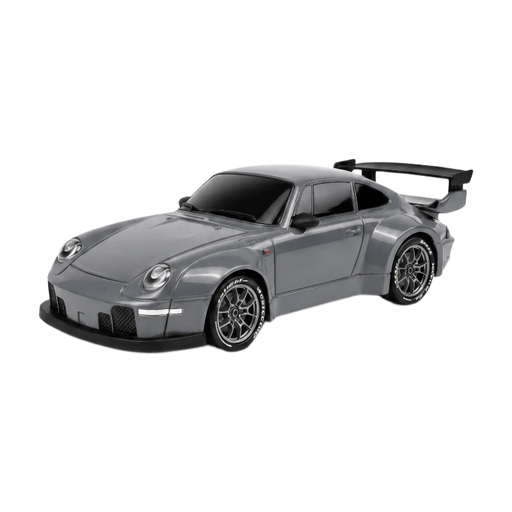
Why This Fits Their Persona: Ideal for anyone looking to get into the hobby without compromising on technology. The compact 1:24 scale is perfect for use indoors or on smaller surfaces.
This model features fully proportional control, an adjustable gyroscope, and comes with two sets of tires (drift and racing). It thereby bypasses the typical weaknesses of entry-level kits.
All-in-One Package: The 4WD drivetrain, gyro system, and interchangeable tires offer a complete drift experience right out of the box. The remote-controlled RC car with LED lights enhance the fun at dusk.
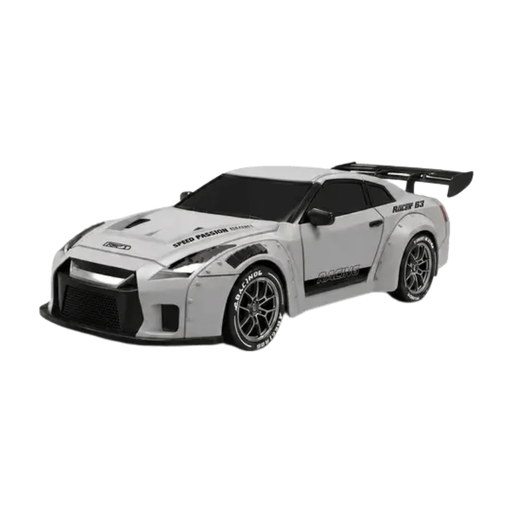
Why This Fits Their Persona: For drivers who appreciate not just the technology but also the aesthetics. The GTR wide-body design appeals to enthusiasts looking for a model with a strong visual presence and proven drift technology.
This set is designed as a complete hobby kit. In addition to core tech like the gyro and 4WD, it includes accessories like traffic cones, which underscores its focus on precision driving rather than just being a toy.
Precise Control: Equipped with a professional steering servo and a 2.4GHz remote for interference-free, responsive control. The 7.4V LiPo battery ensures consistent power delivery.
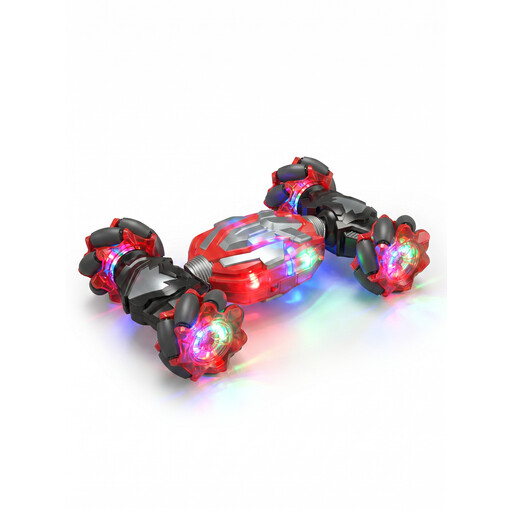
Why This Fits Their Persona: Perfect for drivers who think beyond classic drifting and are looking for a versatile stunt vehicle. The gesture-control watch also offers an interactive and unconventional driving experience.
This model redefines "drift." Instead of relying on slippery tires, its ability to drift sideways comes from its special Mecanum wheels. It is honestly positioned as a stunt vehicle, not a classic drift racer.
Maximum Manoeuvrability: The Mecanum wheels enable movement in all directions, including lateral and diagonal driving. The transformable body also adapts to different terrains.
We have compiled a full, up-to-date list of products that fully meet these strict selection criteria and all relevant safety standards.
The main difference lies in the tires and often the drivetrain. An RC drift car uses very hard, low-grip plastic tires to enable sliding. Regular RC cars use rubber tires for maximum traction. Additionally, drift cars are often equipped with a 4WD RC car drivetrain and a locked or stiff rear differential to promote simultaneous spinning of the rear wheels.
For beginners, an RC car with a gyro is very important. It makes learning drift control significantly easier by stabilising the vehicle and preventing spin-outs. Advanced drivers often reduce the gyro's sensitivity or turn it off completely to have full manual control over the vehicle and practice more demanding techniques.
Yes, many models designed as an RC hobby car come with a second set of rubber tires. By swapping the hard drift tires for the grippy racing tires, you can use the vehicle for normal high-speed driving on asphalt or other smooth surfaces. This makes the car significantly more versatile.