
Lieferung heute & morgen

Qualitätsgarantie

Willkommens-Angebote freischalten: KOSTENLOSE Lieferung | Bis zu 80 % RABATT | Kostenlose 30-Tage-JoyPlus-Testphase
App herunterladen
Finding the right RC car can quickly become overwhelming. Whether it's a gift for a child or a new hobby for an adult, the market is flooded with models whose descriptions often overpromise and underdeliver. As your Joybuy Product Recommendation Officer, I'll help you identify the key features and avoid common purchasing pitfalls, ensuring your decision is based on solid information.
Many buyers are swayed by marketing promises that disappoint in practice. Pay close attention to these three points to avoid a bad purchase:
To find the right model, you should focus on objective technical features. These three parameters are crucial for performance, control, and longevity.
The choice of drivetrain directly impacts handling and performance.
The motor is the heart of every RC car and is a key factor in determining speed and maintenance requirements.
A reliable connection between the transmitter and the vehicle is essential. 2.4 GHz radio technology is the established standard here. It ensures an interference-free transmission and allows multiple vehicles to operate simultaneously without their frequencies interfering with each other. Also, look for proportional controls: this allows for fine-tuned adjustments of throttle and steering, which is indispensable for precise manoeuvres, especially when drifting.
Based on these objective criteria, we have selected a few models for different user groups.
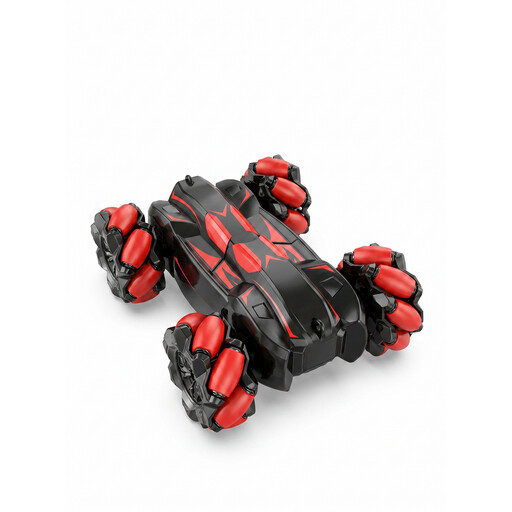
Why it's a great fit: This remote-controlled stunt car is designed for kids aged 6 and up who want to do more than just drive forwards and backwards. The focus is on creative, action-packed manoeuvres.
Instead of advertising unrealistic speeds, this model focuses on a specific feature: the Mecanum wheels. These enable lateral driving and 360° spins, which provides clear and tangible play value.
The special wheels allow for unique driving manoeuvres that aren't possible with conventional RC cars. The 2.4 GHz control system ensures interference-free fun, even when playing with friends.
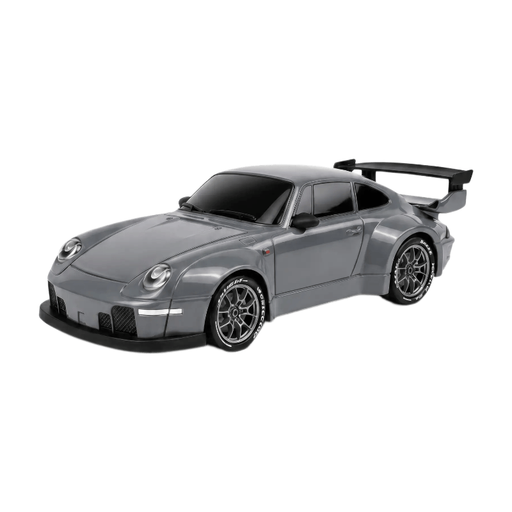
Why it's a great fit: This model is aimed at teens and adults who want a dedicated entry point into the world of RC drifting. It offers features normally reserved for more expensive hobby-grade models.
Instead of vague promises, this car relies on verifiable tech: an adjustable gyro stabiliser, a professional steering servo, and two sets of tyres (drift and grip). This addresses the need for precise control and customisation, sidestepping the spare parts pitfall with a well-thought-out package.
The gyro actively assists with vehicle stability during drifts, making it much easier for beginners to get started. The interchangeable tyres allow for adaptation to different surfaces and driving styles.
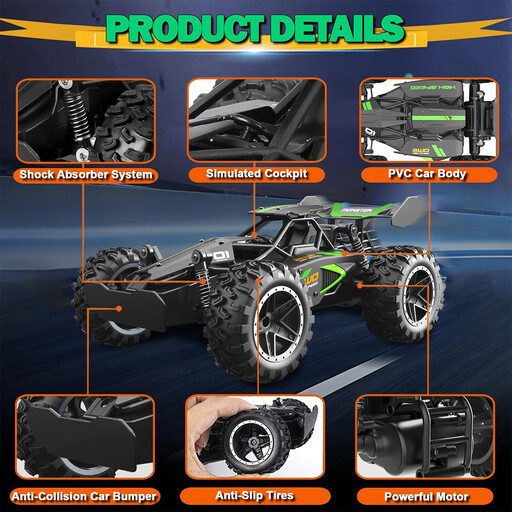
Why it's a great fit: Ideal for drivers looking for a robust off-road RC car for various terrains. It is designed for durability and extended runtime.
This model directly addresses the short battery life pitfall by including two rechargeable batteries. This provides a runtime of over 30 minutes. The splash-proof construction is another feature that sets it apart from less robust models.
The combination of two batteries, a shock-resistant build, and anti-slip tyres makes it a versatile vehicle for grass, gravel, and other challenging surfaces.
We have compiled a complete, up-to-date list of products that meet these strict selection criteria and comply with current safety regulations.
What's the difference between a toy-grade and a hobby-grade RC car? Toy-grade RC cars are generally cheaper, simpler in construction, and designed for immediate use out of the box. Spare parts are rarely available. Hobby-grade models offer higher performance, are more robust, and can be repaired and upgraded, as spare and tuning parts are sold separately. They often require more maintenance.
How long does the battery last on an average RC car? Battery life varies greatly depending on the model, driving style, and battery capacity (measured in mAh). For entry-level models, it's often between 10 and 20 minutes per charge. More powerful hobby-grade models may have similar runtimes, but their batteries are typically swappable, allowing you to extend your drive time with multiple packs.
Do I need an RC car with 4WD (all-wheel drive)? That depends on your intended use. For driving on rough terrain (off-road RC car) or for advanced drifting, a 4WD RC car is often the better choice as it provides more traction and stability. For driving on smooth surfaces or for beginners, a 2WD (rear-wheel drive) model can be sufficient and is often easier to maintain.