
Lieferung heute & morgen

Qualitätsgarantie

Willkommens-Angebote freischalten: KOSTENLOSE Lieferung | Bis zu 80 % RABATT | Kostenlose 30-Tage-JoyPlus-Testphase
App herunterladen
A remote-controlled RC car can be a gift for children, a leisure vehicle for teenagers or an introduction to the RC hobby. Product pages often promote 4WD drive, LED lighting, watch control and spectacular stunts. However, these features are only relevant if they suit the intended use.
Before buying, parents and RC enthusiasts should therefore check what surfaces the vehicle can drive on, which control system is included, and how the battery and spare parts are designed. This helps you avoid common unsuitable purchases.
A 4WD RC car drives all four wheels. This can improve power transmission, but on its own says little about whether the vehicle is actually suitable for grass, gravel or sand. Tyre tread, ground clearance, suspension and vehicle weight are equally important.
For example, a small RC Drift Car designed for tiles and smooth roads is not intended for damp grass or coarse gravel. Conversely, an off-road model may drift less precisely on smooth surfaces.
An RC car with watch control offers plenty of variety. Gesture control is suitable for simple changes of direction and automatic stunts. For controlled drifting, slalom driving or precise manoeuvres, a traditional 2.4-GHz remote control is usually easier to use.
Before buying, make sure you know whether both control methods are included and which batteries are required. With some models, the vehicle is charged via USB, while the remote control requires AAA batteries.
With a battery-powered remote-controlled car, capacity is not the only important factor. The charging method, whether the battery can be replaced and what is included in the delivery are also relevant. The stated driving time depends on speed, the surface and how much the LED or sound functions are used.
Selected drift models state a usage time of around 20 to 40 minutes per charge. This is a manufacturer’s figure, not a guarantee for every play situation. A second compatible battery can be practical for regular use, provided it is approved by the supplier.
An off-road RC car should have grippy tyres, sufficient ground clearance and, ideally, suspension. An RC Drift Car, on the other hand, needs smoother drift tyres and a flat surface.
2.4-GHz radio technology is used in many of the models mentioned. It is designed for several vehicles to be operated at the same time, provided the relevant product description confirms this. The range should be viewed as a manufacturer’s specification; obstacles, buildings and battery condition can affect the connection.
For children from around 3 years old, simple controls and automatic demonstration functions are often easier to use. Vehicles with proportional steering, a gyroscope and multiple speed settings are generally aimed at children from around 8 years old, teenagers or adult users.
Before use, parents should check the age recommendation and warning notices on the relevant product page. Models with small components or powerful motors should not be given to children below the stated age limit. Direct supervision is advisable when children are using the vehicle, particularly with fast stunt models.
After use, the vehicle should be cleared of dust, sand and moisture. A model advertised as waterproof is not automatically suitable for deep water. The battery, charger and connectors should be used in accordance with the manufacturer’s instructions and should never be left charging unattended.
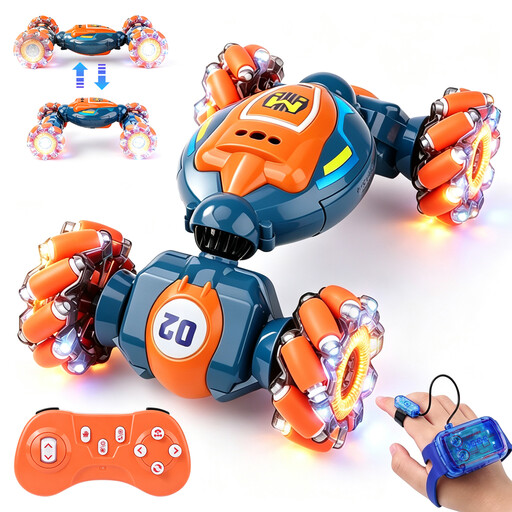
Why this product suits this profile: This model combines a handheld remote control with a gesture-controlled watch, providing an easy introduction to different control methods. LED wheels, 360° spins and two-sided driving are the main highlights.
The two control modes reduce reliance on a single method of operation. The battery is charged via USB; check in advance which batteries are needed for the remote control.
4WD drive, twist transformation, LED wheels and two-sided driving according to the product description.
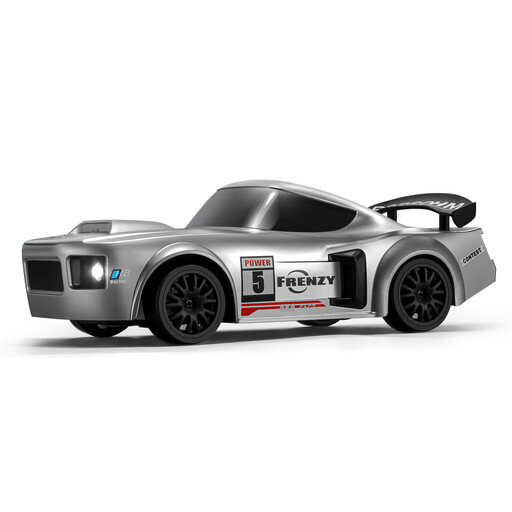
Why this product suits this profile: This vehicle is aimed at users who want to try controlled drifting and different driving styles. Two sets of tyres, two speed settings and an adjustable gyroscope provide specific options for customisation.
Switching between drift and racing tyres stops the vehicle being limited to just one type of play. The product description states 20 to 40 minutes of driving time per charge.
4WD drive, adjustable gyroscope, independent suspension and remotely controlled LED lighting.
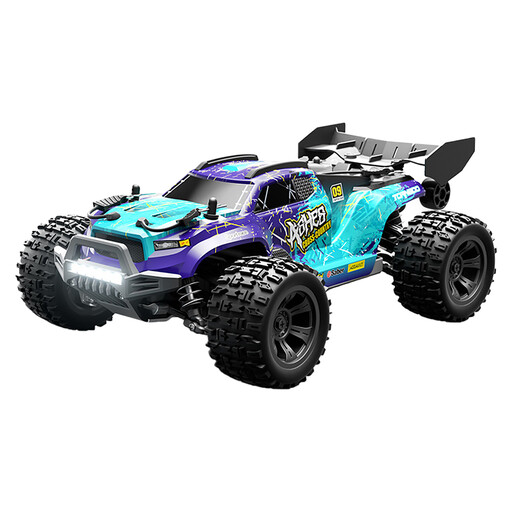
Why this product suits this profile: This model is designed for users who want to take an off-road RC car over sand, grass, mud or snow. Its features include a 7.4-V battery, large tyres and suspension.
The features are not limited to LED effects; they also include suspension, a metal chassis and grippy tyres. Before exposing it to water, check the specific sealing instructions.
4WD metal chassis, independent shock absorbers, 7.4-V-1500-mAh battery and LED headlights.
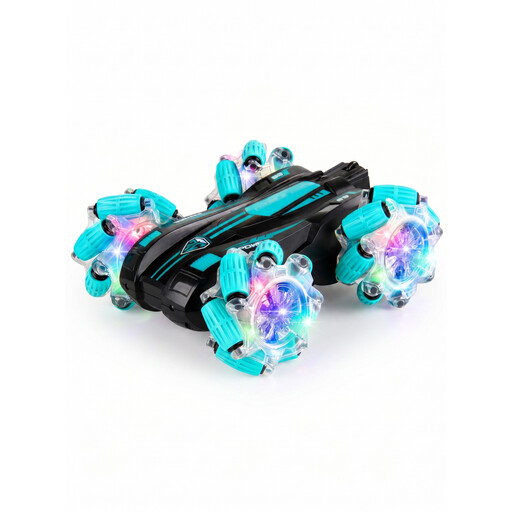
Why this product suits this profile: This RC stunt car continues driving on either side and supports sideways drifting as well as 360° spins. This makes it suitable for short stunt courses indoors and on suitable outdoor surfaces.
Two-sided driving means fewer interruptions after a rollover. However, you still need to keep a sufficient distance from delicate furniture, glass surfaces and confined spaces.
4WD drive, 9-cm LED wheels, two-sided driving and sideways drifting according to the product description.
We have put together a complete, regularly updated list of products that fully meet these strict selection criteria and the safety regulations applicable in the EU.
Driving time depends on battery capacity, speed, the surface and use of lighting or sound effects. Some 1:24 drift models state 20 to 40 minutes per charge. This figure comes from the relevant product description and may vary in practical use.
For younger children, robust models with straightforward controls, a low speed and automatic functions are a sensible choice. For children from around 8 years old, drift and stunt models with proportional control, multiple speed settings or a gyroscope may also be suitable. The manufacturer’s specific age recommendation and warning notices are the deciding factors.
That depends on the vehicle. Drift models are often designed for tiles and smooth roads. An off-road model with grippy tyres, suspension and greater ground clearance is more suitable for grass, sand or gravel. Moisture and water should only be used if the product description explicitly permits it.