
Lieferung heute & morgen

Qualitätsgarantie

Willkommens-Angebote freischalten: KOSTENLOSE Lieferung | Bis zu 80 % RABATT | Kostenlose 30-Tage-JoyPlus-Testphase
App herunterladen
Depending on its design, an RC car for children could be a simple remote-controlled toy car, a nimble RC stunt car or an off-road 4WD RC car. Before you buy, it’s worth checking the recommended age, battery, tyres and intended use. Eye-catching LED lights alone don’t tell you how well a car will perform in everyday use.
The words ‘high speed’ sound appealing, but a fast car isn’t right for every child or every setting. A faster RC drift car often needs a flat, hard surface such as tiles, concrete or tarmac. On carpet, grass or uneven ground, it can be much harder to control.
So check:
An off-road remote-controlled car may have larger tyres, shock absorbers or a protected body. That doesn’t automatically mean it can be driven through puddles or in the rain. The electronics, battery connections and USB charging cable must be kept away from water unless a clear protection rating is specified.
For a model with a water-spraying feature, such as an RC stunt car with a spray function, use clean water only. The vehicle must not be submerged.
An RC car with a rechargeable battery is convenient when the right charging cable is included. However, the remote control or gesture control may need additional AAA or AA batteries. When buying, make sure you distinguish between the following power sources and requirements:
A 4WD RC car sends power to all four wheels. This can be useful on grass, sand or slightly uneven ground. A 6WD model has six powered wheels and is designed for more challenging manoeuvres. Even so, ground clearance, tyre tread and the vehicle’s weight are still key considerations.
Smooth drift tyres are a good choice for drifting. Models with interchangeable tyre sets let you switch between racing and drifting modes. Mecanum wheels can allow sideways movement or diagonal gliding, but they need plenty of space and a fairly even surface.
A 2.4 GHz remote control is used with many modern RC vehicles. It can make it easier to use several vehicles at the same time, provided each system is paired correctly. For younger children, large, clearly labelled buttons are usually easier to use than complex precision controls.
With gesture or watch controls, check that your child can use the motion controls safely. An automatic stunt function may appeal to beginners, while teenagers and more experienced users may prefer the extra control of precise hand-held controls.
The manufacturer’s age recommendation is an important factor when choosing a model. Many stunt models are intended for children aged around 6 or 8 and over, while detailed model cars are often recommended for ages 14 and over. Small parts can pose a choking hazard. Children under three must not use these products.
Practical care tips:
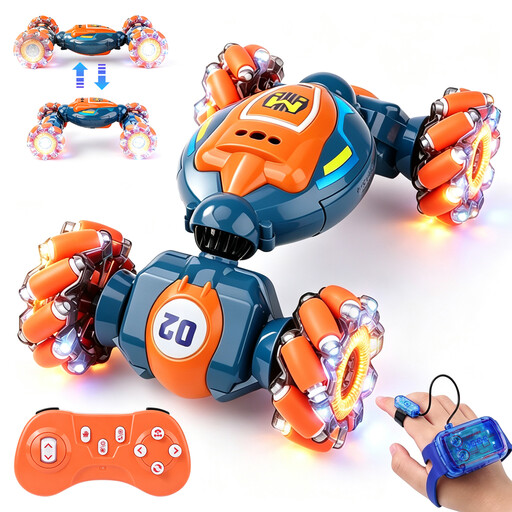
Why this product suits this profile: Two control options – a hand-held remote and a gesture-control watch – offer an easy introduction to stunts and drifting. The vehicle’s built-in battery charges via USB cable.
The product description specifies the 3.7-volt battery and notes that the remote controls require additional AAA batteries. This makes it easier to plan for the accessories you’ll need before buying.
4WD drive, 360-degree spins, LED wheels and a deformable vehicle design.
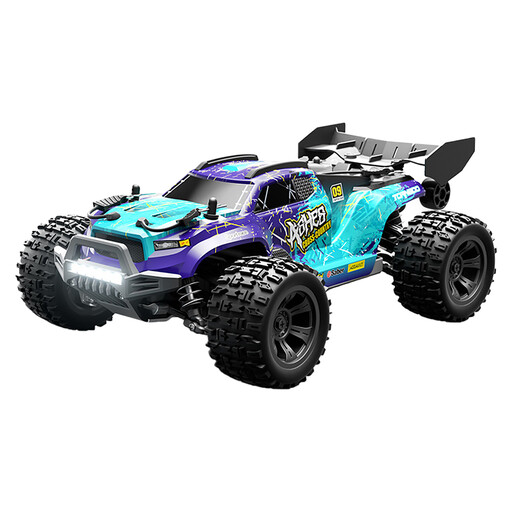
Why this product suits this profile: This model combines 4WD, an aluminium metal chassis, independent suspension and large tyres for driving on a range of surfaces.
The specifications list the battery, remote-control batteries and chassis material separately. This makes it easier to assess what’s involved in using and maintaining the vehicle.
7.4-volt, 1,500 mAh battery, 2.4 GHz remote control and LED headlights.
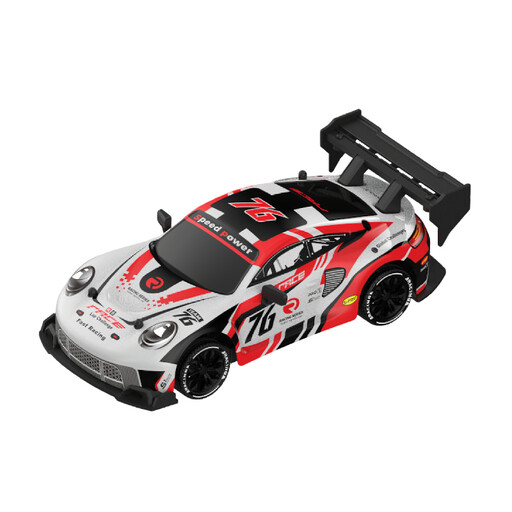
Why this product suits this profile: This model is for users who want to combine racing and drifting on flat surfaces. Two sets of tyres make it easy to switch between driving modes.
The description specifies use on tiles and flat outdoor surfaces. This helps avoid unrealistic expectations about off-road driving.
4WD, USB charging, LED lights and a stated play time of around 20 to 40 minutes per charge.
We’ve put together a complete, regularly updated list of products that meet these strict selection criteria and fully comply with the safety regulations in force in the EU.
It depends on the model. Some simple vehicles are listed as suitable from around age 6, while more powerful drift models are often intended for children aged 8 and over. Detailed diecast model cars may be recommended for ages 14 and over. Always check the information on the product page and packaging.
Play time depends on the battery capacity, motor, surface and driving style. One of the drift models mentioned above has a stated run time of around 20 to 40 minutes. Treat this as a guide, as cold weather, frequent stunts and an older battery can all affect the actual run time.
As well as the purchase price, you may need to pay for AA or AAA batteries for the remote control, replacement batteries, tyres and, where necessary, a suitable charging cable. An RC car with a rechargeable battery reduces the need for disposable batteries in the vehicle. Before buying, check whether the battery and charging accessories are included, and which batteries the controls need.