
Lieferung heute & morgen

Qualitätsgarantie

Willkommens-Angebote freischalten: KOSTENLOSE Lieferung | Bis zu 80 % RABATT | Kostenlose 30-Tage-JoyPlus-Testphase
App herunterladen
Choosing an RC drift car can be a challenge given the vast array of models and technical specifications. Many enthusiasts wonder which features are truly crucial for a great drifting experience and which vehicle best suits their skill level.
This article serves as your guide. We'll explain the key criteria to consider when making a purchase and present a selection of models that stand out for their unique features. Our goal is to provide you with a solid foundation to make an informed decision and find the perfect remote-controlled drift car for your needs.
To select the right model, it helps to understand a few technical fundamentals. The following points are particularly important for the performance and handling of an RC drift car.
The drivetrain is crucial for drifting performance. Most specialised drift models rely on a 4WD RC car (All-Wheel Drive) system. This distributes power to all four wheels, making it easier to initiate and maintain a controlled drift, especially for beginners. The chassis, often featuring independent suspension, ensures the wheels maintain contact with the ground even on uneven surfaces, keeping the vehicle stable.
A key feature of high-quality hobby RC car models is proportional control. Unlike simple on/off controls, it allows for fine-tuned modulation of the throttle and steering. This is essential for precise RC car drifting.
The tyres are just as important. An RC car with drift tyres is equipped with special hard-plastic tyres that have low friction, enabling the vehicle to slide. Many sets also include a set of high-grip rubber tyres for standard driving, which increases the model's versatility.
RC cars come in various scales. A 1:24 drift car is relatively small and ideal for indoor use in spaces like garages or large living rooms. Larger 1:10 scale models require more space and are typically driven outdoors on smooth surfaces like asphalt or concrete. The choice should also align with the target audience. While some models are designed as durable toys for children, others are aimed at ambitious hobbyists as sophisticated RC cars for adults and teens.
Based on the criteria above, we have compiled a selection of vehicles that cater to different requirements and driving styles.
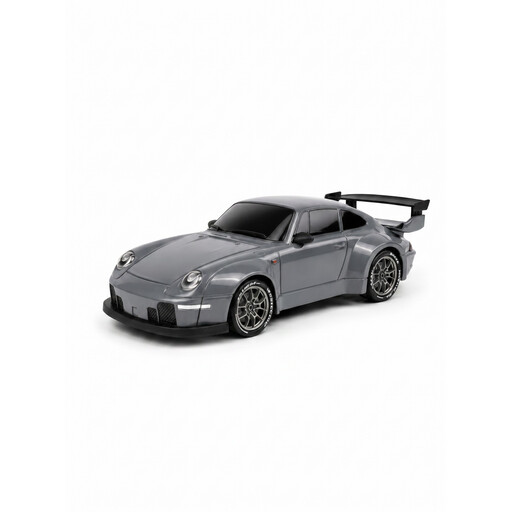
Why it stands out: This 1:24 scale model combines advanced technology with a compact design. The integrated, adjustable gyro stabiliser actively assists with vehicle control during drifts by automatically applying counter-steering inputs. This makes it significantly easier for beginners to get into the drifting hobby. The 2.4 GHz proportional remote and professional steering servo allow for extremely precise control.
Pros:
Who is it for? This vehicle is a great choice for teens and adults looking for a sophisticated hobby RC car for indoor use. Its technical features support a steep learning curve and provide long-lasting enjoyment even for advanced drivers.
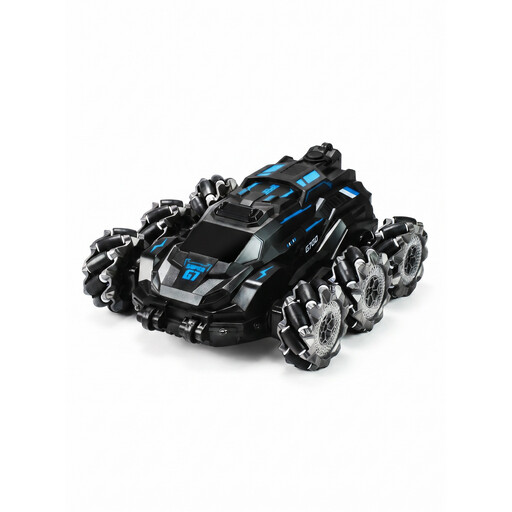
Why it stands out: This model focuses on action and entertainment. With its six-wheel drive (6WD) system and special Mecanum wheels, it can not only move forwards and backwards but also drift sideways and perform 360-degree spins. A special feature is the spray mist function at the rear, which, combined with LED lights and music, creates an eye-catching show effect.
Pros:
Who is it for? This stunt vehicle is primarily aimed at children aged 6 and up and anyone looking for a straightforward, high-impact toy car. The focus is less on realistic drifting performance and more on versatile stunt capabilities and playful features.
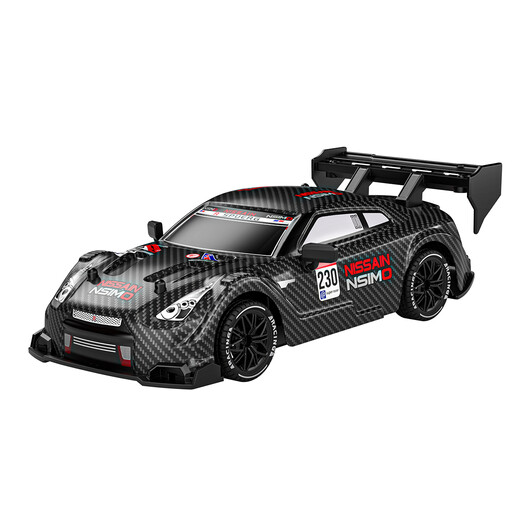
Why it stands out: This model, styled after a famous sports car, combines an attractive design with solid drift performance. The 4WD all-wheel drive and shock-absorbing chassis provide a reliable foundation for controlled drifts on smooth surfaces. Thanks to the 2.4 GHz proportional remote, the vehicle can be manoeuvred with precision. The included second set of tyres allows for a quick switch between drift and race modes.
Pros:
Who is it for? This remote-controlled drift car is ideal for beginners and teens aged 8 and up who want a vehicle with a realistic look and good all-round driving characteristics. It offers a straightforward entry point into the world of RC drifting.
If the models featured don't quite match what you're looking for, or if you're interested in other types of vehicles, it's worth exploring our wider collection.
? Discover more battery-operated vehicle models in our collection
1. What is the difference between a normal RC car and an RC drift car? The main difference is the tyres. RC drift cars use hard-plastic tyres with very low grip to enable sliding. Normal RC cars use rubber tyres for maximum traction. Additionally, drift models often have special chassis setups and an all-wheel-drive system to make drifting easier.
2. Can you drive an RC drift car normally? Yes, this is possible with many models. They often come with a second set of high-grip rubber tyres. After a quick tyre change, the vehicle can be used for normal racing with maximum grip.
3. How difficult is it to drift with an RC car? It takes some practice to get a feel for the interplay between throttle, steering, and the rear end breaking loose. However, models with all-wheel drive (4WD) and electronic aids like a gyro stabiliser make it much easier for beginners to maintain control and make rapid progress.