
Lieferung heute & morgen

Qualitätsgarantie

Willkommens-Angebote freischalten: KOSTENLOSE Lieferung | Bis zu 80 % RABATT | Kostenlose 30-Tage-JoyPlus-Testphase
App herunterladen
The search for the right RC drift car can quickly become overwhelming. Many models promise spectacular drifts and high speeds, but in practice, disappointment is often inevitable. A remote-controlled car that loses performance after a short time or whose drifting capabilities turn out to be pure marketing hype is a common result of uninformed purchases.
As a Joybuy Product Recommendation Officer, I analyze product data to help you separate the wheat from the chaff. This guide focuses on the technical facts and reveals the three most common pitfalls, so you can make an informed decision—whether for getting started in the hobby or as a high-quality gift for tech-savvy boys and girls aged 8 and up.
Before you shortlist a model, you should pay attention to three critical points that are often overlooked and lead to frustration.
To avoid the pitfalls mentioned above, you should carefully check three technical specifications. These define a model's performance and intended use.
For controlled drifting, an all-wheel drive (4WD) system is essential. It distributes the motor's power evenly to all four wheels, allowing the driver to steer the vehicle precisely through corners and maintain the drift angle. A fast remote control car also benefits from 4WD through better acceleration and traction, especially when using high-grip racing tires. Models with only rear-wheel drive (2WD) are often harder to control and less suitable for precise drifting techniques.
A crucial quality feature is the inclusion of two different sets of tires:
Models that include both sets offer two driving experiences in one package, making them significantly more versatile.
The scale indicates the size of the model in relation to the original. For example, a 1:24 RC Car is 24 times smaller than the real vehicle. This scale is a good compromise between detail and manageability, ideal for use indoors or on smaller surfaces. Equally important is the remote control. 2.4 GHz radio technology is standard today and ensures an interference-free connection over ranges of up to 50 meters. It also allows multiple vehicles to operate simultaneously without their signals interfering with each other—a basic requirement for any remote control race car intended for duels with friends.
Based on the criteria above, we have identified several models suitable for different user profiles.
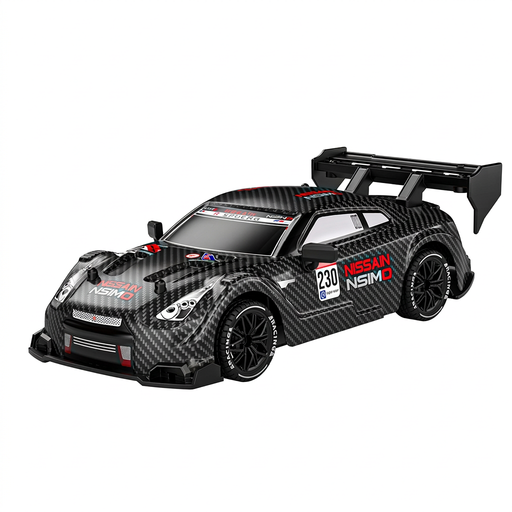
Why This Fits Their Persona: This model is an ideal starter kit. It offers all the necessary features for real drifting without overwhelming the user with complex settings. The GTR design is very popular with young drivers, making it an attractive toy car for boys aged 8+ and tech-interested teens.
It explicitly comes with two tire sets (drift and racing) and features a 4WD drivetrain. The battery is also swappable, which eliminates the most common points of frustration from the outset.
The all-in-one package of drift and racing tires allows for two driving modes in one. The integrated body lighting (RC car with lights) provides an appealing look, even at dusk.
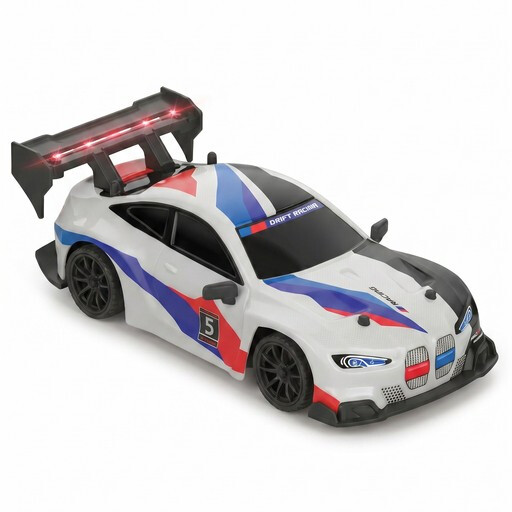
Why This Fits Their Persona: For enthusiasts of classic automotive designs who don't want to compromise on modern RC technology. This model combines the iconic look of a BMW with the full functionality of a drift vehicle, appealing to both collectors and active drivers.
This is not just a display model. The 4WD drivetrain and the included drift tires ensure that its performance lives up to its looks. The swappable battery guarantees long-lasting driving fun.
The combination of a licensed, detailed design and full-fledged drift technology is the main advantage. The LED lighting further enhances the vehicle's realistic appearance.
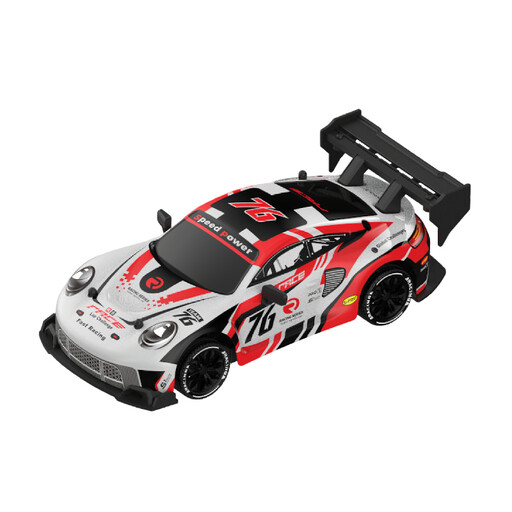
Why This Fits Their Persona: This model is aimed at users who prioritize speed and performance. The manufacturer-stated 25,000 RPM motor promises high top speeds, making it a great choice for racing against friends.
The high motor speed is paired with the necessary hardware: a 4WD drivetrain for traction and control, and swappable tires to switch between maximum grip for racing and low traction for drifting.
The powerful motor is the clear advantage for anyone looking for an especially fast remote control car. The 2.4 GHz control system ensures a stable connection, even when racing with multiple participants.
We've compiled a complete, up-to-date list of products that fully meet these strict selection criteria and safety regulations.
The runtime of an RC drift car typically ranges from 20 to 40 minutes per charge. The exact duration heavily depends on the driving style—aggressive acceleration and constant drifting consume more energy. It is advisable to look for models with swappable batteries and purchase one or more spare batteries to extend playtime without long interruptions.
Yes, but the surface is crucial. RC drift cars are designed for smooth, flat surfaces. Ideal conditions include clean asphalt, concrete, garage floors, or tile. Driving on gravel, grass, or uneven pavement is not recommended, as the low chassis and sensitive mechanics could be damaged. Wet conditions should also be avoided unless the model is explicitly advertised as waterproof.
The main differences lie in three areas: tires, drivetrain, and chassis. RC drift cars use special, hard plastic tires with minimal grip to enable sliding. Normal RC cars use rubber tires for maximum grip. Additionally, all-wheel drive (4WD) is common in drift models to ensure controlled slides. Often, the steering geometry and suspension are also specially adapted to achieve greater steering angles and driving dynamics optimized for drifting.