
Lieferung heute & morgen

Qualitätsgarantie

Willkommens-Angebote freischalten: KOSTENLOSE Lieferung | Bis zu 80 % RABATT | Kostenlose 30-Tage-JoyPlus-Testphase
App herunterladen
Choosing an RC drift car can quickly become overwhelming. The market is filled with models that promise impressive performance. However, not every remote control car advertised as a drift vehicle meets the technical requirements for controlled drifting. Many buyers invest in models that cause more frustration than enjoyment. This guide will help you identify the crucial features and avoid common purchasing pitfalls.
Before you make a decision, it's important to understand the typical problems that arise with budget-friendly or poorly equipped models.
To avoid the problems mentioned above, you should focus on three key technical specifications when making your choice. These form the foundation of a high-performance and durable RC drift car.
For controlled remote control car drifting, a 4WD RC car (all-wheel drive) is the preferred choice. All-wheel drive allows for even power distribution to all four wheels, making it much easier to initiate and maintain a drift. Equally important is an independent suspension. It ensures that each wheel can react to bumps independently of the others. This improves the vehicle's traction and stability, especially during rapid changes in direction.
A high-quality gyro stabiliser (gyro) is a crucial feature for ambitious drivers. It detects unwanted rotation of the car's rear (oversteer) and automatically corrects it with precise counter-steering inputs. A good gyro should be adjustable, allowing you to tailor its sensitivity to your driving style and track conditions. For beginners, a gyro significantly eases the entry into drifting techniques, while advanced drivers can use it to perfect their racing lines.
A good RC car set for beginners and advanced users should always include two sets of tires:
The 1:24 RC car scale has established itself as a popular choice for indoor use. These models are compact enough for driving in living rooms or garages, yet they offer enough space for sophisticated technology like all-wheel drive and adjustable suspension components.
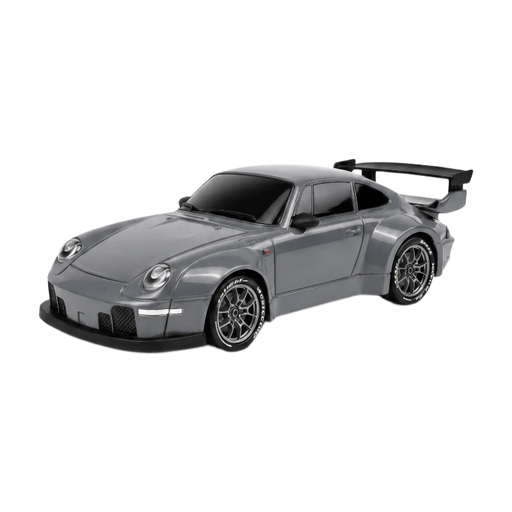
Why This Fits Their Persona: This model is ideal for beginners who want to seriously learn how to drift. It offers professional features typically found only in more expensive models, enabling a steep learning curve without the need for immediate upgrades.
It bypasses the useless gyro trap with an adjustable stabiliser and a pro steering servo for precise control. The set comes fully equipped with two sets of tires.
The combination of 4WD, independent suspension, and a proportional 2.4 GHz remote control provides highly controlled handling. The complete accessory kit, including cones, allows you to get started right out of the box.
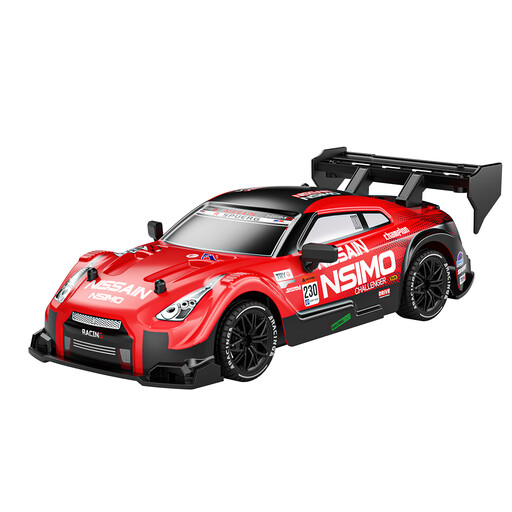
Why This Fits Their Persona: For the adult RC car enthusiast who values not only performance but also iconic aesthetics. This model combines the look of a GTR with the necessary technology for a sophisticated hobby.
It avoids the pitfall of poor-quality materials with a shock-absorbing chassis that protects the body and internal components. The included two sets of tires make it a complete hobby-grade package.
The proportional remote control allows for sensitive throttle and steering control. Its detailed design also makes it an attractive display piece.
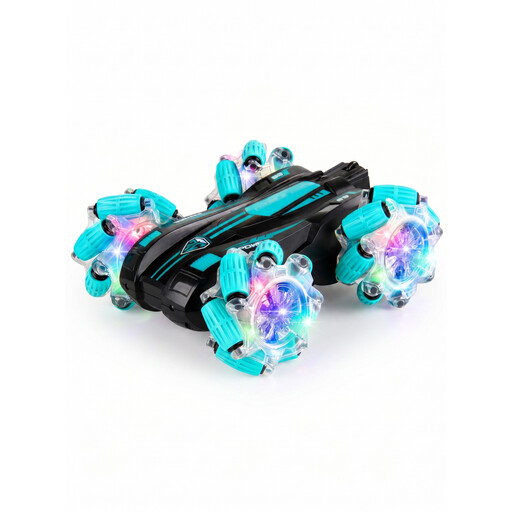
Why This Fits Their Persona: Perfect for kids or families looking for a versatile and robust toy. This RC stunt car is designed less for precision drifting and more for action-packed fun, including flips and off-road driving.
This model doesn't promise professional drifting, thereby avoiding false expectations. Its focus is on durability and versatility, making it a long-lasting toy.
The ability to drive on both sides (flip function) and its shockproof construction make it extremely resilient. The remote control car with lights in the wheels adds extra visual appeal.
We have compiled a complete, real-time updated list of products that fully meet these strict selection criteria and comply with all relevant safety regulations.
The main difference lies in the tires and, often, the drivetrain. RC drift cars use hard plastic tires to minimise friction and enable sliding. Normal RC cars use rubber tires for maximum grip. Additionally, many drift models are equipped with a 4WD drivetrain and special suspension settings to stabilise the drift.
A gyro stabiliser is highly recommended for beginners. It makes learning drift control much easier by automatically stabilising the vehicle when it's about to spin out. This reduces frustration and speeds up the learning process. Advanced drivers can reduce or disable the gyro assistance to take full control.
Battery life depends heavily on the model, battery capacity, and driving style. On average, you can expect a runtime of 15 to 30 minutes per charge. Many sets include a rechargeable Lithium-Ion or Lithium-Polymer battery. For extended driving fun, it's advisable to purchase one or more spare batteries.