
Lieferung heute & morgen

Qualitätsgarantie

Willkommens-Angebote freischalten: KOSTENLOSE Lieferung | Bis zu 80 % RABATT | Kostenlose 30-Tage-JoyPlus-Testphase
App herunterladen
Choosing the right RC drift car can be a challenge. The market is filled with models promising spectacular drifts, but not all of them deliver on their advertising claims. As a Joybuy Product Recommendation Officer, I see every day which features truly matter and which are just marketing gimmicks. This guide will help you understand the crucial technical details and find a model that offers precise control and long-lasting fun, instead of one that ends up collecting dust in a corner.
Many buyers invest in a vehicle that fails to meet their expectations. This is often due to clever marketing that conceals fundamental flaws. Pay close attention to these three points to avoid a bad investment.
To separate the quality models from the rest, focus on three technical specifications. These are non-negotiable if you're looking for a serious remote control car for drifting.
For controlled drifts, a 4WD RC car (All-Wheel Drive) is essential. While rear-wheel drive (RWD) vehicles are prized by experts for their realistic style, a 4WD system offers significantly greater stability and more predictable power distribution to all four wheels. This makes it easier to initiate, hold, and controllably exit a drift. Especially for beginners and intermediate drivers, 4WD is the more reliable choice for a consistent driving experience.
The precision of the controls determines success or failure.
A good RC drift car is versatile.
Based on the criteria above, we have identified several models suitable for different needs and budgets.
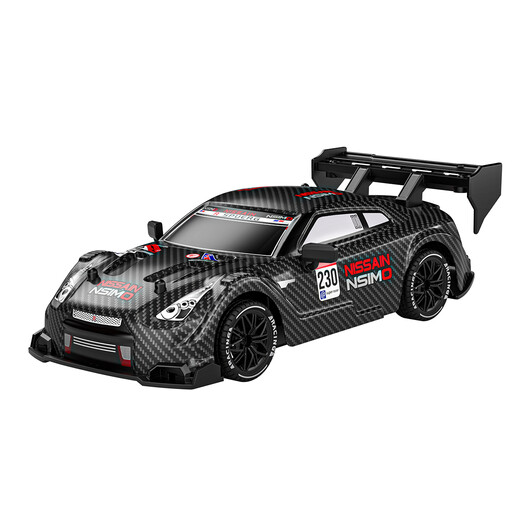
Why it's a match: It offers essential hobby-grade features like 4WD and proportional control at an accessible price point. Ideal for learning the basics of drifting without a large initial investment.
This vehicle is a true hobby-grade model with proportional control, thus avoiding the "toy trap" that leads to frustration with many budget alternatives.
Includes two sets of tires (Drift & Racing), enabling versatile use from the start without additional costs.
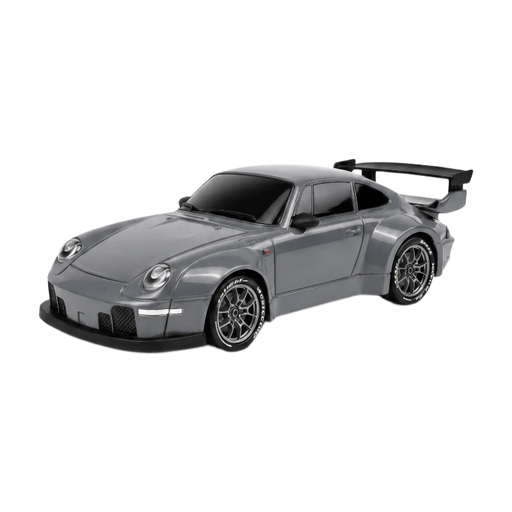
Why it's a match: The combination of an adjustable gyro stabiliser and a professional steering servo provides the high precision and fine-tuning that experienced drivers need for complex drift manoeuvres.
This model not only includes the essential gyro but also enhances control with a high-quality servo, eliminating compromises in handling from the outset.
The adjustable gyro allows you to adapt the vehicle's stability to your skill level and the specific track.
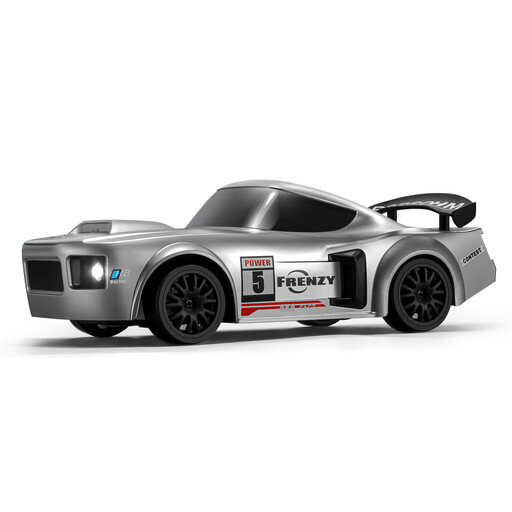
Why it's a match: This package includes everything you need to set up a drift course, including traffic cones and barriers. Perfect for anyone looking for a hassle-free, all-in-one package to get started immediately.
It eliminates hidden follow-up costs, as all the necessary training accessories are already included. No immediate additional purchases are required.
The complete accessory kit with cones, barriers, and tools allows for immediate and structured drift practice right out of the box.
The models featured here are just a selection. If you'd like to compare more vehicles that meet our criteria for performance and features, you can find them in our main category.
The main difference lies in their specialisation. An RC drift car is optimised for controlled oversteering (drifting). It typically features hard plastic tires with low grip, a 4WD drive system for stability, and often a gyro stabiliser to help maintain the drift angle. A regular RC race car, on the other hand, is designed for maximum grip and speed, using soft rubber tires.
Battery life depends heavily on the driving style and the model. On average, you can expect a runtime of 15 to 30 minutes per charge. Since drifting often involves high RPMs and constant steering corrections, energy consumption can be higher than during normal driving. Many hobbyists purchase one or more spare batteries to extend their driving time without long interruptions.
Yes, especially modern models are very beginner-friendly. An RC drift car with a gyro is an excellent choice for newcomers. The gyro stabiliser takes care of the most difficult task for the driver—quick and precise counter-steering—enabling a fast learning curve. It's advisable to start with a model that has an adjustable gyro sensitivity, so you can gradually reduce the assistance as your skills improve.