
Lieferung heute & morgen

Qualitätsgarantie

Willkommens-Angebote freischalten: KOSTENLOSE Lieferung | Bis zu 80 % RABATT | Kostenlose 30-Tage-JoyPlus-Testphase
App herunterladen
The thrill of drifting—the controlled slide of a vehicle through a corner—is as captivating as ever. An RC Drift Car brings this experience home on a smaller scale. However, the market is flooded with models whose promises often outweigh their actual performance. Many buyers are disappointed when their new car slides more than it drifts or develops faults after a short time.
As your Joybuy Product Recommendation Officer, I'll help you recognise the common pitfalls and make an informed decision. We will focus on the technical features that truly matter, leaving the overhyped marketing slogans behind.
The 2 Most Common Pitfalls When Buying an RC Drift Car:
To avoid a bad buy, you should pay attention to three core technical aspects. These are what separate a true hobby-grade RC car from a simple toy.
For controlled drifting, all-wheel drive (4WD) is essential. It distributes the motor's power evenly to all four wheels, allowing the driver to keep the vehicle stable in a drift with precise throttle and steering inputs. A pure rear-wheel-drive car is far more difficult for beginners to master. Also, look for an independent suspension. It ensures the wheels maintain contact with the ground even on slightly uneven surfaces, which is crucial for stability during a drift.
Proportional control is the most important feature for precise manoeuvres. It allows you to finely modulate the throttle and steering—just like in a real car. This is the only way to accurately control the drift angle and execute clean turns. Many modern models aimed at beginners and RC cars for adults also offer an electronic gyro stabilisation system (Gyro). This system detects a spinning-out rear end and automatically counter-steers, which makes learning to drift significantly easier. For advanced drivers, the gyro's sensitivity can be reduced or turned off completely.
Drifting only works with the right tyres. Specialised drift tyres are made of a hard plastic compound with very low grip, which allows the vehicle to slide. However, these tyres are unsuitable for normal driving or racing. Models that come with an additional set of rubber tyres (grip tyres) offer the greatest flexibility. Swapping between tyre sets instantly transforms a drift specialist into a speedy racer. A remote-controlled car with lights also enhances the fun at dusk.
Here are a few recommendations tailored to different needs and experience levels, all of which meet the criteria mentioned above.
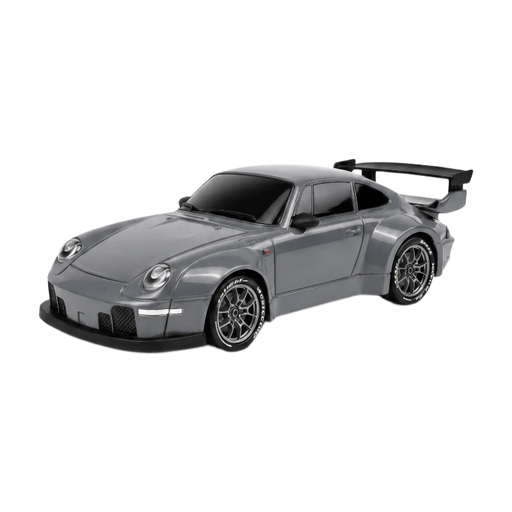
Why This Fits Their Persona: This compact 1:24 drift car is ideal for getting started and for indoor driving. The integrated gyro system actively helps maintain control during initial drift attempts, which prevents frustration and speeds up the learning process.
It bypasses the imprecise control trap by including full proportional throttle and steering. This is not a given in this price range and is crucial for an authentic drifting feel.
Complete set including interchangeable tyres for both drifting and racing. The adjustable gyro system and LED lights offer high play value right out of the box.
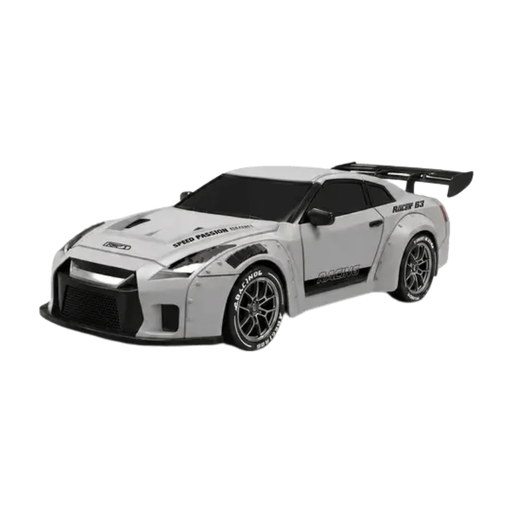
Why This Fits Their Persona: This model is aimed at drivers looking for more performance, customisation options, and appealing aesthetics. The GTR design and upgraded tech make it an ideal RC car for adults and advanced teens who want to hone their skills.
It avoids the "RTR" trap by using a 7.4V LiPo battery. This delivers more consistent and higher power throughout the entire run time compared to basic batteries, ensuring long-lasting fun.
Features a professional steering servo and independent suspension, which allows for highly precise control and stable handling during demanding drift manoeuvres.
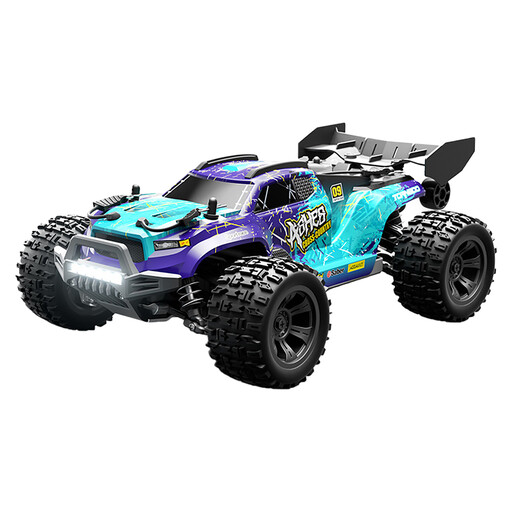
Why This Fits Their Persona: Perfect for users who don't want to be limited to smooth asphalt. This vehicle combines drifting capability with off-road characteristics, so it performs well on sand, grass, or gravel.
Unlike delicate drift cars, this model has a reinforced aluminium chassis and a durable body. This protects the electronics during jumps and on rough terrain, ensuring a longer lifespan.
High versatility thanks to its powerful motor and large, high-grip tyres. The 7.4V 1500mAh battery also provides extended run time for long outdoor adventures.
We've compiled a complete, up-to-date list of products that meet these strict selection criteria and safety regulations.
The main difference lies in three areas: 1. Tyres: RC drift cars use hard, smooth plastic tyres to facilitate sliding, whereas regular RC cars use treaded rubber tyres for maximum grip. 2. Drivetrain: Almost every remote-controlled car for drifting has a 4WD all-wheel-drive system for better control. 3. Chassis Setup: Drift cars often have special suspension geometries to make it easier to initiate and hold a drift.
It's not necessary, but it is highly recommended, especially for beginners. A gyro system (gyroscopic stabiliser) helps to stabilise the vehicle by automatically counter-steering against oversteer (when the rear end spins out). It makes the first steps significantly easier. Advanced drivers often reduce the sensitivity or turn it off completely to have full control over the vehicle.
The run time depends heavily on the battery's capacity (measured in mAh) and your driving style. For most entry-level and mid-range models, you can expect a run time of 15 to 30 minutes per battery charge. Models with larger batteries or those driven less aggressively can achieve even longer times. It's often a good idea to purchase a second battery to extend the fun.