
Lieferung heute & morgen

Qualitätsgarantie

Willkommens-Angebote freischalten: KOSTENLOSE Lieferung | Bis zu 80 % RABATT | Kostenlose 30-Tage-JoyPlus-Testphase
App herunterladen
The search for the right RC drift car can quickly become overwhelming. The market is flooded with models that promise spectacular drifts, yet not every vehicle delivers on its promises. Many buyers invest in a model only to find it's unsuitable for genuine drifting performance. This guide will help you identify the crucial features and avoid common purchasing pitfalls.
As a Joybuy Product Recommendation Officer, my job is to filter market information and provide you with objective, practical advice so you can make an informed decision.
Before you decide on a model, you should be aware of the most common issues that often only become apparent after the purchase.
To avoid the problems mentioned above, you should pay close attention to a few technical specifications when making your selection. These features separate simple toys from capable drift models.
A 4WD remote control drift car (Four-Wheel Drive) is fundamental for controllable drifts. The all-wheel-drive system ensures even power distribution, allowing the driver to keep the vehicle stable and steer with precision even while drifting. Equally important is an independent suspension. It ensures that all four wheels maintain optimal contact with the surface, which provides stability, especially on uneven ground, and makes the car's handling predictable.
An RC car with a gyro is a valuable feature, especially for beginners and intermediate drivers. The gyro sensor detects a sliding rear end (oversteer) and automatically applies counter-steering in a split second. This helps to hold the drift angle and prevents the vehicle from an unwanted spin-out. On many hobby-grade models, the gyro's sensitivity is adjustable, allowing you to tailor the level of assistance to your skill level and preference.
The scale, such as 1:24 RC drift car, defines the size of the model. Smaller scales are excellent for indoor use, while larger models also perform well outdoors. Regardless of the scale, an RC car with interchangeable tyres is a clear sign of quality. A set typically consists of:
This flexibility doubles the vehicle's range of use and is a hallmark of a well-designed RC drift car for adults and ambitious teens.
Here are some recommendations based on the criteria above, suitable for different user profiles.
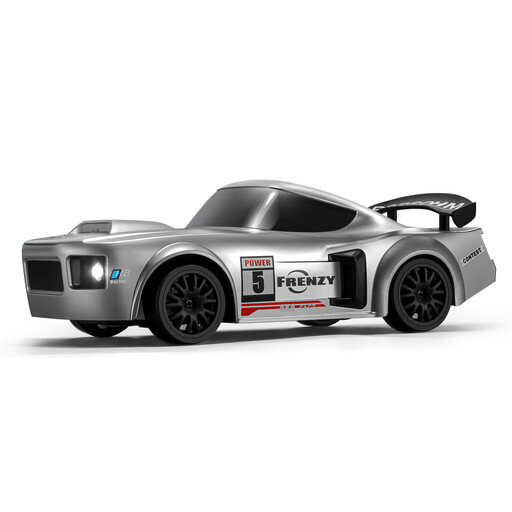
Why This Fits Their Persona: This model offers all the essential features of a true hobby-grade drift car at an accessible price point. It's ideal for anyone looking to get into the hobby without sacrificing key functions like all-wheel drive, a gyro, and interchangeable tyres.
It features an adjustable gyro and two sets of tyres, which prevents uncontrolled sliding and allows for genuine customisation.
Complete package with 4WD drivetrain, gyro stabiliser, and interchangeable tyres. Ready-to-Run (RTR).
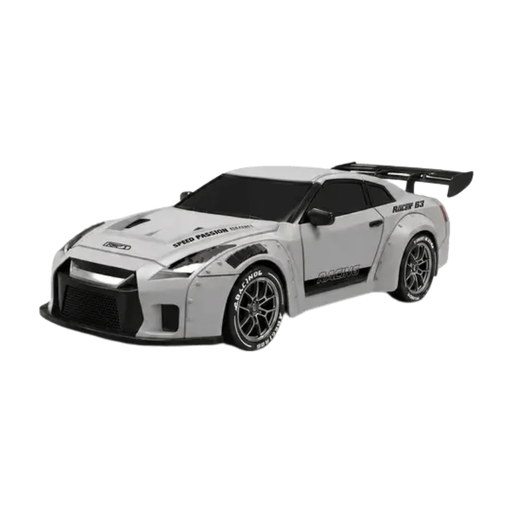
Why This Fits Their Persona: For drivers who demand maximum control and precision. The proportional steering servo and proportional throttle enable extremely delicate manoeuvres that aren't possible with simpler models. A true pro-level RC drift car for enthusiasts.
Goes beyond the basic requirements and addresses the pitfall of inadequate control with a fully proportional 2.4GHz remote system.
Proportional steering servo for ultimate precision. Remotely controlled LED lights and a complete accessory kit.
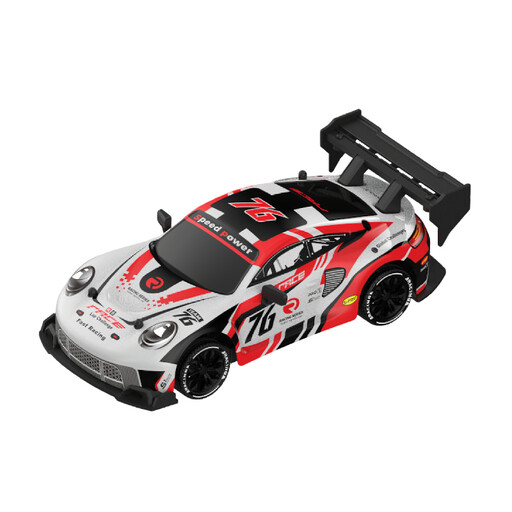
Why This Fits Their Persona: This vehicle is designed for speed and agility. The powerful 25,000 RPM motor and the long 50-metre range of the remote control make it a great choice for indoor competitions and high-speed drifts.
Offers true versatility with the included interchangeable tyres. It's not just a drift car, but also a capable racing vehicle for grip tracks.
Powerful 25,000 RPM motor for high speeds. Long-range remote control (50m) for greater flexibility.
We have compiled a complete, up-to-date list of products that fully meet these strict selection criteria and UK safety regulations.
A gyro stabiliser is highly recommended for beginners. It significantly eases the learning curve for drifting techniques by stabilising the vehicle and preventing uncontrolled spin-outs. This helps you achieve success more quickly and reduces frustration. Advanced drivers can reduce the assistance or turn it off completely to further refine their skills.
The main difference lies in controllability and customisability. Hobby-grade models typically feature proportional control, all-wheel drive, an independent suspension, and the ability to swap parts like tyres or batteries (RC car with interchangeable tyres). Toy cars often have only simple on/off controls and are closed systems with no maintenance or upgrade options.
Battery life varies depending on the model, battery capacity, and driving style. For the 1:24 scale models presented here, the run time per battery charge is typically between 15 and 25 minutes. Many sets already include a second battery to extend the driving time without a long interruption. The charging time via a USB charger is usually 1 to 2 hours.