
Lieferung heute & morgen

Qualitätsgarantie

Willkommens-Angebote freischalten: KOSTENLOSE Lieferung | Bis zu 80 % RABATT | Kostenlose 30-Tage-JoyPlus-Testphase
App herunterladen
An RC drift car should respond quickly, drift under control and offer several driving modes. In practice, however, some models disappoint after only a short time: the tyres aren’t suited to the surface, the battery lasts only a few minutes or the remote control feels imprecise. That’s why parents, teenagers and hobby drivers should look beyond the marketing claims and check the technical details.
A high-speed RC car isn’t automatically a good drift model. Hard drift tyres can make the rear end break away on smooth tiles, but often offer less control on rough tarmac. Soft racing tyres are usually better suited to flat surfaces when acceleration and cornering stability are the priority.
Practical tip: An RC car with interchangeable tyres offers more flexibility than a model with just one set. You can switch between drift and racing modes.
When buying a rechargeable RC car, check the battery type, how it charges and the stated running time. The 4WD drift models featured here list a running time of around 20 to 40 minutes per charge. Actual battery life depends on factors including speed, surface, driving style and lighting.
It’s also worth checking whether the battery is removable and whether a compatible USB charging cable is included. Lithium batteries should only be charged under supervision. Don’t open them, and disconnect them from the power supply once charging is complete.
An RC car for ages 8+ may be more technically demanding than a simple remote-controlled toy car designed for younger children. Proportional speed and steering controls allow for more precise movements, but take a little practice to master. For a first drive, choose a clear, level area without furniture, stairs or breakable items.
When children are using an RC car, follow the guidance provided for the specific product. Small accessories, rotating wheels and lithium batteries require appropriate supervision.
A 4WD RC car sends power to all four wheels. This can be useful for drifting and pulling away on smooth surfaces. For indoor driving, tiles, wood and other level floors are more suitable than deep-pile carpets. Many of the models described are also designed for flat outdoor surfaces.
2.4 GHz remote controls are handy when using several vehicles in the same area, as they’re less prone to interference than older systems that use fixed frequencies. Check the product description for the specific range. Several models in this selection have a stated range of up to 50 metres.
Two sets of tyres give you more options:
A gyroscope is no substitute for practice. Choose a setting that suits your experience and the space available.
LED lights add visual appeal and can make it easier to keep track of the car in low light. However, they also use more power. If you drive regularly, check the charging time, availability of spare batteries and whether compatible replacement tyres are available.
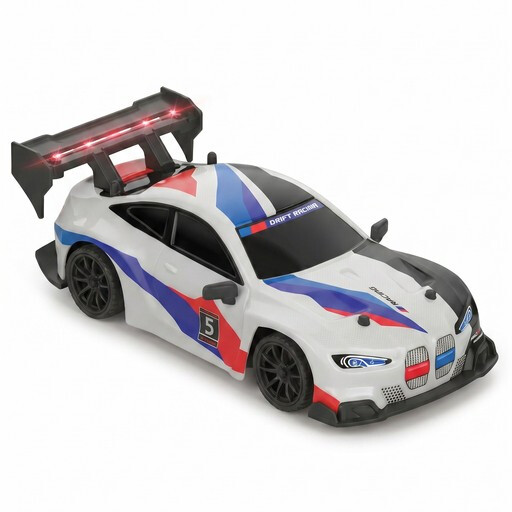
Why this product suits this profile: This compact model combines 4WD, two sets of tyres, 2.4 GHz control and LED lighting, making it suitable for flat indoor surfaces.
Interchangeable drift and racing tyres mean you’re not limited to just one driving style. The stated range of up to 50 metres makes it easier to drive in suitable indoor and outdoor spaces.
4WD, proportional control, LED lights and a stated running time of around 20 to 40 minutes per charge.
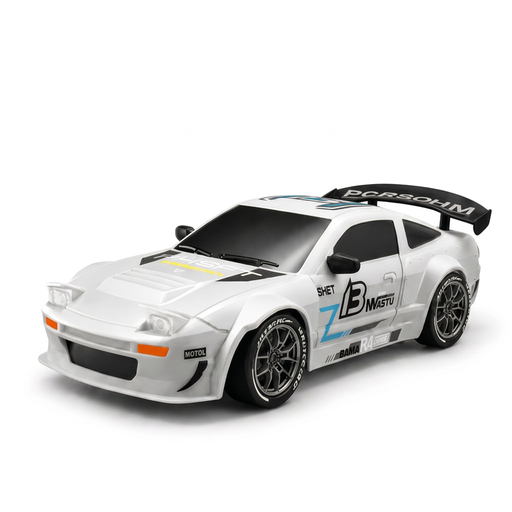
Why this product suits this profile: This model is for teenagers and adults who want to focus more on settings and driving technique.
Two speed settings and an adjustable gyroscope let you tailor the drive to beginners or more experienced users. The product details also list a shock-resistant ABS body and suspension.
Adjustable gyroscope, two types of tyres, LED lighting, lithium battery and an ABS body described as resistant to impact and abrasion.
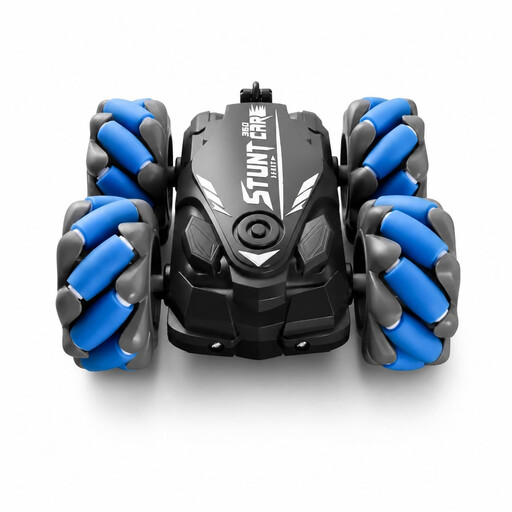
Why this product suits this profile: If you’d like to try stunt moves as well as traditional drifts, this model offers remote and gesture controls for indoor and suitable outdoor surfaces.
It’s not limited to just one driving mode: the listed features include 4WD, sideways drifting, 360-degree spins and driving after flipping over. This adds variety for regular use.
Two control methods, 2.4 GHz connection, built-in lithium battery, Mecanum wheels, and light and sound effects according to the product details.
We’ve put together a complete, regularly updated list of products that meet these strict selection criteria and the safety regulations in force in the EU.
For your first few drives, choose a clear space several metres across. Smooth tiles are suitable for drift tyres, while racing tyres can offer more control on flat tarmac or concrete. After each drive, take a moment to check:
Only use the car on water, sand or dirt if it’s specifically designed for those conditions. Most indoor RC drift models aren’t intended for wet environments.
The 4WD drift models described here have a stated running time of around 20 to 40 minutes per charge. Speed, LED use, surface and how much drifting you do all affect actual battery life.
Several models in this selection are specifically designed for children aged 8 and over. You should also consider how easy the car is to operate, the size of the play area, and supervision while driving and charging. Check the warnings for the specific product before buying.
Yes, as long as the surface is flat and dry. A traditional drift model is generally not the right choice for rough gravel, long grass or wet surfaces. For these conditions, a more off-road-capable 2WD or 4WD RC car with suspension and grippy tyres may be a better option.