
Lieferung heute & morgen

Qualitätsgarantie

Willkommens-Angebote freischalten: KOSTENLOSE Lieferung | Bis zu 80 % RABATT | Kostenlose 30-Tage-JoyPlus-Testphase
App herunterladen
The thrill of drifting—controlled oversteer through corners—captivates motorsport fans worldwide. An RC drift car brings this experience home in miniature. But the market is flooded with models whose performance claims often exceed their actual capabilities. Many buyers invest in a vehicle only to find that precise drifts are nearly impossible. This guide highlights the crucial features that define a quality hobby-grade model and helps you avoid common purchasing mistakes.
As a Joybuy Product Recommendation Officer, my role is to filter market information and provide you with objective, practical advice so you can make an informed decision.
Before we dive into the technical details, let's look at the most common issues that lead to disappointment with entry-level models.
To avoid these pitfalls, you should look for three core technical features. These define the difference between a simple toy and a true hobby-grade RC race car.
An all-wheel-drive system (4WD drift car) is a major advantage for drifting. It ensures even power distribution to all four wheels, which stabilises the vehicle and makes it more controllable when the rear end breaks loose.
Even more important, however, are the controls. A proportional remote control car allows for infinitely variable adjustment of the throttle and steering. You can precisely dose the steering angle and speed, just like in a real car. This is the absolute fundamental requirement for initiating and holding a clean drift.
A gyroscope stabilisation system, often called a "gyro," is a small electronic component that detects unwanted rotational movements of the vehicle and automatically corrects them with counter-steering. For an RC car with a gyro, this means:
The 1:24 scale is a popular compromise between compact size and detail. These models are small enough for indoor use but also robust enough for smooth outdoor asphalt surfaces.
A good set, suitable as a gift for teens or as an entry point for an RC car for adults, should always come as a complete package. This should include at least:
Here are three recommendations tailored to different user profiles, all of which incorporate the quality features mentioned above.
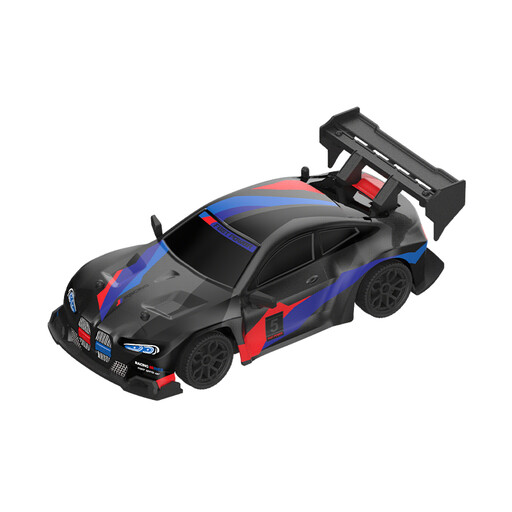
Why it's a good fit: It offers all the essential core features, like all-wheel drive and proportional controls, in one complete package. Ideal as a gift for teens or for taking your first steps in drifting without a large initial investment.
Comes with two sets of tires (drift and grip). The proportional 2.4 GHz control system avoids the frustration of imprecise "all-or-nothing" remotes.
A complete, ready-to-run package with a solid baseline of features for getting started in drifting.
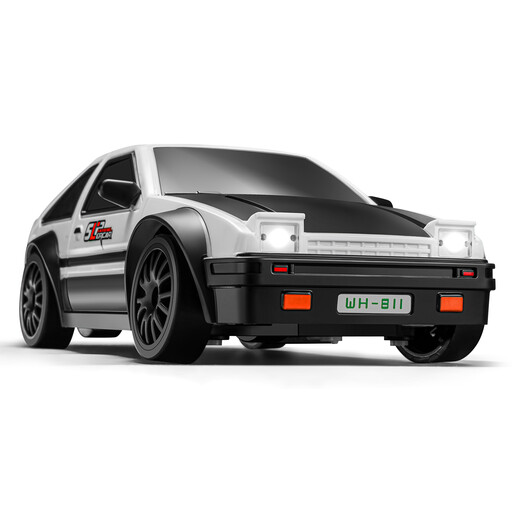
Why it's a good fit: This model is aimed at drivers who value high stability and more precise drifts right from the start. The gyroscope is a clear upgrade over basic entry-level models.
The integrated gyro system actively counteracts rear-end breakaway, making it easier to hold long, controlled drifts—a common problem for models without this assistance.
The gyroscope system actively stabilises the vehicle, enabling significantly improved control during drift manoeuvres.
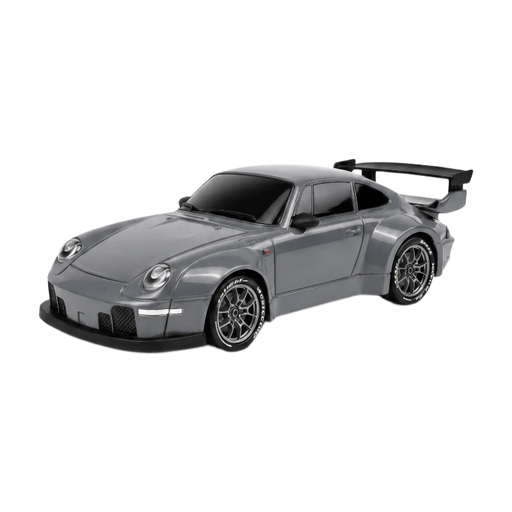
Why it's a good fit: It offers maximum control and customisation for drivers who want to fine-tune their vehicle's setup and tailor its handling to their personal style.
Instead of basic controls, this model features a professional steering servo and an adjustable gyro. This allows for fine-tuning of the handling that isn't possible on standard models.
Adjustable gyroscope and a professional steering servo for highly precise, driver-customisable control.
Tire choice is crucial for performance on different surfaces. Whether you need more grip for racing or specialised drift tires for smooth floors, the right set of tires makes all the difference. Explore compatible options to optimise your driving experience.
Run time heavily depends on the battery's capacity (measured in mAh) and your driving style. For the 1:24 scale models presented here with 7.4V Li-ion batteries, the run time is typically between 15 and 25 minutes per charge. Charging time with a standard USB charger is about 1.5 to 2 hours. Many hobbyists purchase one or two spare batteries to extend their driving sessions.
Yes, but with some limitations. 1:24 scale models are best suited for smooth, clean surfaces like asphalt, concrete, or paving stones. They are not designed for rough terrain, grass, or gravel. Be sure to protect the electronics from moisture and excessive dust.
The main difference lies in the precision of the controls. A non-proportional toy car only has "full throttle" or "no throttle" and "full left/right steering." A proportional RC car, on the other hand, allows for nuanced, infinitely variable control. You can accelerate smoothly, maintain a specific speed, and precisely determine the steering angle—this is essential for controlled manoeuvres like drifting.